Info Hot Job Find your dream job! Get for jobs, post your resume, compare salaries and find career advice and research.
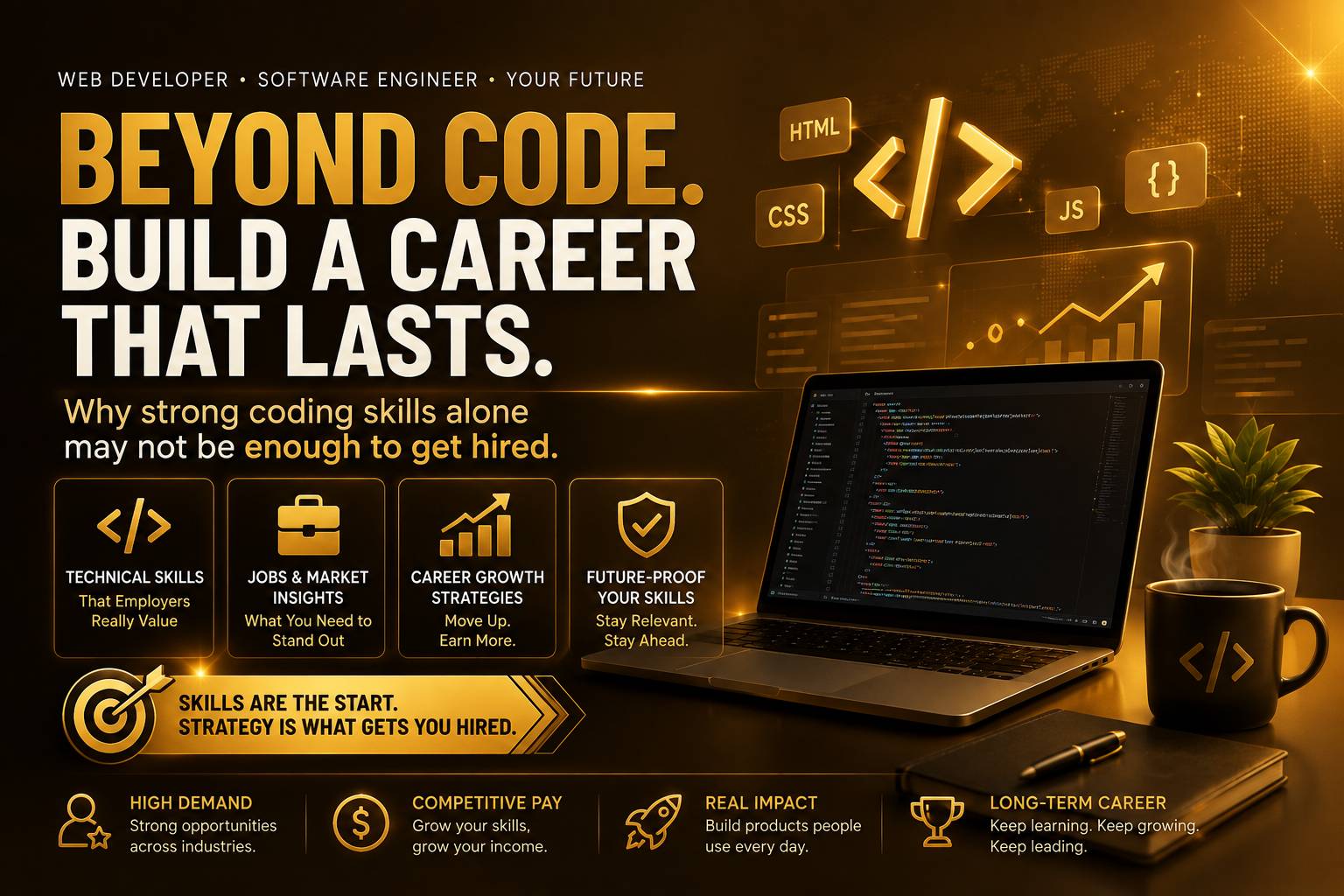
A Web Developer Software Engineer can find opportunities across startups, agencies, SaaS companies, e-commerce businesses, and large technology organizations. The role sits close to the products people use every day, from customer-facing websites to complex web applications and the services running behind them. Still, demand for software talent doesn’t make the hiring process easy.
Many candidates learn a programming language, build a few projects, and expect the next step to be a job offer. Reality is tougher. Employers don’t just need someone who can make a page work. They need people who can handle broken features, awkward legacy code, slow queries, changing requirements, and production issues that appear when least expected.
That gap explains why some applicants struggle even when they know several popular technologies. Writing code is only part of the job. A stronger Web Developer Software Engineer understands how an application behaves, where problems begin, and which solution makes sense without creating bigger issues later.
Web Developer Software Engineer Skills Employers Actually Look For
The role can cover far more than front-end development. Depending on the company, daily work may include HTML, CSS, JavaScript, TypeScript, APIs, databases, authentication, testing, and deployment. Some positions lean toward interfaces, while others involve back-end services or full-stack development. The tools may differ, but employers generally want someone who can understand enough of the system to solve problems independently.
Tutorials can build useful foundations, yet real projects rarely come with step-by-step instructions. An API may return unexpected data, a login flow may fail for certain users, or a database query may slow down as traffic grows. Employers value candidates who can investigate these situations, identify the cause, and explain why their solution is appropriate.
Compensation also varies with technical responsibility. Experience, location, company size, and system complexity can significantly affect pay, even when two positions use similar titles. Reviewing Software Development Engineer salary trends can help candidates compare opportunities based on the level of engineering work expected rather than the job title alone.
A portfolio provides another way to prove capability. A few complete projects can carry more weight than a long collection of unfinished repositories. Clear code organization, practical error handling, sensible technical decisions, and documentation all show how a candidate approaches real work. The goal isn’t to build something unnecessarily complicated. It is to demonstrate that the developer can turn a problem into working, maintainable software.
Web Developer Software Engineer Jobs and Today’s Hiring Pressure
Competition has made it harder to stand out by meeting only the minimum requirements. Entry-level and remote vacancies can attract large numbers of applicants, so employers often look beyond resumes. Projects, practical assignments, work experience, communication, and problem-solving ability may all influence the hiring decision.
Formal employment isn’t the only way to build credibility. Freelance work, internships, open-source contributions, and independently developed applications can demonstrate useful experience when they show genuine ownership. The important question is whether the candidate made decisions, solved unexpected problems, and understood the result rather than simply following a template.
Job titles can complicate the search as well. “Software developer” and “software engineer” sometimes describe similar work, but some employers expect engineers to take greater responsibility for architecture, scalability, and technical decisions. Understanding Software Developer vs. Software Engineer helps candidates look past the title and evaluate whether the actual responsibilities fit their skills and career direction.
The expectations can rise further at large technology companies. Engineers may work with extensive codebases, complex systems, and strict reliability standards, which places greater emphasis on technical reasoning. Reviewing Software Development Engineer positions and salary at Amazon offers useful context for candidates considering how responsibility and career progression can differ in major engineering organizations.
Trying to learn every new framework isn’t the answer. Tools change quickly, while programming fundamentals, HTTP, browser behavior, databases, authentication, debugging, version control, and software design remain useful across different technology stacks. A developer with that foundation can adapt when a company uses unfamiliar tools.
Web Developer Software Engineer Career Growth Depends on Technical Depth
As experience grows, the problems assigned to an engineer usually become broader. Early work may involve a component, feature, or isolated bug. Later, the questions can involve system performance, architecture, maintainability, and the consequences of technical decisions.
Good engineering depends on trade-offs. More complexity doesn’t automatically produce a better system, and the fastest solution may create maintenance problems later. Experienced professionals learn to balance delivery speed, reliability, performance, and long-term cost. That judgment can become just as valuable as coding speed.
Software testing is one direction for expanding engineering expertise. Web applications depend on reliable releases and effective automated checks, creating opportunities for developers who want to combine programming with quality engineering. A Software Development Engineer in Test role demonstrates how coding skills can support a specialized position focused on software quality while remaining closely connected to the development lifecycle.
With deeper experience, a Web Developer Software Engineer can also move toward specialized engineering roles. Such a transition requires additional technical knowledge, but strong programming fundamentals, debugging skills, and system-level thinking provide a useful base. Those capabilities can eventually support opportunities such as an Intel Firmware Development Engineer role in Folsom, California, where the work shifts beyond web applications toward software that operates closer to hardware and underlying systems.
The practical strategy is straightforward: develop real depth before expanding into new areas. Strong web development skills can form the starting point, while experience with testing, systems, cloud technology, or other technical domains can create additional paths. Long-term growth usually comes from solving increasingly difficult problems, not from collecting the largest possible list of frameworks.
FAQ Web Developer Software Engineer Career
- What does a Web Developer Software Engineer do?
The role can combine web development with broader software engineering responsibilities. Depending on the employer, the work may involve building user interfaces, developing back-end services, working with APIs and databases, improving performance, fixing bugs, testing applications, and supporting deployment. More advanced positions also require an understanding of how these parts work together and how technical decisions affect reliability, scalability, and long-term maintenance.
- What skills do employers want from a Web Developer Software Engineer?
Employers commonly look for programming ability, practical web development knowledge, experience with APIs and databases, debugging skills, version control, and the ability to solve unfamiliar problems. Framework knowledge can help, but it rarely carries a candidate on its own. Complete projects with understandable code and evidence of independent technical decision-making often provide stronger proof of ability than simply listing numerous tools or certificates.
- Is Web Developer Software Engineer a good career choice in 2026?
Yes, although the field has become more competitive and employers often expect stronger practical skills. Businesses continue to depend on websites, web applications, and connected software systems, creating ongoing opportunities for capable engineers. Candidates with solid fundamentals, relevant project experience, and the ability to handle real technical problems are generally better positioned for long-term growth than those who depend only on basic tutorial knowledge or short-lived technology trends.
A Web Developer Software Engineer career can offer strong opportunities, but knowing how to write code alone rarely separates one candidate from another. The people who stand out can handle difficult problems, make sound technical decisions, and continue building depth as their responsibilities grow. In a competitive job market, practical skill and engineering judgment remain the combination that gives this career lasting value.