Info Hot Job Find your dream job! Get for jobs, post your resume, compare salaries and find career advice and research.
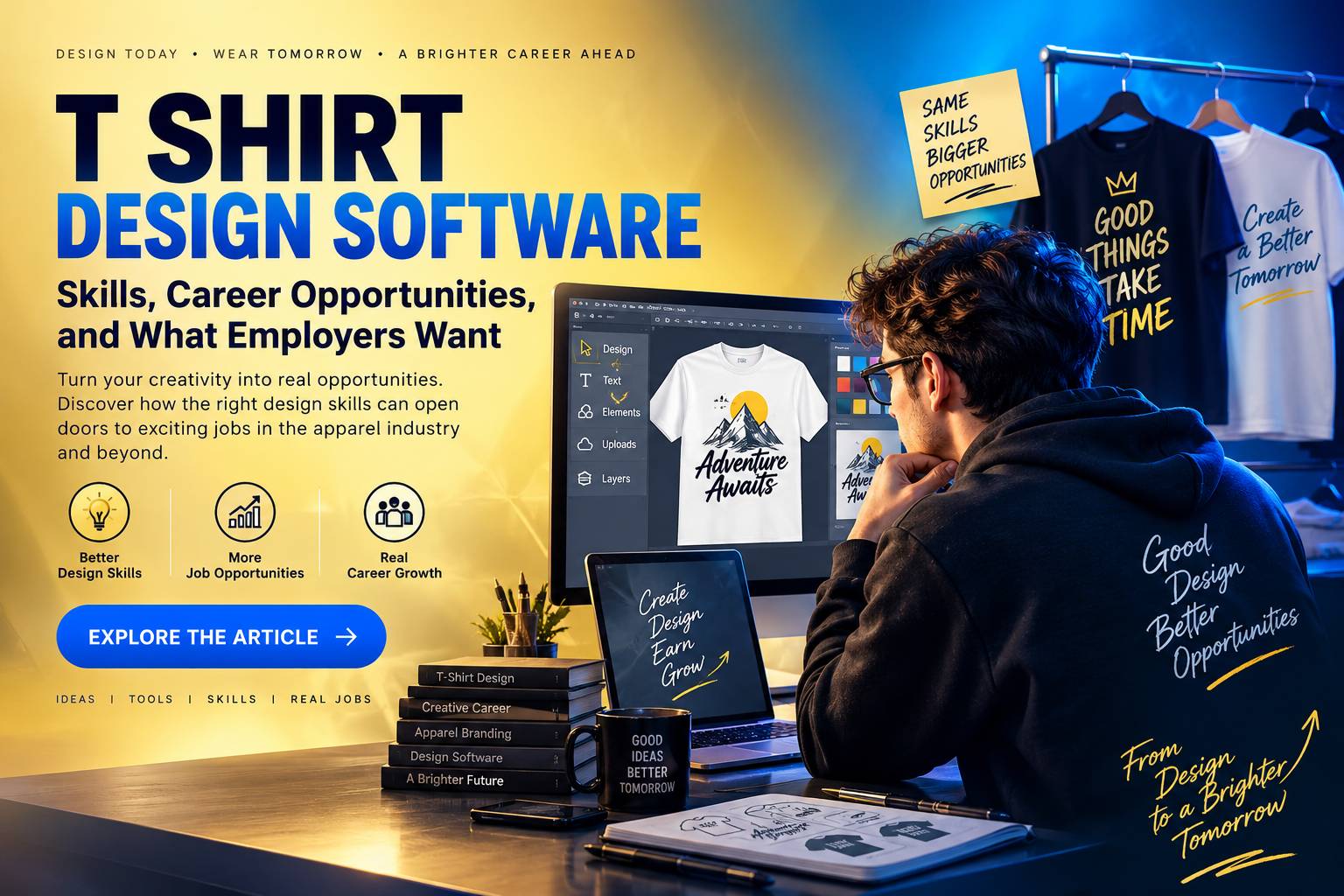
A T-shirt may look simple on the rack, but creating artwork that actually sells is a different story. The design has to catch attention, work on the garment, reproduce properly in print, and still make sense when a customer sees it on a product page. That puts real technical demands on the person behind the artwork. T-shirt design software has become an important part of that process, especially for people trying to turn apparel design from a creative interest into a reliable career.
Custom apparel has opened doors for graphic designers, apparel artists, production specialists, merchandisers, and freelancers. Yet the job isn’t simply about making something attractive. A clothing company needs artwork that can survive revisions, meet production specifications, fit a brand, and reach the printer without unnecessary complications. In practice, that means software knowledge carries more weight when it’s backed by sound design decisions and an understanding of how apparel projects actually move from concept to finished product.
Why T-Shirt Design Software Matters for Modern Design Jobs
Professional T-shirt design software gives a designer control over typography, illustrations, layouts, colors, mockups, and print files. Those controls become especially useful when one concept has to work across several garment colors or sizes. A graphic that looks sharp on a computer screen can lose its impact once it’s printed, so experienced apparel designers think beyond the original digital canvas.
That distinction matters when applying for a job. Anyone can collect attractive designs for a portfolio, but commercial work brings restrictions that personal projects often don’t. Artwork may need to follow a specific print method, use particular colors, avoid excessively fine details, or fit an established brand identity. A candidate who understands those limitations is already solving problems that an employer would otherwise have to explain or fix.
Speed is another practical advantage. Knowing how to handle vector artwork, raster images, typography, resolution, color settings, and apparel mockups can reduce unnecessary revisions and keep production moving. It also makes conversations with printers, marketers, e-commerce teams, and clients much easier because the designer understands what’s happening beyond the visual surface.
That broader workflow can lead to other opportunities without taking the focus away from apparel. Experience at a software design firm, for instance, can expose a creative professional to branding systems, digital products, and structured design processes. Those experiences can strengthen skills that are already useful in apparel work, particularly when a designer needs to maintain visual consistency across different types of digital and physical content.
T-Shirt Design Software Skills Employers Look For
Knowing where a button is in a design application isn’t much of a qualification by itself. Hiring managers want to see what comes out at the other end. Can the applicant build clean artwork? Can the file be sent directly to production? Can a design be adapted without destroying its visual balance? Those practical questions often tell an employer far more than a long list of software names on a résumé.
For T-shirt roles, useful capabilities include scalable artwork, print-ready files, apparel mockups, color variations, typography, illustration, and brand consistency. Typography deserves particular care. A shirt can depend almost entirely on a short phrase, yet poor spacing or an unsuitable typeface can make an otherwise strong idea look amateurish.
There’s a less obvious skill behind successful apparel projects: organization. A designer may receive a brief, produce several concepts, handle revisions, obtain approval, and prepare final files while working against a launch or production deadline. Familiarity with project management software design can help put that workflow into perspective, particularly when creative work is shared across a larger team. The connection is practical: better project organization leaves more room for careful design work and fewer last-minute production mistakes.
Commercial apparel also has a customer-facing side. The artwork might be created for an online store where marketing teams are watching product launches, customer behavior, and campaign performance. Understanding CRM software design gives designers a clearer picture of how customer information and marketing systems support the business around a product. The T-shirt remains the creative focus, but knowing what happens around the product can help a designer make more commercially aware decisions.
Building a Career With T-Shirt Design Software
Learning T-shirt design software doesn’t lock someone into a single job title. A person might begin with simple merchandise graphics and later move toward apparel branding, production art, merchandise development, e-commerce content, or creative direction. Freelance work can broaden the client base even further, from small clothing labels and creators to event organizers and businesses ordering custom merchandise.
The useful part is that the underlying skills travel well. Software changes, interfaces get redesigned, and new tools appear, but composition, typography, visual hierarchy, file preparation, and communication remain relevant. Someone who can understand a brief and turn it into workable artwork won’t be starting from zero every time a new platform enters the market.
Some designers eventually want to move closer to technology itself. That doesn’t mean abandoning the skills developed through apparel work. Experience with structured briefs, visual systems, user requirements, and precise production standards can provide a useful foundation for exploring adjacent design roles. A position such as a Software Design Engineer in Redmond, WA represents a much more technical career path, but it also illustrates how design-oriented problem-solving can extend beyond graphics and into technology.
Job searches should reflect that variety. Companies don’t always advertise an opening as “T-shirt designer.” Similar work may appear under titles such as graphic designer, apparel graphic designer, production artist, merchandise designer, print designer, or visual designer. Looking at the responsibilities rather than one exact title can uncover positions that would otherwise be easy to miss.
A portfolio still carries considerable weight. Ten nearly identical shirt graphics won’t say much about versatility. A stronger portfolio might show a typography-led design, an illustrated concept, branded merchandise, different garment colors, realistic mockups, and properly prepared production artwork. Short project notes can add useful context by explaining the original challenge and why a particular design direction was chosen.
The wider design market is moving quickly, particularly as clothing businesses rely more heavily on online stores, digital marketing, and rapid product launches. That creates room for people who understand apparel but aren’t limited to one narrow task. Broader software designer jobs in 2026 reflect how design-related careers are expanding across technology-driven environments, while many of the same core abilities—visual thinking, software fluency, communication, and problem-solving—remain useful across disciplines.
T-Shirt Design Software and Long-Term Job Growth
The lasting value of T-shirt design software isn’t measured by how many features a designer knows. It’s measured by whether those features help produce better work with less friction. A designer who can move confidently from a rough idea to polished, production-ready shirt artwork has a useful commercial skill, not just familiarity with an application.
That’s becoming increasingly important as templates, automation, and generative tools handle more routine design tasks. The easy part of producing an image is getting easier. The harder part is deciding what should be made, why it works, whether it fits the brand, and whether it can actually be produced as intended. Those decisions still require judgment.
For someone building a career, that difference is significant. Software should support the creative process rather than replace the thinking behind it. Strong apparel designers learn their tools, understand production requirements, pay attention to commercial goals, and stay flexible when the workflow changes.
FAQ: T-Shirt Design Software Jobs
1. What T-Shirt Design Software is best for professional designers?
There isn’t one universal choice because the right T-shirt design software depends on the artwork, printing process, employer requirements, and individual workflow. Professional vector and image-editing applications are valuable because they offer precise control over typography, illustrations, resolution, color, and scalable artwork. For employment purposes, practical design ability and a strong portfolio generally matter more than simply naming a particular software brand.
2. Do I need professional software experience to get a T-shirt design job?
Professional software experience can make an application stronger, but it isn’t necessarily the deciding factor. Employers can also look at portfolio quality, knowledge of print production, typography, composition, branding, file preparation, and reliability under deadlines. Someone without commercial experience can still demonstrate potential through well-developed portfolio projects that resemble genuine apparel briefs rather than a collection of random personal designs.
3. Is T-shirt design still a good career option in 2026?
T-shirt design remains a viable career because custom apparel continues to serve clothing brands, businesses, creators, events, organizations, and online merchants. The market is more competitive than it once was, though, so relying on basic graphics alone can be limiting. Combining apparel design with software expertise, branding, production knowledge, e-commerce awareness, and broader visual communication creates more paths for long-term career development.
T-shirt design software can provide a strong foundation for an apparel design career, but knowing the software is only part of the equation. The real advantage comes from using it to solve practical design and production problems, communicate clearly with other teams, and create work that serves a commercial purpose. As custom apparel and digital commerce continue to develop, professionals who combine creative judgment with technical skill will have a stronger position when competing for design jobs and building a sustainable career.