Info Hot Job Find your dream job! Get for jobs, post your resume, compare salaries and find career advice and research.
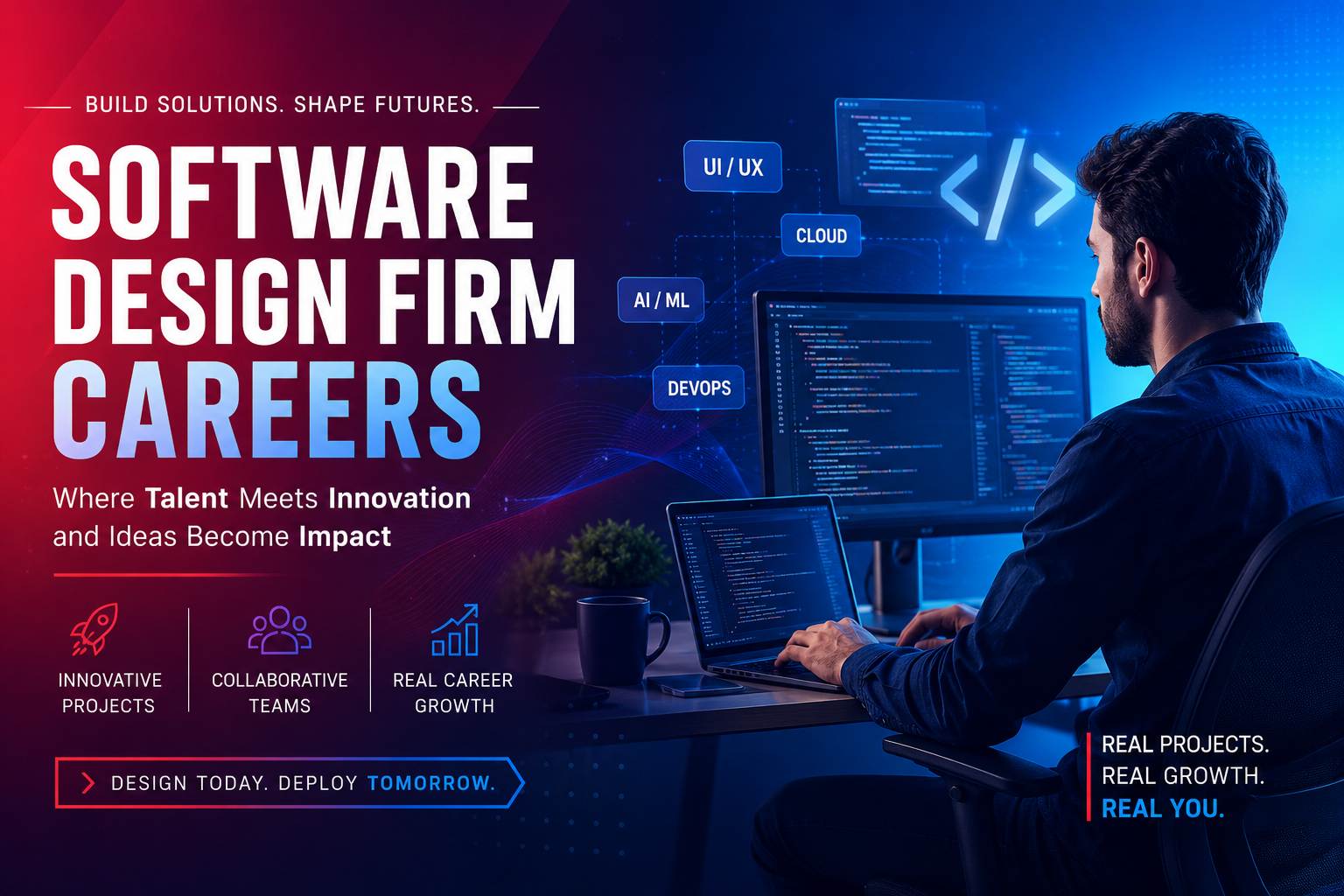
Technology continues to reshape every industry, but none moves as quickly as software development. Behind the apps, platforms, enterprise systems, and digital products people rely on every day, a Software Design Firm plays a critical role in transforming ideas into reliable software solutions. As businesses invest more in digital transformation, demand for skilled professionals inside these firms continues to grow, creating attractive career opportunities for developers, designers, architects, analysts, and project managers.
A career with a Software Design Firm offers far more than a competitive salary. It provides exposure to innovative technologies, challenging projects, and collaborative environments where learning never stops. For professionals looking to build long-term careers in technology, understanding how these firms operate can make the difference between landing an average job and securing a role with significant growth potential.
Software Design Firm Jobs and Career Opportunities
A Software Design Firm rarely hires for only one technical position. Successful firms build multidisciplinary teams capable of handling every stage of software development, from discovery and planning to deployment and long-term maintenance. Software engineers work alongside UI/UX designers, quality assurance specialists, DevOps engineers, cloud architects, cybersecurity experts, business analysts, and technical project managers to deliver complete digital products.
Unlike companies that develop software only for internal use, a Software Design Firm often serves multiple clients across healthcare, finance, education, manufacturing, retail, logistics, and government sectors. This diversity gives employees valuable experience solving different business challenges instead of repeating the same tasks year after year.
Employers generally seek candidates who combine technical expertise with communication skills. Writing clean code matters, but explaining technical decisions to clients and collaborating across departments has become equally important. Professionals who can balance both technical excellence and business awareness usually advance faster into leadership positions.
For professionals interested in managing software delivery from concept to launch, understanding modern workflows is equally valuable. Learning about effective project management software for software design teams can strengthen both technical and leadership capabilities.
Working Inside a Modern Software Design Firm
Modern software development has shifted away from isolated programming toward highly collaborative product development. Most Software Design Firm environments embrace Agile methodologies, continuous integration, automated testing, and cloud-native deployment. Teams communicate frequently, release software in smaller iterations, and collect user feedback throughout development instead of waiting until the final stage.
This work environment encourages constant improvement. Developers learn new programming languages, designers adapt to changing user expectations, and infrastructure specialists optimize cloud performance while maintaining security standards. Every completed project becomes another opportunity to expand professional expertise.
Remote work has also transformed hiring practices. Many Software Design Firm employers recruit globally, allowing talented professionals to work with international clients without relocating. While technical ability remains essential, employers increasingly value adaptability, time management, and cross-cultural communication because distributed teams have become the industry standard.
Organizations that rely on complex infrastructure also benefit from understanding complementary technologies, including open-source network design software solutions that improve planning before implementation begins.
Skills Employers Expect in Software Design Firm Roles
Technical requirements vary depending on specialization, yet several competencies consistently appear across Software Design Firm job descriptions. Programming languages such as Java, Python, JavaScript, C#, and Go remain highly relevant, while cloud platforms including AWS, Microsoft Azure, and Google Cloud continue expanding their influence throughout enterprise software development.
Employers also prioritize experience with Git, Docker, Kubernetes, REST APIs, SQL databases, automated testing, and modern development frameworks. Candidates who understand software architecture, scalability, cybersecurity, and system performance often stand out during interviews because these capabilities directly affect product quality.
Soft skills have become increasingly important as software projects grow more complex. Clear communication, critical thinking, problem-solving, and collaboration frequently determine project success. Companies want professionals who can explain technical concepts without creating unnecessary complexity.
Continuous learning remains one of the strongest career advantages. Technology evolves rapidly, and hiring managers recognize candidates who regularly improve their knowledge through certifications, personal projects, or contributions to open-source communities.
Professionals involved in digital product creation can also gain broader industry insight by exploring the latest engineering design software platforms that influence development across multiple technical disciplines.
Choosing the Right Software Design Firm Employer
Not every Software Design Firm offers the same career experience. Some focus on startup innovation, while others specialize in enterprise consulting or long-term government contracts. Understanding a company’s project portfolio provides valuable insight into the type of work employees perform every day.
Career development opportunities should receive equal attention during the job search. Firms that invest in mentorship, technical training, certification programs, and leadership development often produce stronger long-term career outcomes than organizations focused solely on immediate project delivery.
Company culture also matters. High-performing teams encourage knowledge sharing, constructive feedback, and continuous improvement instead of placing blame when challenges arise. Employees who feel supported typically produce better software and remain with organizations longer, reducing turnover while improving project consistency.
Businesses increasingly integrate customer relationship management into software strategy, making familiarity with CRM software design principles another valuable advantage for technology professionals seeking broader expertise.
Compensation remains competitive across much of the industry, although salary varies according to location, specialization, experience, certifications, and project complexity. Senior software architects, cloud engineers, security specialists, and engineering managers frequently earn significantly higher salaries due to their strategic responsibilities and technical expertise.
FAQ Software Design Firm Careers
1. What qualifications do employers usually expect from candidates applying to a Software Design Firm?
Most Software Design Firm employers prefer applicants with a computer science, software engineering, or related technical background, but practical experience often carries equal or greater weight. Demonstrated expertise through professional projects, GitHub portfolios, internships, certifications, and open-source contributions can strengthen an application considerably. Employers also evaluate communication skills, teamwork, problem-solving ability, and adaptability because modern software development depends on close collaboration across multiple disciplines. Candidates who continuously learn emerging technologies generally remain more competitive in today’s hiring market.
2. Is working at a Software Design Firm better than joining an internal corporate IT department?
The answer depends on career goals rather than a universal advantage. A Software Design Firm typically exposes employees to a wider variety of industries, technologies, and client challenges, allowing professionals to build experience quickly across different software environments. Internal corporate IT positions may offer greater stability and deeper specialization within a single organization. Professionals seeking rapid technical growth, diverse projects, and exposure to innovative development practices often find Software Design Firm careers especially rewarding.
3. Which tools and resources help professionals succeed in a Software Design Firm career?
Success usually comes from combining technical knowledge with efficient workflows. Developers should become comfortable with source control, cloud platforms, containerization, testing frameworks, and project collaboration tools. Building practical experience through personal projects and staying informed about evolving software architecture trends also improves career prospects. Those looking to upgrade their workstation for demanding development tasks may also consider reliable hardware and accessories through professional software development equipment that support productivity during long coding sessions.
Apply Software Design Firm Jobs
The demand for professionals within a Software Design Firm continues to rise as organizations accelerate digital transformation across nearly every industry. Candidates who combine technical depth with communication skills, business awareness, and a commitment to continuous learning place themselves in an excellent position for long-term career success. As technology keeps evolving, the professionals capable of designing reliable, scalable, and user-focused software will remain among the most valuable contributors in the global workforce.