Info Hot Job Find your dream job! Get for jobs, post your resume, compare salaries and find career advice and research.
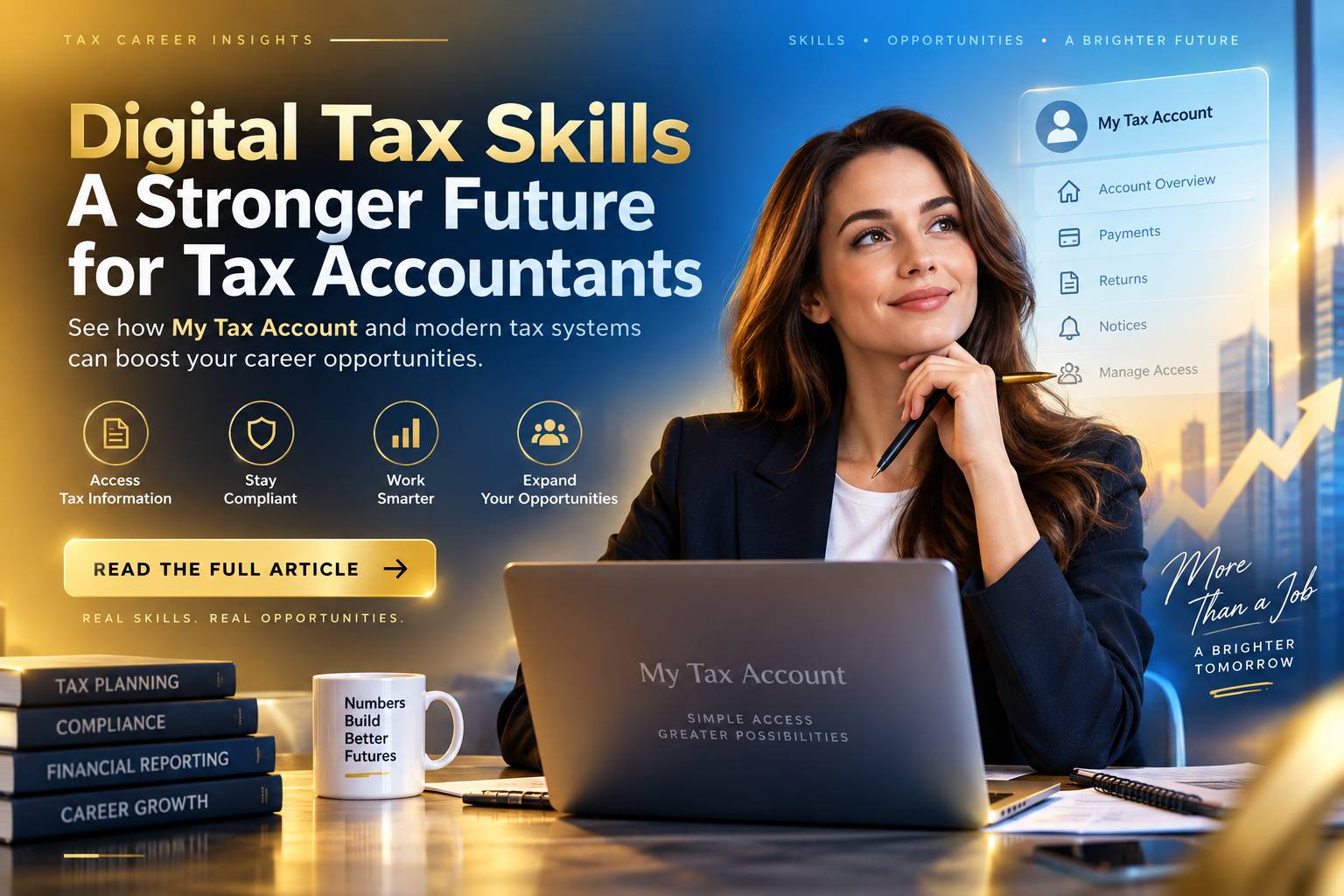
Tax accounting used to revolve heavily around spreadsheets, paper records, calculations, and filing deadlines. The work is still detail-driven, but the tools have changed considerably. Online tax systems now sit much closer to everyday accounting tasks, giving professionals faster access to records, payments, notices, and compliance information. My Tax Account is one example of how tax administration has moved into a more connected digital environment.
For anyone considering tax accountant jobs, that shift deserves attention. An accountant who can work comfortably with digital tax systems can spend less time tracking down information and more time assessing what the numbers actually mean. Accuracy remains the foundation of the profession, while speed, system knowledge, and careful analysis have become important parts of the job as well.
My Tax Account and the Changing Role of Tax Accountants
My Tax Account is an online tax service associated with state tax administration, particularly Wisconsin’s Department of Revenue. It gives taxpayers and authorized professionals a digital way to access and manage certain tax-related information and obligations. Its importance for accountants goes beyond convenience. The platform reflects a broader move from fragmented, paper-based processes toward electronic tax administration.
Consider what happens when an account contains a discrepancy. An accountant may need to check account activity, compare it with financial records, review a notice, confirm a filing, and determine the appropriate next step. Having those details available through an online system can shorten that process and make the information easier to track. The professional still has to interpret the evidence and decide what action makes sense.
That’s where employers can distinguish between candidates who simply know accounting theory and those who can apply it in a modern workplace. Tax software can organize information and automate routine tasks, yet someone still needs to recognize an unusual figure, question an unexpected balance, or investigate a compliance issue. Good tax accountants know how to use the system while keeping their own judgment in the driver’s seat.
The combination of accounting knowledge and digital ability applies across many workplaces. The Majeski Jahnke Tax Accountant position in Minneapolis, MN, for example, represents the kind of opportunity where professionals may need to handle detailed tax information while keeping accuracy and compliance at the forefront.
My Tax Account Skills That Matter in Tax Accountant Jobs
Experience with My Tax Account can be useful for work involving state tax compliance, business tax accounts, payroll obligations, and electronic communication with tax authorities. An employer may not require experience with this exact platform. What carries further is the ability to learn unfamiliar systems quickly and use them accurately.
That ability becomes particularly practical when an accountant is responsible for more than one tax jurisdiction. Different filing requirements, deadlines, account records, and electronic systems can turn an ordinary workload into a complicated one. A reliable digital workflow keeps information organized, but reconciliation and review remain essential.
Tax accounting rewards attention to details that are easy to overlook. A payment that doesn’t match an account balance, an unexpected notice, or an incomplete record can signal a larger problem. Digital tools make those details easier to find. The accountant’s job is to determine why they don’t line up and what should happen next.
Corporate employers face the same challenge on a larger scale. The Koch Companies Services Tax Accountant position in Atlanta, GA is an example of a corporate tax role where managing financial information and maintaining reliable compliance processes are central to the job. Familiarity with online tax systems can support that work, particularly when several tax responsibilities need to be coordinated at once.
My Tax Account and the Future of Tax Accounting Careers
Automation is changing tax accounting, but it doesn’t tell the whole story. Repetitive calculations, data processing, and administrative work are increasingly handled by software. More complicated situations still require someone to examine the records, understand the tax implications, and make a reasoned decision.
That distinction matters for career development. As routine work becomes easier to automate, skills such as investigation, interpretation, reconciliation, and communication can carry more weight. An accountant who understands both financial information and the technology used to manage it is well positioned to handle work that demands closer analysis.
The CGGVeritas Corporate Tax Accountant position in Houston, TX reflects this broader direction. Corporate tax professionals often work with structured financial information, reporting requirements, and compliance controls. Knowledge of digital tax systems can complement those responsibilities by making it easier to manage and verify tax information across different processes.
Specialized organizations have similar demands. The Tax Accountant position at Underwriters Laboratories in Northbrook, IL shows how tax accounting can sit alongside financial reporting and control processes. In environments like these, organized electronic workflows can help accountants keep large amounts of information accurate, accessible, and ready for review.
Career progression can follow the same direction. Someone who starts with tax preparation or compliance may eventually move into senior tax accounting, tax management, compliance, or advisory work. Experience with electronic tax administration, accounting software, financial systems, and data-driven workflows can become part of the professional foundation needed for those roles.
Large corporate tax departments make that combination particularly relevant. As tax teams handle growing volumes of electronic records, accountants may move between accounting data, tax accounts, compliance information, and reporting systems throughout the workday. The Simon Property Group Tax Accountant opportunity in Indianapolis illustrates this type of corporate environment. Experience with platforms such as My Tax Account can complement core tax accounting skills by giving professionals greater confidence when working within digital compliance workflows.
FAQ: My Tax Account for Tax Accountant Jobs
1. What is My Tax Account used for?
My Tax Account is an online tax administration service that allows users and authorized tax professionals to handle certain tax-related activities electronically. Depending on the account and jurisdiction, it can provide access to tax information, filing functions, payments, account activity, and communications with a tax authority. For accountants, systems like this can make tax administration more accessible while reducing reliance on manual processes.
2. Is My Tax Account experience useful when applying for tax accountant jobs?
Yes, particularly for positions involving state tax compliance or electronic tax administration. Employers may not specifically require experience with My Tax Account because different organizations use different platforms, but familiarity with digital tax systems demonstrates useful technical adaptability. The ability to review account information, manage electronic records, identify discrepancies, and support compliance tasks can strengthen a tax accountant’s overall qualifications.
3. Do tax accountants still need strong accounting skills as tax work becomes more automated?
They certainly do. Automation can handle many repetitive calculations and administrative processes, while complicated tax situations still require analysis and professional judgment. Accountants must recognize inconsistencies, understand financial records, interpret applicable requirements, and determine when further investigation is necessary. Digital skills can make that work more efficient, but accounting expertise remains essential for sound decision-making.
My Tax Accountant is part of a larger change in the way tax professionals manage information and compliance. Digital systems can make records, payments, filings, and account activity easier to handle, while careful accounting judgment remains essential when the information needs interpretation. For tax accountant candidates, combining strong accounting skills with confidence in digital tax administration provides a practical foundation for adapting to a profession that continues to evolve.