Info Hot Job Find your dream job! Get for jobs, post your resume, compare salaries and find career advice and research.
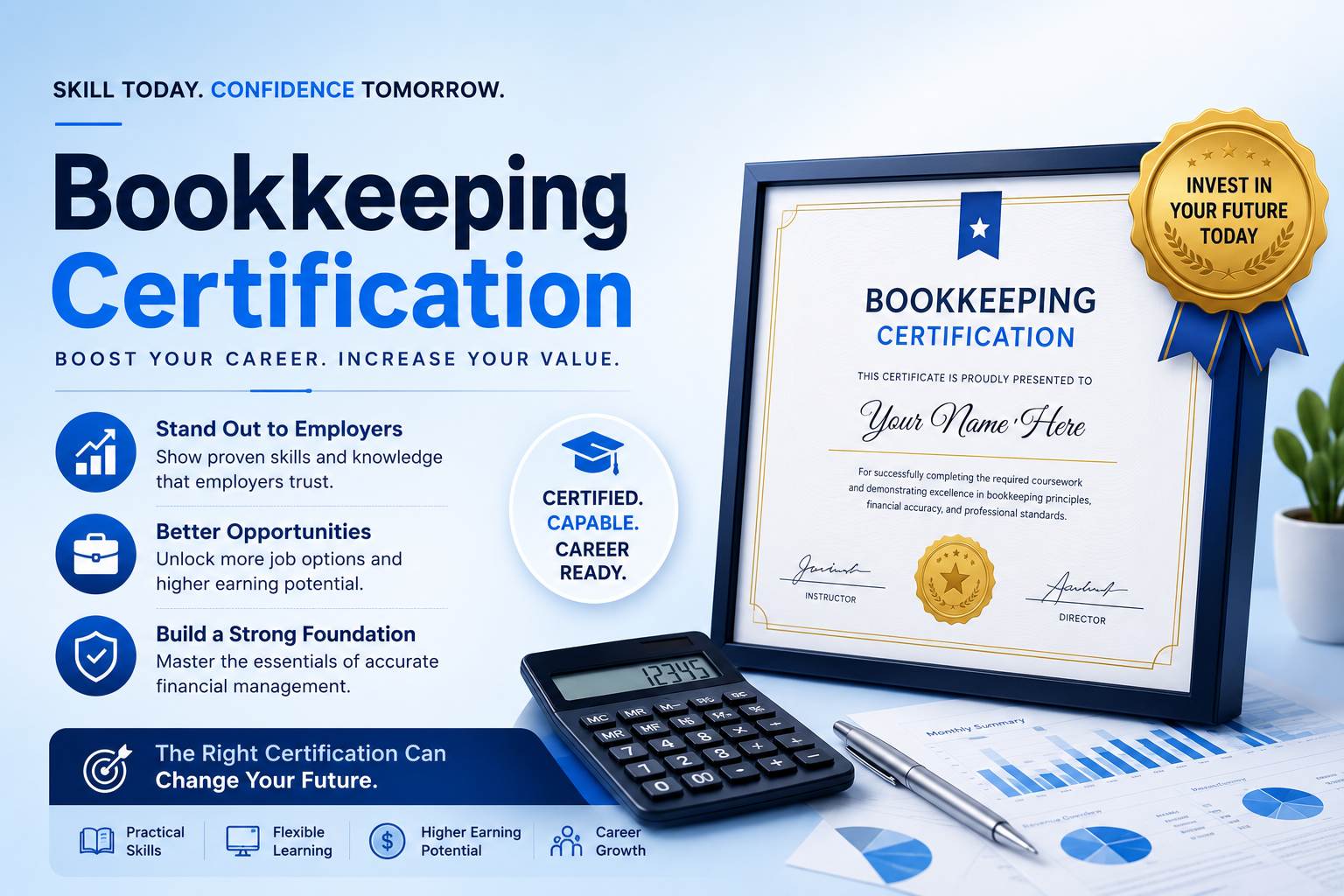
A strong resume can open doors, but employers often look for more than work experience alone. In today’s competitive hiring market, candidates who demonstrate verified skills tend to stand out faster. That’s one reason Bookkeeping Certification has become increasingly valuable for professionals entering finance or looking to move into higher-paying positions.
Businesses rely on accurate financial records every day. Mistakes can affect budgets, tax reporting, cash flow, and strategic decisions. Because of that responsibility, hiring managers want proof that applicants understand bookkeeping principles, accounting software, and financial accuracy. A recognized certification provides that confidence while showing commitment to professional development.
Why Bookkeeping Certification Matters in Today’s Job Market
Bookkeeping has evolved well beyond maintaining paper ledgers. Modern bookkeepers work with cloud accounting platforms, digital invoices, automated bank feeds, payroll systems, and financial reporting software. As technology continues to reshape finance departments, employers increasingly favor candidates who can adapt to these tools while maintaining high standards of accuracy.
A Bookkeeping Certification demonstrates that an individual has mastered the core knowledge needed to perform bookkeeping tasks correctly. Instead of relying solely on previous job titles, employers gain evidence that a candidate understands financial transactions, account reconciliation, reporting procedures, and accounting best practices.
For job seekers with limited experience, certification can help bridge the gap between education and employment. For experienced professionals, it strengthens credibility and often supports promotion opportunities or salary negotiations.
If you’re still building your foundation, learning exactly what bookkeeping is helps clarify how certification fits into a long-term finance career.
Bookkeeping Certification Builds Skills Employers Actually Need
Hiring managers rarely look for someone who only understands bookkeeping theory. They want professionals who can immediately contribute to daily operations. Certification programs are designed around practical knowledge, making graduates more prepared for real workplace responsibilities.
Certified bookkeepers typically develop stronger abilities in recording financial transactions, reconciling accounts, managing accounts payable and receivable, processing payroll information, preparing financial reports, and maintaining organized documentation. These competencies reduce training time for employers and increase productivity from the start.
Technology proficiency is another major advantage. Many certification programs introduce popular accounting platforms that businesses already use. Familiarity with digital accounting systems helps candidates transition smoothly into modern workplaces where efficiency and automation play significant roles.
Accuracy also becomes second nature during certification training. Financial records require careful attention because even small errors may create significant problems later. Employers recognize this discipline as one of the most valuable qualities in bookkeeping professionals.
Those interested in understanding the broader profession can explore bookkeeping, accounting, and auditing clerk careers to see how bookkeeping fits within the larger financial industry.
Can Bookkeeping Certification Increase Salary?
Certification alone does not guarantee a higher salary, but it often improves earning potential. Employers generally reward professionals who demonstrate specialized knowledge, reliability, and continuous learning. Certification helps communicate all three.
Many organizations use certifications as part of their hiring criteria when comparing candidates with similar backgrounds. A certified applicant frequently appears more competitive because the credential reduces uncertainty about technical competence.
As professionals gain experience after certification, career opportunities often expand into payroll administration, office management, accounting assistance, finance coordination, and eventually full accounting positions. Some professionals continue their education toward advanced accounting certifications, while others build successful freelance bookkeeping businesses serving multiple clients remotely.
The combination of certification and practical experience creates stronger long-term career growth than either one alone.
Professionals preparing for bookkeeping interviews can also review real bookkeeping and accounting clerk opportunities to better understand employer expectations.
Choosing the Right Bookkeeping Certification
Not every certification carries the same value. Before enrolling, candidates should evaluate program quality, industry recognition, curriculum, software training, instructor experience, and ongoing support after completion.
Programs covering accounting fundamentals, financial reporting, reconciliation procedures, payroll processing, taxation basics, and accounting software generally provide stronger career preparation than courses focused on only one narrow topic.
Flexibility also matters. Many professionals complete certification online while maintaining full-time employment. Self-paced programs allow learners to build new skills without interrupting their careers, making certification more accessible than ever before.
Cost should be considered alongside long-term value. A well-recognized certification often delivers a better return on investment through increased job opportunities, improved earning potential, and greater career mobility.
Learning modern accounting methods such as double-entry bookkeeping can further strengthen the practical knowledge gained through certification programs.
Bookkeeping Certification Opens More Career Opportunities
Certified bookkeepers work in nearly every industry. Healthcare providers, law firms, manufacturers, retailers, educational institutions, construction companies, nonprofit organizations, and government agencies all require financial recordkeeping.
Remote work has expanded this demand even further. Cloud accounting platforms allow certified professionals to manage financial records from virtually anywhere while collaborating securely with clients and employers online.
Many certified bookkeepers eventually specialize in industries where financial regulations require additional expertise. Others transition into supervisory positions or become independent consultants serving multiple businesses simultaneously.
Job seekers can gain useful insight by reviewing opportunities such as this bookkeeper accounting clerk position, which reflects the practical skills employers commonly request.
Professionals seeking additional learning resources may also find this recommended guide valuable: Bookkeeping Essentials.
FAQ Bookkeeping Certification
1. Is Bookkeeping Certification required to become a bookkeeper?
No. Many entry-level bookkeeping positions do not legally require certification. However, certification significantly improves your competitiveness because it demonstrates verified knowledge and practical skills. Employers often prefer certified candidates when comparing applicants with similar experience, making certification an excellent investment for long-term career growth and increased employment opportunities.
2. How long does it take to earn a Bookkeeping Certification?
The timeline depends on the program and your learning schedule. Some online certification courses can be completed within a few weeks of dedicated study, while more comprehensive programs may take several months. Self-paced learning has become increasingly popular because it allows working professionals to develop bookkeeping skills without leaving their current jobs or disrupting personal commitments.
3. Is Bookkeeping Certification still valuable with AI and accounting software?
Absolutely. While artificial intelligence automates repetitive bookkeeping tasks, businesses still need qualified professionals to review financial data, identify discrepancies, maintain compliance, interpret reports, and make informed decisions based on accurate records. Certification proves that you understand both bookkeeping principles and modern accounting technology, making your expertise even more relevant as automation continues to evolve.
Apply Bookkeeping CertificationBookkeeping Certification is more than a credential to add to a resume. It represents verified competence, professional credibility, and a commitment to maintaining accurate financial records in an increasingly digital business environment. Employers recognize these qualities because financial accuracy directly affects business performance.
For anyone planning a career in bookkeeping, accounting support, or financial administration, certification offers a practical way to strengthen qualifications and expand career opportunities. Combined with real-world experience, continuous learning, and strong attention to detail, a bookkeeping certification can become an important stepping stone toward a stable, rewarding, and future-ready profession.