Info Hot Job Find your dream job! Get for jobs, post your resume, compare salaries and find career advice and research.
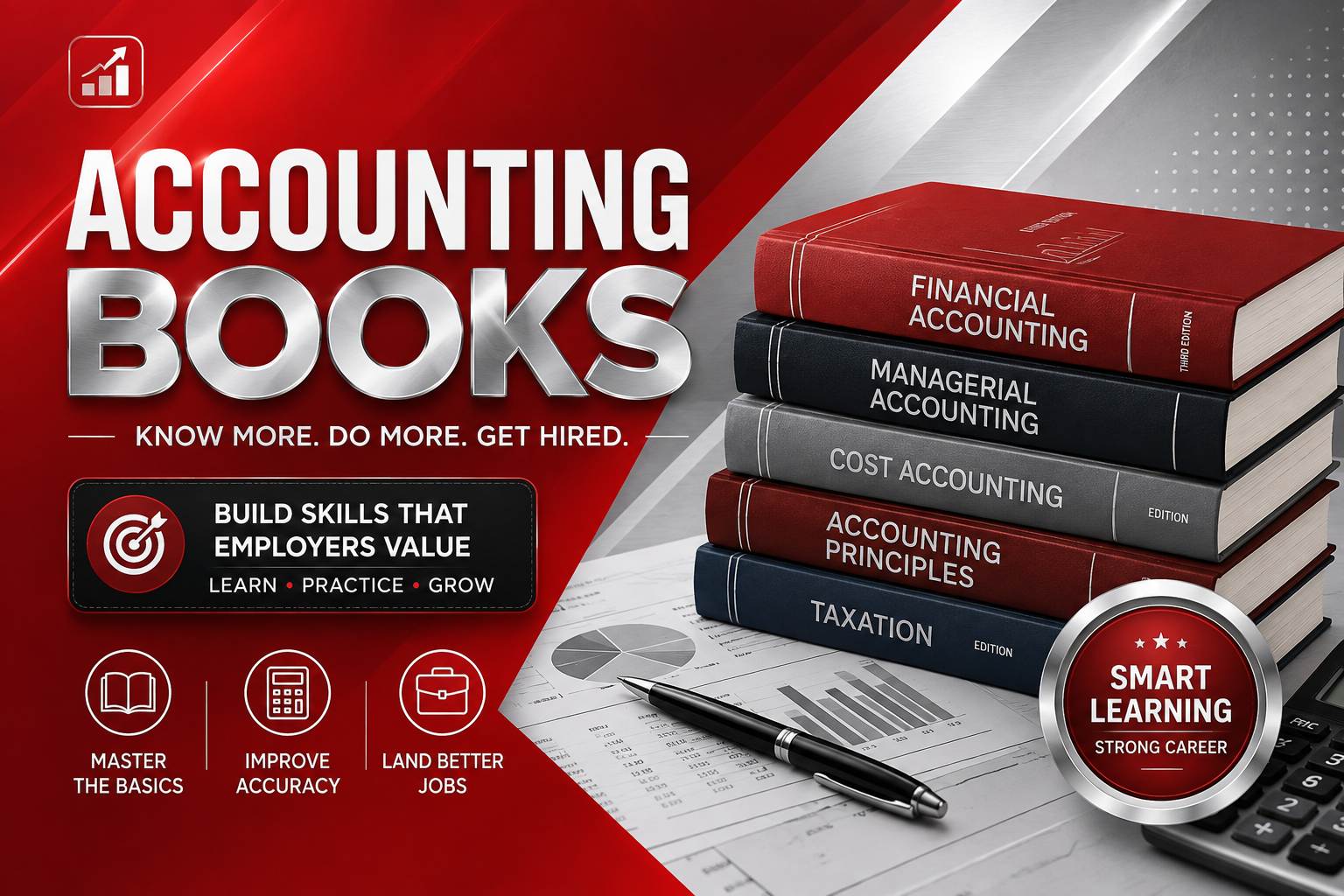
Accounting skills still carry serious weight in today’s job market. Businesses may automate data entry, generate financial reports with software, and move bookkeeping into the cloud, but they still need people who understand what the numbers mean. That’s why the right Accounting Books can be more than study material—they can become a practical tool for building skills that employers actually value.
For students, career changers, bookkeepers, and aspiring accountants, learning from reliable accounting references can create a stronger foundation before applying for a job. The challenge is choosing material that develops practical understanding rather than simply filling a bookshelf.
Why Accounting Books Still Matter for Accounting Jobs
Accounting software has changed how financial information is processed, but it hasn’t eliminated the need for accounting professionals. Someone still has to understand revenue, expenses, assets, liabilities, equity, cash flow, and financial reporting. Software can calculate numbers quickly, but it doesn’t replace professional judgment.
That distinction matters when looking for accounting jobs. Employers aren’t only interested in whether someone can operate QuickBooks, Excel, or another accounting platform. They want candidates who can recognize errors, understand transactions, organize financial records, and explain financial information clearly.
Good Accounting Books can help develop that foundation. A well-written book allows readers to study accounting principles at their own pace and return to difficult subjects whenever necessary. For someone preparing for an entry-level position, that flexibility can make a real difference.
The strongest approach is to connect what you learn with actual workplace situations. Reading about accounts receivable, for example, becomes much more valuable when you understand how unpaid invoices affect cash flow and working capital.
For additional context, Passbook Savings Account provides a useful example of how financial products connect with basic accounting and personal finance concepts.
Choosing Accounting Books That Support Career Growth
Not every accounting book serves the same purpose. Some focus heavily on academic theory, while others concentrate on bookkeeping procedures, financial statements, taxation, auditing, or managerial accounting. The best choice depends on the job you’re targeting.
Someone preparing for a bookkeeping position may benefit more from practical explanations of journal entries, ledgers, reconciliations, invoices, payroll, and financial statements. An aspiring staff accountant may need deeper coverage of accrual accounting, adjusting entries, depreciation, inventory, internal controls, and reporting standards.
Books should also help readers understand why a transaction is recorded rather than simply showing which account to debit or credit. Memorizing procedures might help with a test, but understanding the reasoning behind those procedures creates skills that transfer into real work.
Another useful subject is accounts receivable. Understanding how businesses manage unpaid customer balances is particularly relevant to accounting and finance positions. Factoring Accounts Receivable offers another perspective on how companies can manage receivables and improve access to working capital.
Career-focused readers should also pay attention to the age of the material. Accounting principles can remain stable for years, but tax rules, reporting requirements, software workflows, and employment expectations can change. A strong learning strategy combines foundational Accounting Books with current professional resources.
How Accounting Books Can Improve Job Readiness
Reading alone won’t turn someone into an experienced accountant. Practical application is where the value compounds.
A useful method is to work through accounting examples while creating your own transactions, journal entries, trial balances, and financial statements. Even a small fictional business can provide enough data to practice the accounting cycle from beginning to end.
This approach also helps prepare for interviews. Accounting employers may ask candidates to explain how they would reconcile an account, identify an incorrect entry, handle an outstanding receivable, or explain the relationship between financial statements. Someone who understands the underlying accounting process can answer with greater confidence.
Job descriptions can provide another important learning guide. A Senior Accountant Job in Holtville, CA shows how accounting knowledge connects with real employment requirements. Comparing job postings with subjects covered in your Accounting Books can reveal which skills deserve more attention.
The same principle applies to bookkeeping. A Cardinal Group Bookkeeper position in Tempe, AZ illustrates the practical side of maintaining financial records, while a Bookkeeper opportunity at Tampa’s Lowry Park Zoo demonstrates how bookkeeping skills can be used across different industries.
The gap between studying accounting and getting hired often comes down to practical readiness. Candidates who can connect accounting concepts with everyday business operations generally have a stronger position than those who only memorize definitions.
A practical accounting reference can also become a long-term desk resource. Accounting Books and learning resources can help learners build a small reference library around the subjects they use most often.
FAQ Accounting Books for Accounting Jobs
1. Are Accounting Books still useful if I already know accounting software?
Yes. Accounting software makes processing transactions faster, but it doesn’t automatically teach the accounting logic behind those transactions. Employers still expect candidates to understand reconciliations, financial statements, journal entries, accruals, receivables, payables, and internal controls. Accounting Books can strengthen that underlying knowledge and make software skills more useful in real workplace situations.
2. What Accounting Books should beginners use for a career in bookkeeping or accounting?
Beginners should generally start with practical books that explain the accounting cycle, debits and credits, journal entries, ledgers, trial balances, financial statements, accounts payable, accounts receivable, and bank reconciliation. After building that foundation, more specialized material covering taxation, payroll, managerial accounting, auditing, or financial reporting can be added based on the specific job or career path.
3. Can reading Accounting Books help me get an accounting job without experience?
They can help, but reading alone isn’t enough to replace professional experience. The real advantage comes from using Accounting Books to build practical skills and then applying those skills through exercises, spreadsheets, accounting software, simulated business transactions, or entry-level work. This combination can make a candidate more prepared for interviews and demonstrate genuine accounting knowledge.
Building a Stronger Accounting Career
Accounting remains a practical career field because businesses will always need accurate financial information. Technology can automate repetitive tasks, but reliable accounting still depends on people who understand financial data, recognize problems, and make sound decisions.
The right Accounting Books can provide the foundation, but career progress comes from turning that knowledge into usable skills. Combine structured learning with practical exercises, current job requirements, and real-world accounting scenarios, and the path from studying accounting to competing for a position becomes considerably stronger.