Info Hot Job Find your dream job! Get for jobs, post your resume, compare salaries and find career advice and research.
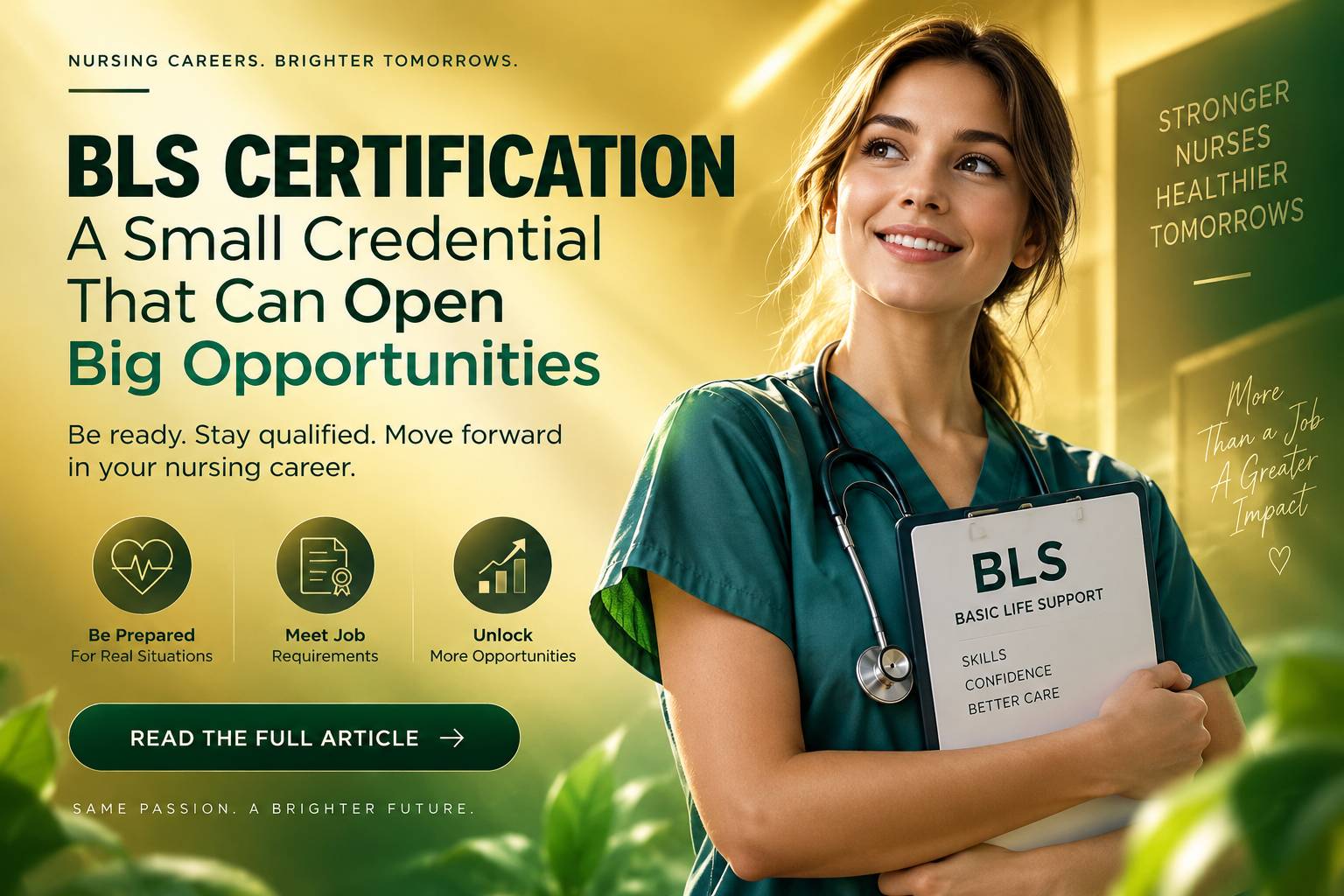
An RN license gets a nurse through the door, but it doesn’t necessarily check every box on a healthcare employer’s hiring list. One credential that can matter is current Basic Life Support certification. For nurses working around patients with serious or rapidly changing conditions, knowing how to respond when a basic life-support emergency occurs isn’t just a formality.
That makes Registered Nurse BLS relevant long before the first day on the job. If a position requires active BLS certification, an expired credential can create a problem even when the applicant has the right license, education, and experience. In a competitive nursing job market, there’s little reason to let an avoidable credential issue slow things down.
Registered Nurse BLS Requirements for Nursing Jobs
Registered Nurse BLS requirements aren’t the same everywhere. A hospital may require certification before a nurse starts clinical duties, while another employer may give a newly hired RN time to complete or renew it during onboarding. The wording of the job posting usually gives the first clue, but the employer’s credentialing policy is what ultimately matters.
For someone entering the profession, BLS is only one piece of the qualification puzzle. Education comes first, and nurses who are still working toward an RN career can review the registered nurse schooling requirements to understand how education fits into the larger path toward employment.
Timing can make a difference, too. Imagine getting an interview, receiving an offer, and then discovering that the employer needs proof of current BLS before you can move forward. The certification itself may be easy to renew, but the delay can still complicate onboarding. Keeping it active means one less issue to sort out when an opportunity comes along.
The broader employment picture remains encouraging. The U.S. Bureau of Labor Statistics projects 6% employment growth for registered nurses from 2025 through 2035, with about 180,800 openings expected each year on average.
Registered Nurse BLS Certification and Career Readiness
BLS certification has a practical role in nursing because emergencies don’t wait for a convenient moment. Registered nurses may be involved in recognizing a patient’s deterioration, initiating emergency measures, calling for additional support, and working with the clinical team during a critical event.
That’s one reason employers can place specific certification requirements on certain RN positions. The requirements may differ between an outpatient clinic and a hospital unit, for example, because the responsibilities and patient populations aren’t identical. A nurse applying for a position should match the certification requirements to the actual role rather than assume every RN job follows the same standard.
BLS also shouldn’t be confused with advanced emergency credentials. Some positions may require ACLS or other specialty certifications in addition to BLS. What matters is having the credential the employer actually asks for, and having it current when it needs to be verified.
Nurses looking for more specific information can also review this resource on BLS for Registered Nurse requirements and considerations.
For an employer, that current credential provides a simple answer to a practical question: can the candidate meet the position’s basic life-support requirement? It doesn’t prove clinical excellence by itself, but it can confirm that an essential hiring condition has been addressed.
Registered Nurse BLS for Job Applications and Hiring
A résumé should make certification information easy to verify. Instead of simply writing “BLS certified,” an RN can identify the certification, issuing organization, and expiration date when appropriate. That small amount of detail saves recruiters from having to guess whether the credential is still valid.
An expired BLS certificate isn’t an automatic rejection everywhere. Policies vary, and some employers may allow a new hire to renew before beginning patient care. Still, relying on that flexibility isn’t a particularly strong job-search strategy. A current credential keeps the application cleaner and avoids an issue that could otherwise appear at the wrong stage of the hiring process.
Once credentials are in order, nurses can compare jobs on the things that actually affect a career decision: pay, location, schedule, specialty, benefits, workload, and advancement opportunities. For nurses considering a move to Colorado, the information on Registered Nurse salary in Colorado can provide useful context when comparing opportunities.
There’s also a simple point about professional presentation. Accurate terminology matters on résumés, applications, and other career documents. Nurses who want to confirm the standard abbreviation for Registered Nurse can use it when preparing professional materials.
Not every nursing-related resource needs to be about employment, either. Recognizing a graduation, new license, promotion, or another professional milestone is part of nursing culture, and these Registered Nurse gifts can be useful when choosing something for a nurse or nursing graduate.
FAQ: Registered Nurse BLS Certification
1. Is BLS certification required for every registered nurse job?
No. BLS certification isn’t required for every RN position, because employers set their own credentialing requirements. Some healthcare facilities require current BLS before employment or clinical duties begin, while others may allow a nurse to complete or renew the certification during onboarding. The safest approach is to check the specific job posting and confirm the employer’s requirements rather than assume an RN license covers every certification requirement.
2. Can a registered nurse get hired with an expired BLS certification?
It depends on the employer and the position. Some organizations may allow an RN to renew an expired certification after receiving a job offer, provided the credential is current before clinical work starts. Others may require active BLS during the hiring process itself. Keeping certification current is therefore the more practical approach, particularly when applying to positions that explicitly list BLS as a condition of employment.
3. Does BLS certification improve a registered nurse’s chances of getting a job?
BLS certification doesn’t guarantee a job and won’t compensate for missing licensure, education, experience, or specialty qualifications. Its benefit is more specific: when an employer requires current BLS, having the credential ready means the applicant already meets that particular condition. It can also demonstrate preparedness for basic life-support emergencies, which supports the overall professional profile presented during hiring.
Registered Nurse BLS certification can remove an unnecessary obstacle from the nursing job search, particularly when an employer requires an active credential before clinical duties begin. It doesn’t replace an RN license, education, experience, or specialty training, but keeping BLS current shows that an important employment requirement is already covered. For nurses preparing to compete for new opportunities, staying current with essential credentials is a straightforward way to remain ready when the right position becomes available.