Info Hot Job Find your dream job! Get for jobs, post your resume, compare salaries and find career advice and research.
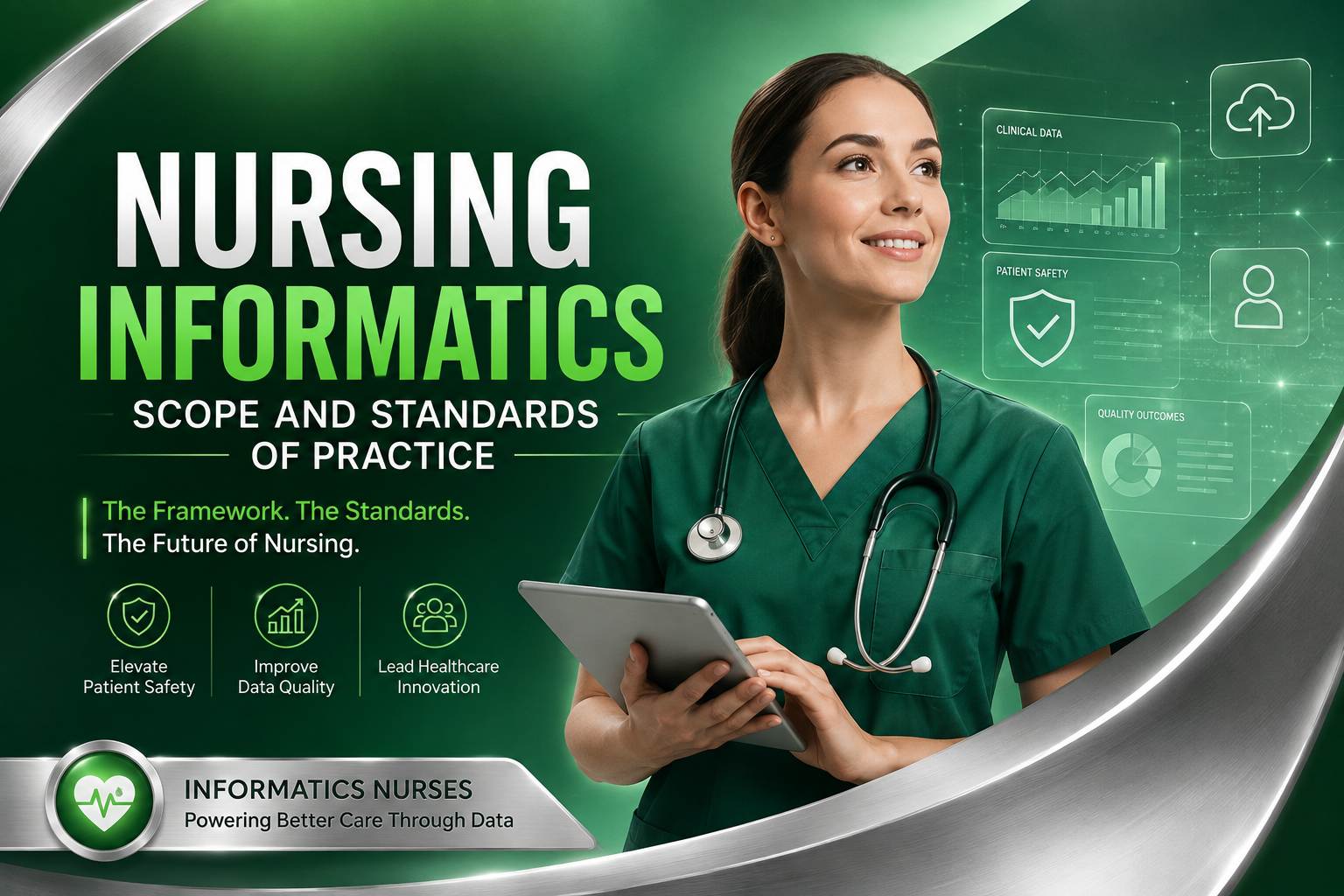
Healthcare is becoming more dependent on data, but more technology doesn’t automatically mean better patient care. A poorly designed alert can slow a nurse down. Incomplete documentation can distort clinical decisions. A system that ignores real nursing workflow can create new risks instead of solving old ones.
That reality has pushed nursing informatics far beyond basic computer skills. Nurses working in this field are expected to understand clinical practice, information systems, data quality, workflow, patient safety, ethics, and organizational change. For anyone considering an informatics nursing career, understanding the Nursing Informatics Scope and Standards of Practice isn’t just an academic exercise. It can shape how employers define the role, measure performance, and determine whether a nurse is ready to handle increasingly complex healthcare technology.
Nursing Informatics Scope And Standards Of Practice and the Modern Nursing Role
The American Nurses Association’s Nursing Informatics: Scope and Standards of Practice, 3rd Edition, published in 2022, describes the competent level of practice expected across nursing informatics and provides national standards for practice and professional performance. ANA identifies the publication as a resource for quality improvement, certification and credentialing, position descriptions, performance appraisal, education, and regulatory decision-making.
That matters because the informatics nurse isn’t simply the person who knows how to use an electronic health record. The role sits between clinical nursing and information technology. A nurse informaticist may evaluate an EHR workflow, participate in system implementation, analyze clinical data, improve documentation, support patient safety initiatives, train staff, or help determine whether a technology actually improves care.
The standards provide a professional framework for that work. The third edition includes standards covering assessment, diagnosis or problem identification, outcomes identification, planning, implementation, coordination, health teaching and health promotion, and evaluation. Its professional performance standards also address ethics, culturally congruent practice, communication, collaboration, leadership, education, evidence-based practice and research, quality of practice, professional practice evaluation, resource utilization, and environmental health.
This creates an important distinction for job seekers. Employers aren’t hiring informatics nurses merely to operate software. They’re looking for professionals who can translate clinical problems into information and technology solutions while understanding the consequences those solutions can have on nurses and patients.
A strong informatics nurse therefore needs both clinical credibility and analytical thinking. Someone who understands technology but doesn’t understand nursing workflow may design an efficient system that fails at the bedside. Likewise, a clinically experienced nurse without informatics skills may recognize a problem but struggle to convert it into a scalable technology solution.
The strongest candidates bridge both worlds.
Nursing Informatics Standards and Career Opportunities
The Nursing Informatics Scope and Standards of Practice can also be viewed through a career lens. Informatics nurses can work in hospitals, health systems, academic institutions, government agencies, technology companies, consulting organizations, and other healthcare environments where clinical information is created, analyzed, exchanged, and used.
Job titles vary considerably. Positions may include nursing informatics specialist, clinical informatics nurse, informatics analyst, clinical systems analyst, EHR implementation specialist, nursing informatics consultant, or informatics manager. The actual responsibilities depend heavily on the organization and the nurse’s level of experience.
Technology knowledge alone won’t guarantee employment. Employers often want evidence that a candidate understands clinical processes and can communicate effectively with nurses, physicians, IT teams, administrators, and other stakeholders. Data governance, workflow analysis, project management, quality improvement, change management, and evidence-based practice can all become important parts of the job.
Certification can also strengthen a professional profile, although certification requirements depend on the specific credential and role. ANA’s third edition is specifically positioned as a reference for certification and credentialing, as well as position descriptions and performance evaluations.
The employment argument is straightforward: healthcare organizations can’t afford technology projects that fail because the system doesn’t fit clinical reality. Informatics nurses help reduce that gap.
For nurses considering this path, education is another major factor. A bachelor’s degree in nursing may provide the clinical foundation required for many roles, while graduate education can become valuable for advanced informatics, leadership, analytics, or systems-focused positions. The right educational route depends on the employer, job description, certification pathway, and long-term career target.
Clinical experience can be equally important. A nurse who has spent time dealing with medication documentation, handoffs, patient records, staffing pressures, and real-world workflow often has an advantage when evaluating technology designed for bedside care. The ability to recognize what looks good on a screen but fails during a busy shift is hard to teach from a textbook.
For nurses building toward this specialty, related education can strengthen both clinical confidence and job readiness.
Willoughby Eastlake School of Practical Nursing offers another example of how practical nursing education can establish a foundation for a broader healthcare career.
Medication accuracy remains another area where technology and nursing practice intersect, making Nursing Dosage Calculation Practice Worksheets a useful educational resource for developing calculation skills.
Nursing Informatics Career Skills and Professional Standards
The future of nursing informatics will demand more than familiarity with EHR platforms. Healthcare organizations increasingly depend on data analytics, interoperability, clinical decision support, cybersecurity, artificial intelligence, remote monitoring, and digital workflows. Each technology introduces opportunities, but each also creates new professional responsibilities.
That is where the standards become particularly valuable. Informatics practice must remain connected to nursing ethics, patient safety, communication, collaboration, quality improvement, and evidence. Technology should serve clinical objectives rather than become the objective itself.
The job market reflects this shift. Organizations need nurses who can ask difficult questions: Does this system improve workflow? Is the data reliable? Does the alert create unnecessary cognitive burden? Can clinicians interpret the information correctly? Does the technology introduce an equity problem? What happens when the system fails?
Those aren’t purely technical questions. They’re nursing questions with technological consequences.
Advanced education can also open additional leadership opportunities. Nurses interested in executive, academic, research, or advanced-practice pathways may explore resources related to Doctor of Nursing Practice Salary and Doctorate Of Nursing Practice.
For prospective nursing students, preparation begins even earlier. Strong performance on nursing entrance assessments can influence access to nursing education, making a resource such as the Kaplan Nursing Entrance Exam Practice Test relevant to the broader career journey.
FAQ Nursing Informatics Scope And Standards Of Practice
- What is the current edition of Nursing Informatics: Scope and Standards of Practice?
The American Nurses Association currently identifies the third edition of Nursing Informatics: Scope and Standards of Practice as the specialty reference published in 2022. It defines competent nursing informatics practice and includes standards of practice and professional performance. Nurses should distinguish this specialty publication from ANA’s broader Nursing: Scope and Standards of Practice, which is a separate resource with its own current edition. - What skills are important for a nursing informatics job?
Important skills include clinical nursing knowledge, EHR and clinical information system experience, data analysis, workflow evaluation, communication, project management, quality improvement, evidence-based practice, and change management. Strong informatics nurses also understand how technology affects patient safety and clinical decision-making rather than focusing only on the technical operation of software. - Is nursing informatics a good career choice for registered nurses?
It can be a strong career path for RNs who enjoy technology, data, problem-solving, education, and systems improvement. Informatics roles can move nurses away from traditional bedside responsibilities while keeping them connected to healthcare. Career opportunities vary by employer, education, experience, certification, and local demand, so reviewing actual job descriptions is essential before choosing a specific education pathway.
Nursing informatics is no longer a niche corner of healthcare technology. It has become a practical bridge between nursing judgment and increasingly complex digital systems. The Nursing Informatics Scope and Standards of Practice provides a professional framework for that bridge, while the job market increasingly rewards nurses who can combine clinical experience with technology, data, communication, and systems thinking. For nurses prepared to move beyond routine documentation and help shape how healthcare actually works, informatics offers a demanding—but promising—career direction.