 Info Hot Job Find your dream job! Get for jobs, post your resume, compare salaries and find career advice and research.
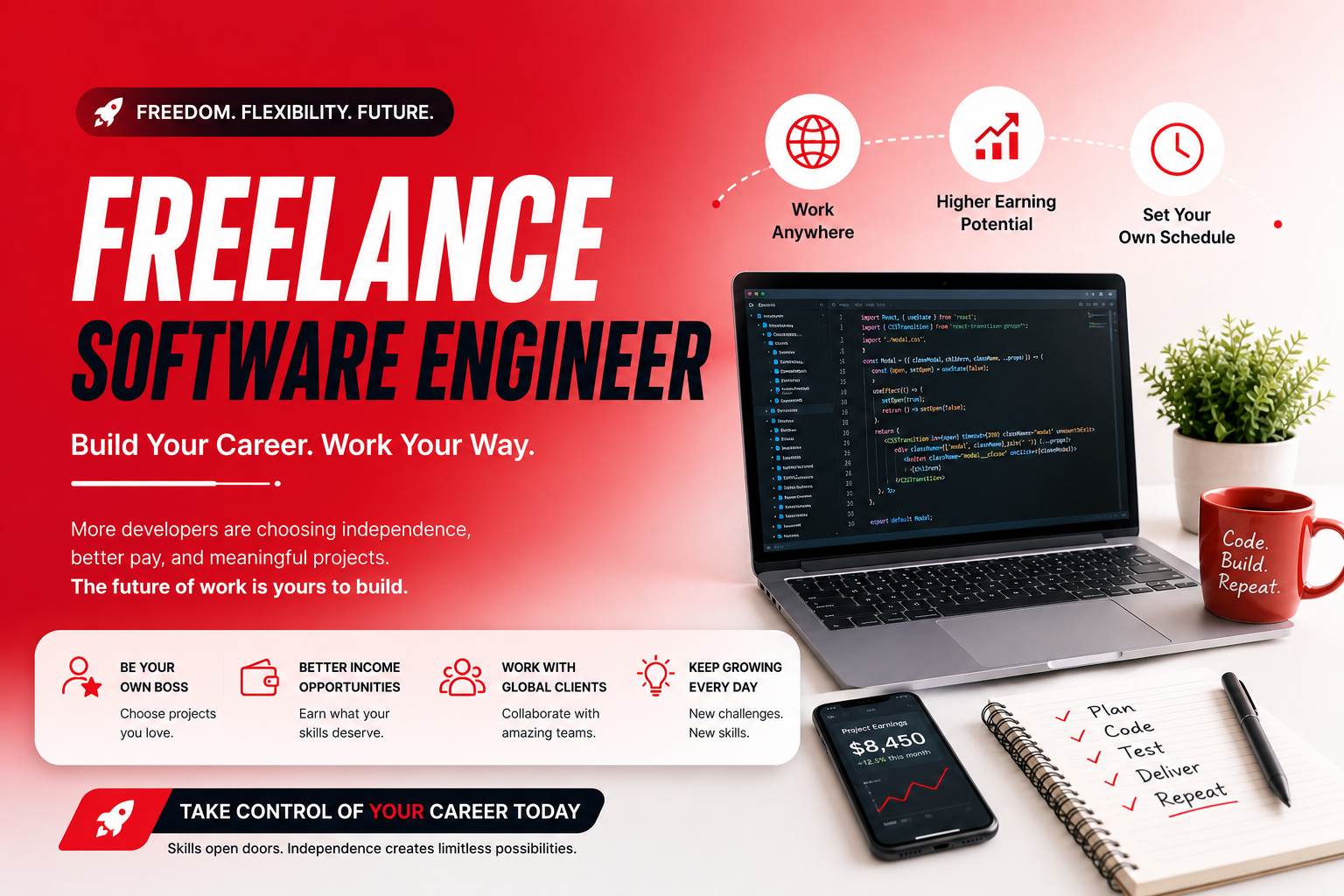
The technology industry has changed dramatically over the past decade. Remote collaboration, cloud-based development, and global hiring have opened doors that barely existed a few years ago. Today, talented developers no longer have to relocate or commit to a single employer to build a successful career. Instead, many professionals are embracing the flexibility and earning potential of becoming a Freelance Software Engineer.
Companies are also changing how they hire. Rather than expanding permanent engineering teams for every project, many organizations prefer experienced freelancers who can solve specific technical challenges quickly. That shift has created new opportunities for developers who possess strong technical skills, excellent communication, and the discipline to manage their own business.
For software engineers willing to take ownership of their careers, freelancing can offer more than flexible schedules. It can provide access to international clients, diverse projects, and professional growth that traditional employment sometimes limits.
Building a Successful Freelance Software Engineer Career
A successful Freelance Software Engineer does much more than write code. Clients expect someone who can understand business goals, recommend practical solutions, communicate clearly, and deliver reliable software on schedule.
Technical ability remains essential, but professional reputation often determines long-term success. Meeting deadlines, maintaining documentation, responding promptly, and producing maintainable code help freelancers secure repeat business and referrals.
Developers who continuously improve their expertise also become more competitive. Reading technical resources, following industry trends, and practicing modern engineering principles allow freelancers to justify higher rates while delivering greater value.
Expanding technical knowledge is always a smart investment. Developers looking to strengthen their engineering foundation can benefit from reading our guide to Software Engineering Books for career growth, which highlights learning resources valued throughout the software industry.
Skills That Clients Expect From a Freelance Software Engineer
Modern clients rarely hire based solely on programming language expertise. They want developers capable of solving business problems with scalable, secure, and maintainable software.
Strong knowledge of software architecture, APIs, cloud platforms, databases, testing strategies, and version control significantly improves a freelancer’s marketability. Equally important are communication skills. Many freelance projects involve collaborating with distributed teams across multiple time zones, making professionalism just as valuable as technical expertise.
Clients also appreciate developers who understand project planning, requirement analysis, and realistic delivery estimates. These skills reduce project risks while building trust throughout the engagement.
Reviewing opportunities like Senior Software Engineer positions at ASG Software Solutions provides useful insight into the technical capabilities employers and enterprise clients commonly seek.
Freelance Software Engineer vs Full-Time Employment
Choosing between freelancing and permanent employment depends on individual priorities. Full-time positions generally offer predictable income, structured career progression, and company-sponsored benefits. Freelancing, however, provides greater independence and the freedom to choose projects aligned with personal interests and technical goals.
Income potential can also differ considerably. Experienced freelance developers often command competitive hourly or project-based rates, particularly when working with international businesses requiring specialized expertise. However, freelancers must also manage contracts, taxes, client acquisition, and business development independently.
This level of responsibility isn’t suitable for everyone, but professionals who enjoy autonomy frequently find freelancing both financially and professionally rewarding.
Understanding how companies evaluate engineering talent can help freelancers position themselves effectively. Career examples such as Software Resources Inc. software engineering opportunities demonstrate the experience and technical standards many organizations expect from advanced developers.
Growing Long-Term as a Freelance Software Engineer
Sustainable freelance success comes from treating your career as a business rather than a series of isolated coding projects. Building long-term client relationships often generates more reliable income than constantly searching for new contracts.
Creating a strong portfolio with measurable business results also strengthens credibility. Clients respond positively to real examples showing improved performance, successful product launches, reduced operational costs, or enhanced user experiences.
Professional networking remains equally valuable. Participating in developer communities, contributing to open-source projects, attending technical conferences, and publishing technical content all increase visibility within the software industry.
Engineers considering future leadership opportunities may benefit from exploring roles like Software Engineer leadership positions at L-3 Communications, where technical excellence is combined with broader project responsibilities.
Freelancers planning to transition into consulting or engineering management should also understand the leadership expectations described in Dell Senior Software Engineer Manager careers, where strategic decision-making becomes as important as technical execution.
Continuous learning remains one of the best competitive advantages in freelancing. Developers looking to expand their technical library can explore this curated collection of professional programming resources through the Software Engineering Books Collection, featuring respected titles covering software architecture, clean code, and modern engineering practices.
FAQ Freelance Software Engineering Career
- Is becoming a Freelance Software Engineer a good career choice in 2026?
Yes. Demand for skilled freelance software engineers continues to grow as companies increasingly hire remote specialists for short-term and long-term projects. Organizations value flexibility, while experienced developers gain access to clients worldwide. Success still depends on technical ability, communication, and consistent delivery, but the overall market remains attractive for professionals with proven expertise and a strong portfolio.
- How much experience should someone have before becoming a Freelance Software Engineer?
While some developers begin freelancing early, most clients prefer engineers with practical experience solving real business problems. Having two to five years of professional software development experience often provides a stronger foundation for managing projects independently. Understanding software architecture, testing, deployment, and client communication greatly improves the likelihood of winning contracts and maintaining long-term client relationships.
- What technologies help Freelance Software Engineers stay competitive?
Successful freelancers typically build expertise in widely adopted technologies such as cloud platforms, modern JavaScript frameworks, backend development, APIs, databases, containerization, and DevOps practices. Beyond technical tools, learning software architecture, clean coding principles, and project management techniques creates additional value for clients. Combining broad engineering knowledge with one or two specialized technical areas often leads to stronger market demand and higher earning potential.
The role of a Freelance Software Engineer continues to evolve alongside the global technology industry. Businesses increasingly seek professionals who combine technical expertise with business awareness, clear communication, and dependable execution. Developers who continuously improve their skills, build strong client relationships, and maintain professional standards position themselves for sustainable success.
Freelancing isn’t simply an alternative to traditional employment—it has become a respected career path that rewards initiative, adaptability, and lifelong learning. For software engineers ready to take greater control of their future, it offers opportunities that extend far beyond writing code alone.


