 Info Hot Job Find your dream job! Get for jobs, post your resume, compare salaries and find career advice and research.
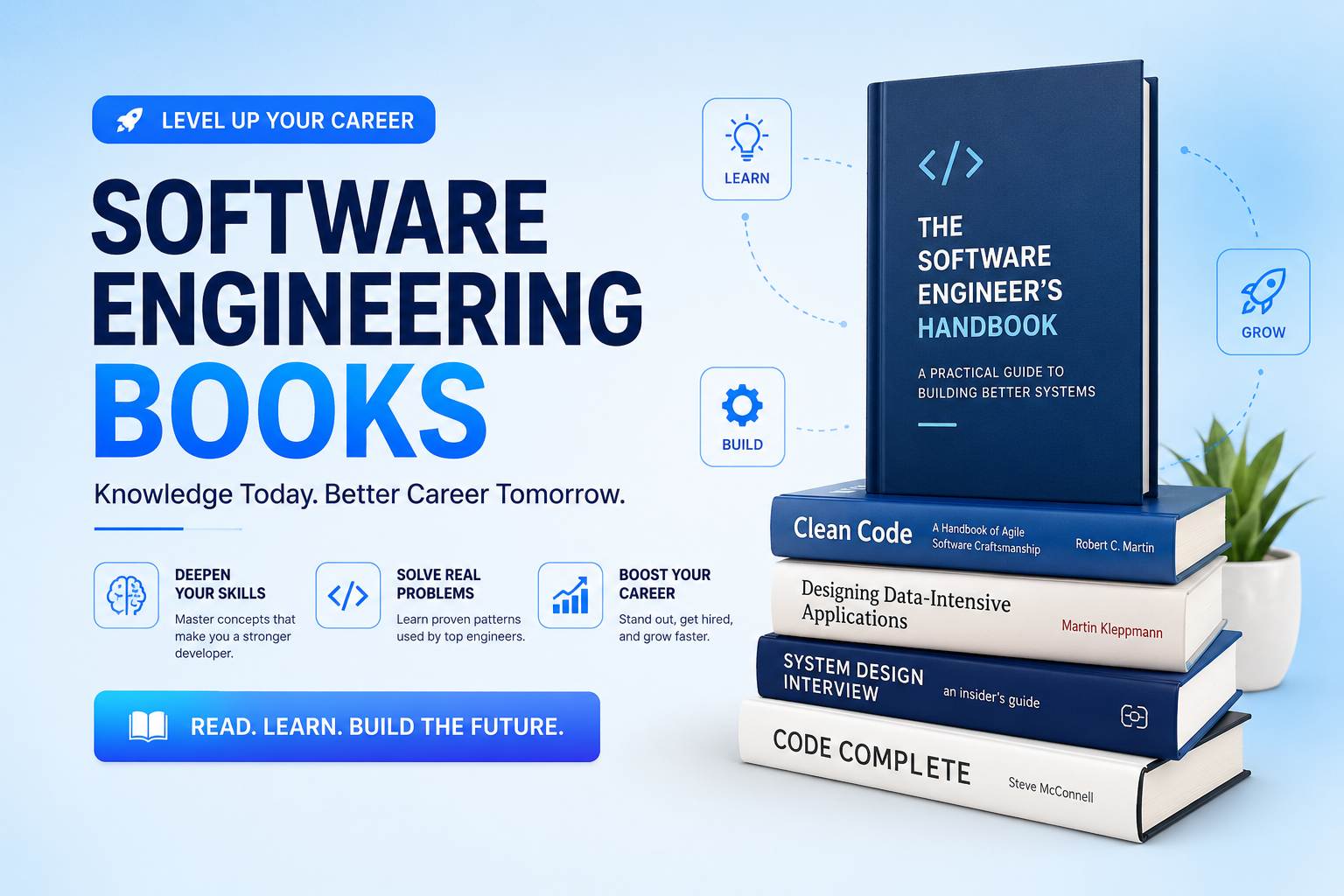
Landing a software engineering job has never been just about writing code. Employers want developers who understand architecture, design principles, collaboration, testing, and long-term software maintenance. That combination of technical depth and practical thinking often separates average candidates from professionals who consistently receive interviews and promotions.
While online courses and coding bootcamps have become increasingly popular, experienced engineers still recommend Software Engineering Books as one of the most reliable ways to build lasting knowledge. A carefully chosen book explains not only how something works but also why experienced teams follow certain practices. That context becomes invaluable when solving real-world problems instead of completing tutorial exercises.
Developers who invest time reading quality technical books often approach projects with greater confidence, communicate more effectively during interviews, and produce cleaner, maintainable code. Those advantages become especially important in a competitive hiring market where technical skills alone may not be enough.
Why Software Engineering Books Still Matter for Career Growth
Technology changes quickly, yet the fundamental principles behind excellent software rarely become obsolete. Concepts such as modular design, scalability, testing strategies, documentation, and maintainability continue to influence successful software projects regardless of programming language.
Many hiring managers notice candidates who demonstrate an understanding of engineering principles rather than simply memorizing syntax. Reading Software Engineering Books develops this broader perspective because books usually provide deeper explanations than short video tutorials or blog posts.
Learning through books also encourages patience and analytical thinking. Instead of jumping directly to copy-and-paste solutions, readers begin evaluating trade-offs between different implementation approaches. That habit translates into stronger technical interviews because candidates can explain the reasoning behind their decisions rather than merely presenting working code.
If you’re interested in exploring real software engineering career opportunities, reading about positions such as Senior Software Engineer opportunities at ASG Software Solutions offers valuable insight into the qualifications employers typically expect.
Best Software Engineering Books for Building Practical Skills
The best Software Engineering Books don’t focus exclusively on programming languages. Instead, they teach readers how professional engineering teams develop reliable software over the long term.
Books covering software architecture explain how complex systems remain organized as applications grow. Resources focused on testing demonstrate why quality assurance begins during development rather than after deployment. Meanwhile, books discussing clean code encourage developers to write software that teammates can understand months or even years later.
Developers preparing for technical interviews also benefit from reading books about algorithms, system design, and software project management. These topics frequently appear during hiring processes at established technology companies because they reveal how candidates think under realistic engineering scenarios.
Job seekers researching employer expectations may also find useful perspectives from Software Resources Inc. software engineering careers, where technical competence and professional experience play equally important roles.
Choosing Software Engineering Books Based on Your Career Goals
Not every developer needs the same reading list. Beginners often benefit from books introducing programming fundamentals, debugging techniques, and software development workflows. These resources establish a solid foundation before moving toward specialized topics.
Intermediate engineers usually gain more value from books discussing software architecture, distributed systems, performance optimization, and design patterns. At this stage, understanding how systems evolve becomes more important than simply writing functional code.
Senior engineers, meanwhile, often focus on leadership, engineering management, security, cloud infrastructure, and large-scale software design. These subjects prepare professionals for responsibilities extending beyond coding itself.
Selecting books that match current career objectives makes learning far more efficient than attempting to read every popular technical title available. Depth almost always produces better long-term results than constantly switching between unrelated topics.
Understanding how employers define senior engineering roles becomes easier after reviewing examples like software engineering positions at L-3 Communications, where technical expertise is combined with business impact.
How Software Engineering Books Improve Job Opportunities
Hiring decisions increasingly depend on problem-solving ability rather than memorized programming knowledge. Technical interviews often explore architecture discussions, debugging scenarios, collaboration experiences, and software lifecycle management.
Developers who regularly read Software Engineering Books tend to communicate these concepts more clearly because they understand both theory and practical implementation. Interviewers frequently notice candidates capable of explaining design decisions instead of offering only short answers.
Books also strengthen confidence during system design interviews. Rather than improvising unfamiliar concepts, readers can rely on proven engineering practices supported by years of industry experience.
Continuous learning also demonstrates professional maturity. Employers appreciate candidates who actively improve their knowledge without waiting for formal workplace training. Reading consistently signals curiosity, discipline, and commitment to long-term career development.
Those aiming for leadership positions should also examine expectations described in Dell Senior Software Engineer Manager career insights, where engineering knowledge extends into project leadership and organizational planning.
Professional development often includes building a personal technical library. For readers looking to expand their collection, this recommended resource offers a variety of respected titles covering software engineering concepts, programming practices, and career development: Software Engineering Books Collection.
FAQ Software Engineering Career Books
1. Are Software Engineering Books still useful when online courses are everywhere?
Absolutely. Online courses are excellent for demonstrating tools and frameworks, but Software Engineering Books usually provide deeper explanations behind engineering decisions, software architecture, maintainability, and long-term development strategies. Because books are written with a structured progression, readers often gain a stronger conceptual foundation instead of learning isolated techniques. Combining books with hands-on practice and online tutorials creates a more balanced learning path that prepares developers for real workplace challenges rather than only completing guided exercises.
2. Which Software Engineering Books should beginners read first?
Beginners should prioritize books that explain programming fundamentals, problem-solving, debugging, version control, testing basics, and clean coding principles before moving into advanced architecture or distributed systems. Building a solid understanding of these topics reduces confusion later when learning frameworks and cloud technologies. Rather than chasing the newest programming trend, new developers usually benefit more from mastering timeless engineering concepts that remain valuable regardless of language or platform.
3. Can reading Software Engineering Books increase salary potential?
Reading alone doesn’t automatically increase compensation, but it significantly improves the knowledge that employers value during interviews and performance evaluations. Developers who understand software design, maintainability, scalability, and engineering best practices often solve more complex business problems and contribute beyond writing code. That broader expertise frequently supports promotions into senior engineering positions, technical leadership roles, or specialized architecture careers where higher salaries are commonly available. Professionals interested in compensation trends can also explore this detailed guide on Senior Software Engineer salary expectations.
Apply Software engineering Jobs
The most successful software engineers rarely stop learning after getting hired. They continue expanding their understanding of software architecture, engineering principles, system design, collaboration, and emerging technologies throughout their careers. Software Engineering Books remain one of the most dependable resources for building that knowledge because they encourage thoughtful learning instead of surface-level memorization.
Whether you’re preparing for your first developer role, pursuing a senior engineering position, or planning a long-term career in technology, investing time in quality technical books can strengthen both your skills and professional confidence. Consistent learning may not produce overnight results, but it steadily builds the expertise employers recognize and reward.


