Info Hot Job Find your dream job! Get for jobs, post your resume, compare salaries and find career advice and research.
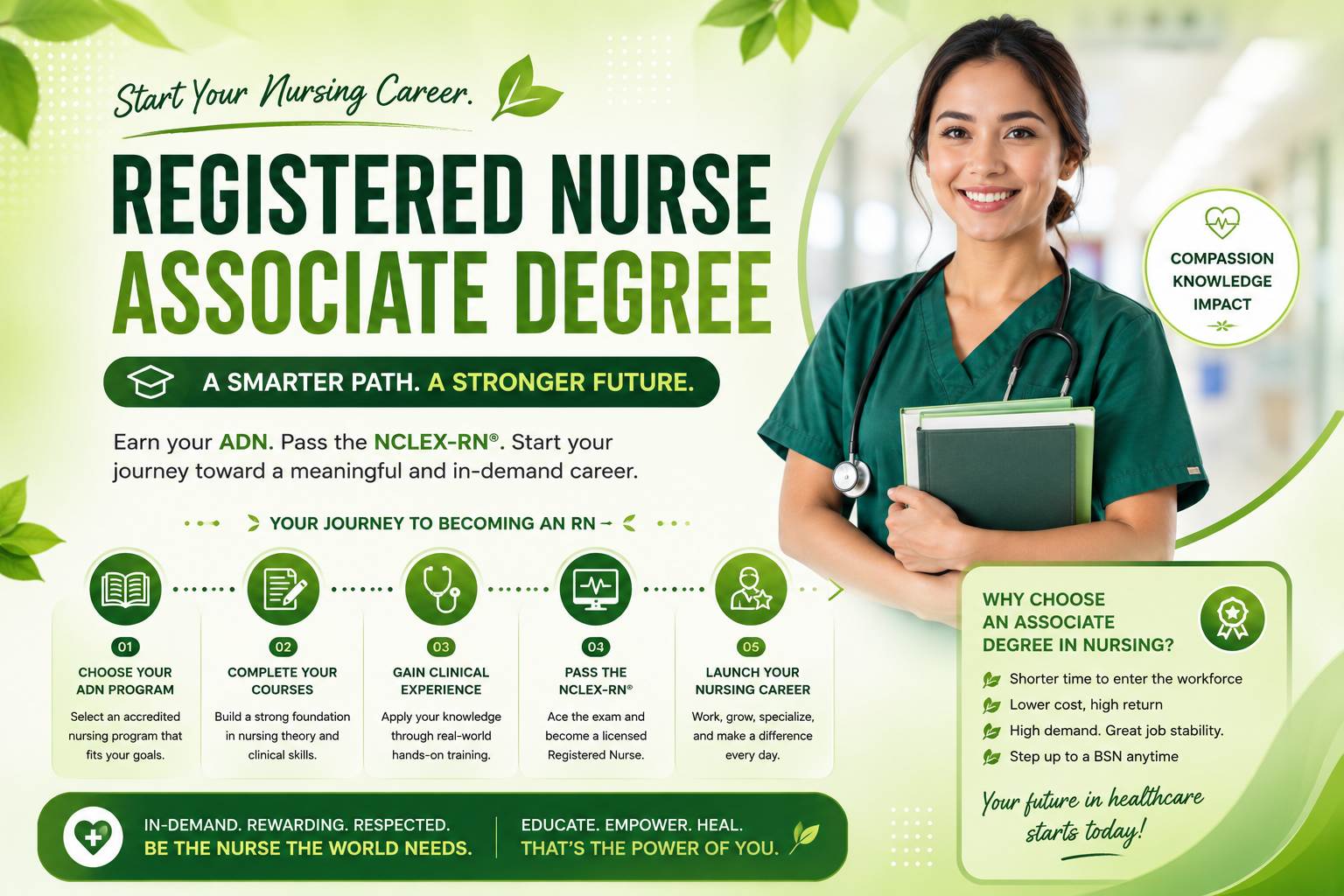
A nursing career doesn’t always require four years of college before entering the workforce. For many aspiring healthcare professionals, earning a Registered Nurse Associate Degree offers a faster, more affordable route into one of the most respected and in-demand professions. As hospitals, clinics, and healthcare organizations continue searching for qualified nurses, an Associate Degree in Nursing (ADN) remains a practical choice for individuals eager to begin making a difference while building a stable career.
The healthcare industry continues evolving, but one fact remains consistent: registered nurses are essential to patient care. Whether treating patients in emergency departments, medical-surgical units, outpatient clinics, or rehabilitation centers, RNs play a critical role in every healthcare setting. An associate degree provides the educational foundation needed to earn RN licensure while creating opportunities for future academic and professional advancement.
For students balancing financial responsibilities, family commitments, or career changes, an ADN program often delivers the ideal combination of accessibility, quality education, and career potential.
Registered Nurse Associate Degree Career Opportunities
A Registered Nurse Associate Degree qualifies graduates to sit for the NCLEX-RN licensing examination. After obtaining licensure, graduates become eligible for many of the same entry-level registered nursing positions available to Bachelor of Science in Nursing (BSN) graduates.
Healthcare employers continue hiring ADN-prepared nurses across hospitals, physician offices, long-term care facilities, rehabilitation centers, outpatient surgery centers, behavioral health organizations, home healthcare agencies, and community health clinics.
Although some large healthcare systems increasingly encourage BSN education, many continue hiring associate degree nurses while supporting continued education through tuition reimbursement or RN-to-BSN bridge programs. This allows nurses to begin earning a professional salary sooner while advancing their education at a comfortable pace.
Choosing an ADN often becomes a strategic decision rather than a limitation. Instead of delaying employment for several additional years, graduates enter the workforce, gain valuable clinical experience, and continue building qualifications while working.
Readers interested in understanding the complete educational journey can also explore this guide covering the Steps to Becoming A Registered Nurse, which explains each stage from nursing school to licensure.
Registered Nurse Associate Degree Salary and Job Outlook
One of the strongest advantages of earning a Registered Nurse Associate Degree is the ability to enter a profession with excellent employment prospects relatively quickly. Healthcare demand continues to increase because of population growth, longer life expectancy, and expanding medical services.
Registered nurses holding associate degrees generally receive competitive salaries comparable to those of other entry-level RN positions. Actual earnings depend on employer, geographic location, specialty, work schedule, certifications, and years of experience.
Many ADN-prepared nurses increase their earning potential by pursuing specialty certifications or continuing their education after entering the workforce. Employers frequently reward additional education with promotions, leadership opportunities, and expanded clinical responsibilities.
The flexibility of an ADN career path also creates opportunities in specialties such as emergency nursing, surgical services, pediatrics, intensive care, rehabilitation, oncology, and cardiovascular nursing after gaining appropriate experience.
For nurses interested in advancing into highly specialized operating room careers, becoming a Registered Nurse First Assistant represents an excellent long-term professional goal.
Registered Nurse Associate Degree vs Bachelor’s Degree
One question frequently asked by future nursing students involves choosing between an Associate Degree in Nursing and a Bachelor of Science in Nursing. Both educational pathways prepare graduates for the same NCLEX-RN licensing examination, allowing successful candidates to become registered nurses.
The primary difference lies in program length, curriculum depth, and long-term advancement opportunities. ADN programs generally require about two years, while BSN programs typically take four years.
Students seeking rapid workforce entry often prefer an associate degree. Those planning future leadership positions, graduate education, or administrative careers may eventually pursue a BSN through bridge programs after gaining professional experience.
Fortunately, today’s healthcare system supports lifelong learning. Many ADN graduates complete RN-to-BSN programs online while maintaining full-time employment, allowing them to earn both experience and advanced education simultaneously.
Individuals comparing nursing pathways may also find this discussion on Practical Nurse Vs Registered Nurse helpful when evaluating educational options and career progression.
Registered Nurse Associate Degree Skills for Long-Term Success
Success as an ADN-prepared registered nurse depends on more than academic achievement. Healthcare employers consistently value communication, adaptability, teamwork, professionalism, critical thinking, and compassion alongside technical nursing skills.
Clinical rotations provide essential hands-on experience before graduation, exposing students to diverse patient populations and healthcare environments. These experiences strengthen clinical confidence while helping future nurses identify areas of professional interest.
As careers progress, many associate degree nurses discover rewarding specialty opportunities. Pediatric care remains one of the most fulfilling options for nurses passionate about working with children and families. Exploring careers as a Pediatric Registered Nurse demonstrates how specialization can significantly expand professional opportunities.
Other nurses pursue flexible employment through travel nursing assignments, combining competitive compensation with experience across multiple healthcare organizations and clinical settings.
FAQ Registered Nurse Associate Degree
- Can I become a Registered Nurse with an Associate Degree?
Yes. Graduates of accredited Associate Degree in Nursing programs become eligible to take the NCLEX-RN licensing examination. After successfully passing the exam and meeting state licensing requirements, they can work as Registered Nurses in a wide variety of healthcare settings. Many employers also provide opportunities for ADN-prepared nurses to continue their education while gaining valuable professional experience.
- Is a Registered Nurse Associate Degree worth it in today’s healthcare market?
For many students, absolutely. An Associate Degree offers one of the fastest and most affordable pathways into professional nursing while providing access to stable employment, competitive salaries, and long-term career growth. Although some employers encourage BSN completion over time, ADN graduates remain highly valued throughout hospitals, outpatient clinics, rehabilitation centers, and numerous other healthcare environments.
- Can Associate Degree nurses advance into specialized nursing careers?
Yes. Earning an Associate Degree does not prevent nurses from specializing later in their careers. After gaining clinical experience, ADN-prepared Registered Nurses may pursue certifications and additional education leading to specialties such as pediatrics, emergency nursing, perioperative services, critical care, oncology, leadership, education, or advanced practice nursing. Continuous learning remains the key to expanding career opportunities regardless of the initial educational pathway.
Why a Registered Nurse Associate Degree Remains a Strong Career Choice
Choosing a Registered Nurse Associate Degree allows aspiring nurses to enter one of the fastest-growing healthcare professions without waiting years to begin their careers. The combination of shorter educational timelines, lower tuition costs, excellent employment opportunities, and clear advancement pathways continues to make the ADN one of the smartest investments for future healthcare professionals.
As healthcare organizations continue expanding patient services, registered nurses remain essential across virtually every medical specialty. Graduates who combine strong clinical skills with lifelong learning often enjoy rewarding careers filled with professional growth, financial stability, and meaningful patient relationships.
For individuals seeking a practical, flexible, and respected route into healthcare, earning a Registered Nurse Associate Degree continues to be an outstanding first step toward a successful nursing career.