Info Hot Job Find your dream job! Get for jobs, post your resume, compare salaries and find career advice and research.
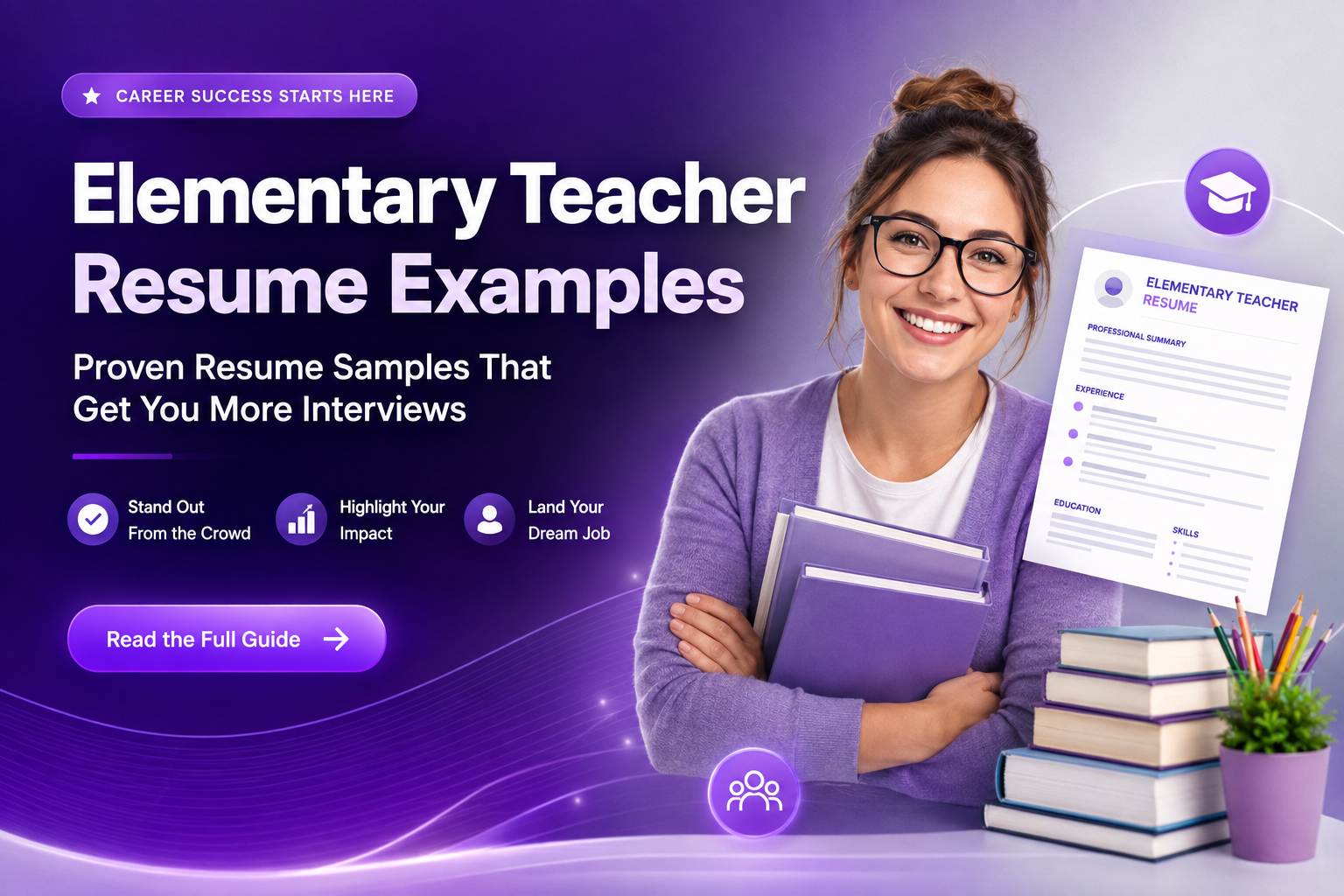
A strong resume can open doors long before you step into a classroom. School principals and hiring managers often spend only a few moments scanning each application before deciding whether to move it forward. That short window makes every word count. An outstanding resume doesn’t simply list qualifications. It demonstrates classroom impact, highlights measurable achievements, and shows why a candidate deserves an interview.
Many qualified educators lose opportunities because their resumes look outdated, generic, or packed with information that recruiters don’t value. The competition for teaching positions continues to evolve as districts seek professionals who combine instructional expertise with adaptability, technology skills, and student-centered teaching methods. That’s why reviewing Elementary Teacher Resume Examples before creating your own can significantly improve your chances.
Elementary Teacher Resume Examples That Reflect Today’s Hiring Standards
The best Elementary Teacher Resume Examples aren’t filled with buzzwords or lengthy career summaries. Instead, they communicate value quickly. School administrators want evidence that a teacher can manage classrooms effectively, improve student learning, collaborate with colleagues, and build positive relationships with families.
A modern elementary teacher resume usually begins with a concise professional summary tailored to the position. Rather than saying you’re passionate about education, demonstrate that passion through accomplishments. Mention years of experience, grade levels taught, curriculum expertise, classroom technology, or measurable student outcomes whenever possible.
Hiring managers also appreciate resumes organized with clear sections, including professional experience, education, certifications, technical skills, and relevant achievements. Clean formatting makes information easier to scan, increasing the likelihood that important qualifications won’t be overlooked.
If you’re exploring broader teaching opportunities, reading about elementary school teaching careers can also help you understand what employers currently expect from candidates.
Writing an Elementary Teacher Resume That Gets Attention
One mistake appears repeatedly across weak resumes: describing responsibilities instead of achievements. Every elementary teacher manages lessons, supervises students, and prepares classroom activities. Those duties alone don’t separate one applicant from another.
Successful Elementary Teacher Resume Examples emphasize measurable contributions. Instead of writing that you “planned classroom instruction,” explain how your instructional strategies increased reading proficiency, improved classroom engagement, or supported differentiated learning for diverse student populations.
Numbers strengthen credibility whenever they’re available. Mention the number of students taught, grade levels managed, literacy improvement percentages, attendance initiatives, or successful implementation of educational technology. Concrete evidence helps hiring managers visualize your impact.
Another overlooked advantage is customization. Sending the same resume to every district often produces disappointing results. Carefully matching keywords from the job description with your experience improves compatibility with applicant tracking systems while making your application more relevant to recruiters.
Educators interested in district-specific opportunities may benefit from reviewing positions such as the MAPSA Elementary School Teacher opportunity in Dearborn, MI, where employer expectations can vary depending on school culture and instructional priorities.
Elementary Teacher Resume Skills Employers Want to See
Teaching credentials alone rarely guarantee interviews. Today’s schools expect educators to contribute beyond daily classroom instruction. Modern Elementary Teacher Resume Examples frequently highlight communication, collaboration, instructional technology, classroom management, curriculum planning, differentiated instruction, and assessment strategies.
Digital literacy has become increasingly valuable. Experience with Google Classroom, Microsoft Teams, interactive whiteboards, student assessment platforms, and learning management systems demonstrates readiness for today’s educational environment.
Soft skills deserve equal attention. Strong classroom leadership, conflict resolution, parent communication, cultural responsiveness, and teamwork often influence hiring decisions because schools depend on collaborative teaching environments.
Certifications should also appear prominently. State teaching licenses, ESL endorsements, reading specialist credentials, STEM training, or special education experience can significantly strengthen a resume when aligned with the school’s needs.
Candidates interested in literacy-focused education careers may also find inspiration by reviewing the qualifications commonly requested for a Literacy Coach position in Richmond Public Schools.
Elementary Teacher Resume Examples for New and Experienced Educators
Experience changes how a resume should be presented. New graduates often worry about limited classroom experience, but student teaching, internships, volunteer work, tutoring, and educational projects can provide meaningful evidence of teaching ability.
Recent graduates should emphasize instructional planning, classroom observation experience, curriculum development, educational technology, and academic achievements. Professional organizations, leadership roles, and educational awards also deserve space when relevant.
Experienced educators benefit from a different strategy. Rather than listing every responsibility accumulated over many years, prioritize accomplishments that demonstrate leadership and measurable student success. Curriculum development, mentoring new teachers, committee leadership, professional development presentations, and successful educational initiatives create stronger impressions than repetitive job descriptions.
Career transitions within education require another adjustment. Teachers moving into instructional coaching, curriculum development, administration, or specialized educational roles should emphasize transferable leadership, communication, and instructional expertise while minimizing unrelated details.
Exploring positions beyond elementary classrooms, including specialized science instruction such as the Aspire Public Schools Biology and Chemistry Teacher role, can also provide insight into how different educational employers prioritize skills and experience.
Avoiding Common Resume Mistakes That Cost Interviews
Many resumes fail before reaching the interview stage because of avoidable errors. Excessive length remains one of the biggest problems. Recruiters don’t need every workshop attended or every classroom responsibility performed over an entire career. Relevant, concise information consistently performs better.
Another common issue involves vague language. Statements such as “excellent communication skills” or “hardworking professional” carry little weight without supporting evidence. Replacing generic claims with measurable accomplishments creates stronger credibility.
Formatting deserves careful attention as well. Decorative fonts, excessive colors, graphics, and crowded layouts often distract from qualifications. Simplicity improves readability for both applicant tracking systems and human recruiters.
Grammar and spelling mistakes create equally damaging impressions. A teaching resume filled with writing errors naturally raises concerns about professionalism and attention to detail. Careful proofreading remains one of the easiest ways to strengthen an application.
Educators considering broader educational careers may also explore specialized positions like the Wisconsin Museum Education Specialist opportunity, where instructional experience extends beyond traditional classrooms.
FAQ Elementary Teacher Resume Tips
1. How long should an elementary teacher resume be?
Most hiring managers prefer a one-page resume for early-career educators and a two-page resume for experienced teachers with extensive accomplishments. The goal isn’t to include every detail but to present the most relevant qualifications efficiently. Prioritize measurable classroom achievements, certifications, instructional skills, and recent teaching experience while removing outdated or unrelated information. A concise resume is easier to review, increases readability, and helps recruiters identify your strongest qualifications within seconds.
2. What should I include if I have little classroom experience?
Limited professional experience doesn’t automatically weaken a teaching resume. Student teaching placements, practicum experiences, tutoring, volunteer work, substitute teaching, educational research, and leadership activities all demonstrate valuable teaching competencies. Focus on curriculum planning, classroom management, lesson development, educational technology, and collaboration with mentor teachers. Employers understand that new graduates are building experience, so showing initiative, adaptability, and instructional readiness often matters more than years of employment.
3. How can I make my elementary teacher resume stand out from other applicants?
The strongest resumes emphasize accomplishments rather than routine responsibilities. Include measurable results whenever possible, such as improvements in student achievement, successful literacy initiatives, classroom technology integration, or leadership in school projects. Tailor your resume to each job description by naturally incorporating relevant keywords and aligning your experience with the school’s priorities. Clear formatting, concise writing, and evidence-based achievements consistently make stronger impressions than lengthy descriptions filled with generic statements.
Strong Elementary Teacher Resume Examples share one defining quality: they prove value instead of merely describing responsibilities. Schools invest in educators who demonstrate measurable classroom impact, adapt to changing instructional needs, and contribute positively to the learning community. A well-crafted resume positions your experience where it matters most, helping hiring managers recognize your potential before the interview even begins. Small improvements in clarity, relevance, and measurable achievements can make the difference between being overlooked and receiving the call every educator hopes to hear.