Info Hot Job Find your dream job! Get for jobs, post your resume, compare salaries and find career advice and research.
Nursing demands more than knowing the right answer. In a busy clinical setting, nurses must recognize key details, set priorities, and act confidently when a patient’s condition changes. That pressure starts long before the first shift on the floor, which is why effective preparation matters so much for nursing students and graduates working toward professional licensure.
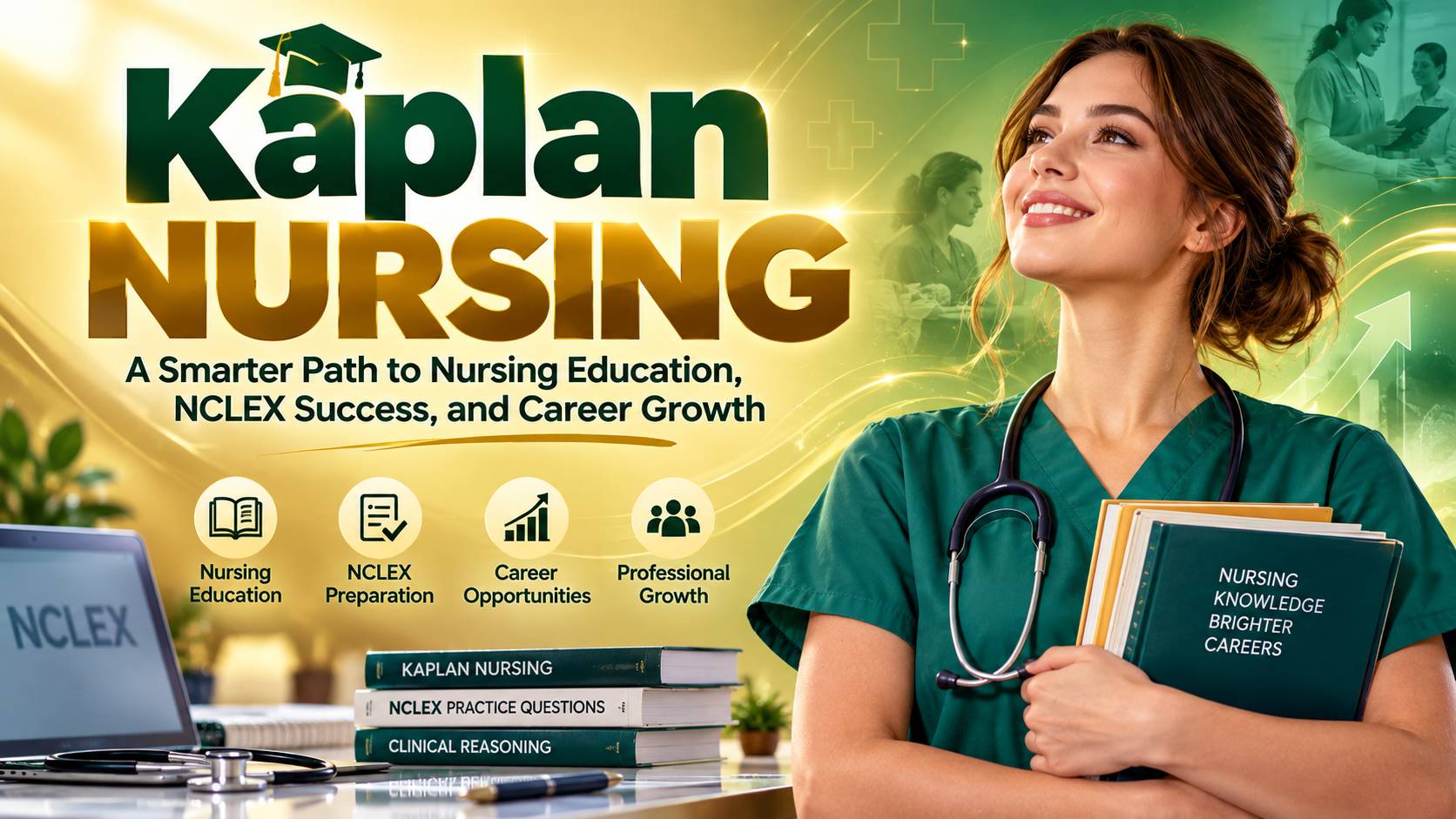
Kaplan Nursing is closely associated with nursing education, NCLEX preparation, practice questions, and clinical reasoning. For many students, the real challenge isn’t memorizing another page of notes. It’s learning how to sort through information, recognize what matters most, and choose an appropriate response when several answers may seem reasonable.
Kaplan Nursing Education and NCLEX Preparation
Nursing school rarely keeps subjects in neat little boxes. Pharmacology can affect a medical-surgical question, patient safety can change the priority of an intervention, and a seemingly simple clinical scenario may require knowledge from several areas at once. Understanding each subject separately is one thing; bringing them together under pressure is another.
This is where structured Kaplan Nursing preparation can have practical value. Rather than treating exam preparation as pure memorization, students can use practice questions to build analysis, prioritization, and clinical decision-making. Those skills are especially relevant to NCLEX preparation because candidates must apply nursing knowledge instead of simply recalling isolated facts.
Practice questions can also uncover weak areas that aren’t obvious during regular classes. A student might feel comfortable with pharmacology but repeatedly miss medication-safety questions. Someone else may know the underlying disease process yet hesitate when asked which patient needs attention first. Finding those patterns early gives candidates something concrete to work on before the licensing examination.
That preparation has value beyond test day. The ability to identify relevant information, recognize risk, and establish priorities remains part of everyday nursing practice. Passing the NCLEX opens the professional door, but those reasoning skills continue to develop once a nurse begins working with real patients.
Kaplan Nursing Career Paths and Professional Opportunities
A nursing license doesn’t lock someone into one type of job. Hospitals remain an important employer, but qualified nurses also work in insurance, specialty practices, home health, healthcare administration, education, case management, and clinical review. Career direction often changes as experience grows.
Consider nurse consulting. The role can involve reviewing medical information, interpreting clinical documentation, and applying nursing knowledge to healthcare decisions. It calls for clinical experience, but communication and analytical skills matter too. For nurses considering this type of transition, a Nurse Consultant Job Opportunity in Tampa, FL provides an example of how nursing expertise can be used outside conventional bedside care.
Remote work has opened another door for experienced professionals. Some nurses now use their clinical background to review records, assess documentation, and support appeals or utilization decisions from outside a traditional hospital environment. For someone interested in combining nursing knowledge with a remote work setting, Clinical Appeals Nurse Remote Jobs offer an example of this less traditional career path.
Specialty practice can take a different route altogether. Oncology, for instance, brings together complex treatment, patient education, symptom management, and long-term communication with patients and families. Nurses and advanced practice professionals who develop expertise in a specialty may find opportunities that require a deeper understanding of a particular field. A Nurse Practitioner or PA Opportunity in Jacksonville, FL is one example of how advanced clinical knowledge can lead to specialized work.
The common thread is the nursing foundation behind each role. Education and licensing establish the basics, while experience determines how those skills are eventually applied. A nurse who starts at the bedside may later discover that clinical review, specialty practice, education, or consulting fits better with their strengths and long-term goals.
Kaplan Nursing Skills Beyond the NCLEX
The learning doesn’t stop after the licensing examination. Once nurses enter practice, they still need to communicate clearly, document accurately, notice subtle changes in a patient’s condition, and know when a situation requires escalation.
Continuing education helps keep those skills current. Clinical guidelines change, technology develops, and professional responsibilities can expand considerably over time. A nurse moving into a new specialty may also need knowledge that wasn’t central to an earlier position. For professionals looking to maintain their credentials and expand their knowledge, Registered Nurse CEU Opportunities can be part of a broader continuing education plan.
Clinical judgment becomes especially important when nurses have to make decisions with incomplete information. Several patients may need attention at once, but the most urgent problem isn’t always the most obvious one. Recognizing deterioration, assessing risk, interpreting findings, and deciding what needs to happen first are skills that improve through education and repeated clinical experience.
Home health and hospice nursing put those abilities to practical use. Nurses may work with patients in their homes, communicate closely with families, and make assessments without the immediate resources available in a hospital. Careful observation and timely communication can therefore make a significant difference. For nurses interested in community-based practice, Registered Nurse Visiting Staff Jobs in Alabama show another way professional nursing skills can be applied.
FAQ Kaplan Nursing Resources
1. What is Kaplan Nursing used for?
Kaplan Nursing resources are commonly associated with nursing education and preparation for professional nursing examinations, particularly the NCLEX. They can help students review core nursing concepts, work through practice questions, develop clinical reasoning, identify knowledge gaps, and become more comfortable with the type of prioritization and decision-making required during a high-stakes nursing examination.
2. Is Kaplan Nursing useful for NCLEX preparation?
It can be useful for students who want a structured approach to NCLEX preparation. Practice questions and rationales give candidates an opportunity to examine how they reached an answer and where their reasoning needs improvement. The most effective preparation should still be supported by a solid nursing-school foundation, regular study, and targeted review of subjects where performance remains weak.
3. Can Kaplan Nursing preparation help with a nursing career?
Kaplan Nursing preparation is primarily connected with nursing education and examination readiness, but the reasoning skills involved can remain useful after licensure. Nurses regularly need to prioritize care, recognize potential risks, interpret clinical information, and make decisions based on patient needs. Those abilities can support careers in bedside nursing, specialty practice, case management, consulting, education, and clinical review.
A nursing career can change direction several times as experience builds. The preparation that helps a student approach the NCLEX with confidence can also become part of a broader professional foundation. Kaplan Nursing can support that early stage through structured learning and examination preparation, while clinical experience, continuing education, and specialization shape what comes next.