Info Hot Job Find your dream job! Get for jobs, post your resume, compare salaries and find career advice and research.
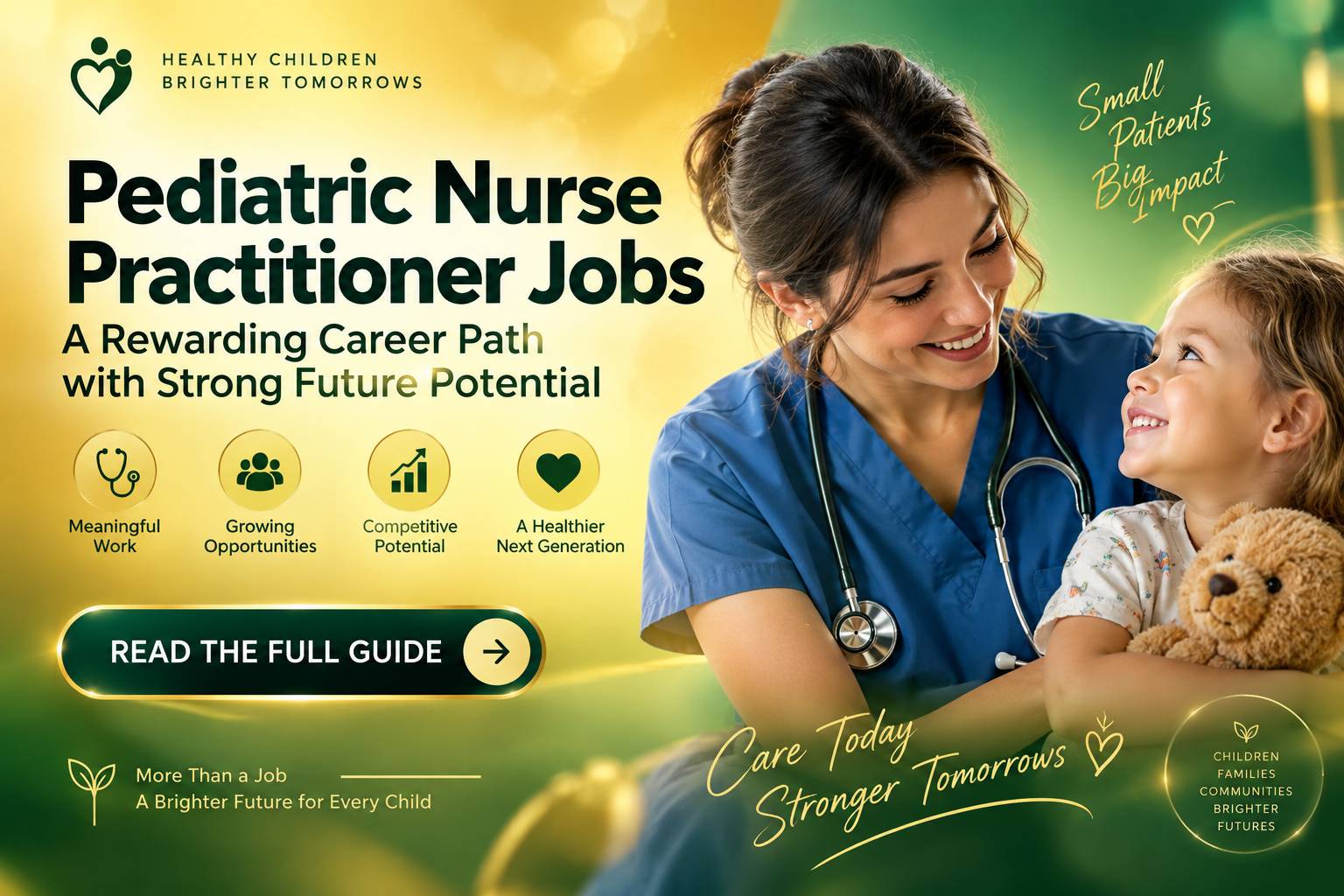
Pediatric Nurse Practitioner Jobs appeal to registered nurses who want to work at a higher clinical level while dedicating their careers to children and adolescents. The opportunity is easy to understand: young patients need specialized care, families need reliable guidance, and healthcare organizations need qualified professionals who can handle both responsibilities with confidence.
The work carries real weight. A pediatric nurse practitioner may evaluate symptoms, manage ongoing conditions, provide preventive care, and make clinical decisions within the scope of practice. Parents and caregivers are part of the equation, too. Explaining a concern clearly can matter just as much as recognizing it in the first place.
That creates a demanding but worthwhile career path. Advanced education takes commitment, and the transition from registered nurse to advanced practice isn’t something that happens overnight. Yet for nurses who want deeper clinical involvement and a long-term specialty, the return can extend far beyond a change in title.
Pediatric Nurse Practitioner Jobs and the Need for Specialized Pediatric Care
Pediatric Nurse Practitioner Jobs exist within a healthcare environment where children require care tailored to their age, development, and individual health needs. A toddler who can’t describe a symptom presents a different clinical challenge from an adult patient. Adolescents bring another set of physical and emotional considerations. Good pediatric care requires professionals who can adapt rather than rely on a one-size-fits-all approach.
Families add another layer to the work. Parents often arrive with questions, concerns, and expectations that don’t fit neatly into a standard appointment. The ability to listen, explain, and establish trust can shape how well a care plan is understood and followed. Clinical expertise opens the door, but communication often determines what happens next.
This is one reason specialized pediatric professionals remain valuable across different care settings. Clinics need continuity. Hospitals need practitioners who can contribute to complex care. Community-based services need providers who understand both medical needs and the realities facing families. The job may look different from one workplace to another, but the central responsibility remains the same: delivering sound care to younger patients.
For nurses beginning their journey in direct patient care, roles connected to nursing assistant jobs can offer a useful view of the healthcare environment and the day-to-day importance of patient observation, communication, and hands-on support. Those responsibilities differ significantly from advanced practice, yet they illustrate how nursing careers can develop through increasing levels of education and clinical responsibility.
The path upward requires more than ambition. Employers expect pediatric nurse practitioners to arrive prepared for the complexity of the role. Education and credentials matter, but so does the ability to remain composed when the clinical picture isn’t immediately clear.
Pediatric Nurse Practitioner Career Requirements and Professional Preparation
Most Pediatric Nurse Practitioner Jobs require candidates to build substantially on their registered nursing background. Graduate-level advanced practice education, appropriate licensure, relevant clinical preparation, and professional certification are typically part of the process. Requirements can differ by jurisdiction and employer, so candidates need to pay attention to the standards that apply where they plan to practice.
Getting there takes work. Graduate programs demand sustained effort, and many nurses must balance study with employment and other responsibilities. There’s also a financial side that shouldn’t be ignored. Tuition, reduced work hours, and the time required to complete advanced training all deserve careful consideration before making the commitment.
The payoff, however, is a broader clinical skill set. Preparation for pediatric advanced practice develops knowledge that goes beyond routine nursing tasks. Assessment, clinical reasoning, pharmacology, treatment planning, and patient education become central to the role. Knowing the theory is only part of the job; applying it when a child presents with unclear or changing symptoms is where professional judgment matters.
Previous pediatric experience can give candidates a stronger foundation. It exposes nurses to the realities of communicating with children at different developmental stages and working with families during stressful moments. Experience doesn’t remove the need for formal advanced training, but it can make that training easier to connect with real clinical situations.
Healthcare work has changed in other ways as well. Patient records, clinical data, and digital systems now influence decisions and workflows throughout the profession. Nurses drawn to that side of healthcare can compare this career path with nursing informatics jobs, where nursing expertise is applied more directly to information systems, data, and healthcare technology.
Strong credentials may get an applicant through the first stage of hiring, but employers still need evidence of practical readiness. They look for people who can think clearly, communicate with a multidisciplinary team, and respond professionally when circumstances become difficult.
Pediatric Nurse Practitioner Employment Opportunities and Career Challenges
Pediatric Nurse Practitioner Jobs can open doors to several types of workplaces, each with its own pace and expectations. Primary care may center on preventive services, developmental monitoring, wellness visits, and long-term relationships with patients. Hospital or specialty settings can bring more acute cases, complicated diagnoses, and faster clinical decisions.
That range gives the profession considerable depth. Some practitioners prefer following patients over time and getting to know the families they serve. Others are more comfortable in environments where each shift brings different clinical problems. Finding the right setting matters because job satisfaction depends on more than qualifications or salary.
Greater responsibility also changes the pressure of the work. Pediatric patients may struggle to explain what hurts or when symptoms began. Important details can come from parents, caregivers, observations, medical records, and the practitioner’s own assessment. Pulling that information together requires concentration and sound judgment.
The emotional side deserves equal attention. When a child is seriously ill, the practitioner is often working with an anxious family as well as a patient. Difficult conversations and urgent decisions are part of the territory. Professional resilience isn’t about becoming detached; it’s about staying effective when the situation is hard.
Those comparing nursing career levels may find certified nursing assistant jobs helpful for understanding how education, scope of practice, and daily responsibilities change across patient-care roles. The comparison also makes the demands of an advanced pediatric position easier to evaluate in practical terms.
Pay naturally enters the conversation. Still, salary figures alone rarely tell the whole story. Location, experience, specialty, employer, workload, and working hours can all affect compensation. A position that looks attractive on paper may carry responsibilities or scheduling demands that change its overall value.
For nurses weighing financial potential against professional demands, highest-paying nursing jobs provide a broader point of comparison across specialized and advanced nursing careers. Looking beyond a single salary figure can lead to a more realistic assessment of where pediatric advanced practice fits among other opportunities.
Not everyone wants the same relationship with work and location. Some nurses want to establish themselves in one community and remain with a particular patient population for years. Others value the chance to move, work in different facilities, and experience new healthcare environments. For the second group, becoming a travel nurse offers a useful comparison with a career built around pediatric specialization and longer-term clinical focus.
A targeted job search usually works better than casting a wide net. Before applying, candidates should look closely at the patient population, expected duties, schedule, workplace structure, and opportunities to continue developing professionally. A strong match benefits both the employer and the practitioner, and it can make the difference between simply landing a job and building a career that remains sustainable.
Pediatric advanced practice asks a lot from the people who choose it. In return, it offers the chance to develop specialized expertise, participate more directly in patient care decisions, and make a lasting difference during important stages of a child’s life. For the right nurse, that’s a serious reason to keep moving forward.
FAQ Pediatric Nurse Practitioner Jobs
- What qualifications are required for Pediatric Nurse Practitioner Jobs?
Pediatric Nurse Practitioner Jobs generally require an established nursing foundation followed by advanced practice education, graduate-level preparation, and the appropriate professional credentials for pediatric practice. Exact rules vary by jurisdiction and employer, so candidates should confirm current licensing, certification, and clinical requirements before pursuing a specific position or educational pathway.
- Are Pediatric Nurse Practitioner Jobs competitive?
Competition varies by location, employer, specialty, and the number of available openings. Well-established healthcare organizations and positions with attractive schedules may receive many applications. Relevant pediatric experience, strong clinical preparation, current credentials, and the ability to clearly demonstrate professional readiness can help applicants stand out in a competitive hiring process.
- Is becoming a pediatric nurse practitioner worth the additional education?
The answer depends on a nurse’s long-term goals, financial situation, and interest in advanced pediatric care. The educational path requires substantial time and commitment, but it can provide access to broader clinical responsibilities and specialized career opportunities. Nurses should weigh the investment against the type of work, professional autonomy, and career direction they want over the years ahead.
Pediatric Nurse Practitioner Jobs offer a demanding yet promising direction for nurses who want to deepen their expertise and play a larger role in children’s healthcare. Advanced preparation and greater accountability are part of the deal, but for professionals who value specialized practice, clinical growth, and meaningful patient relationships, the career can offer a strong foundation for long-term professional satisfaction.