Info Hot Job Find your dream job! Get for jobs, post your resume, compare salaries and find career advice and research.
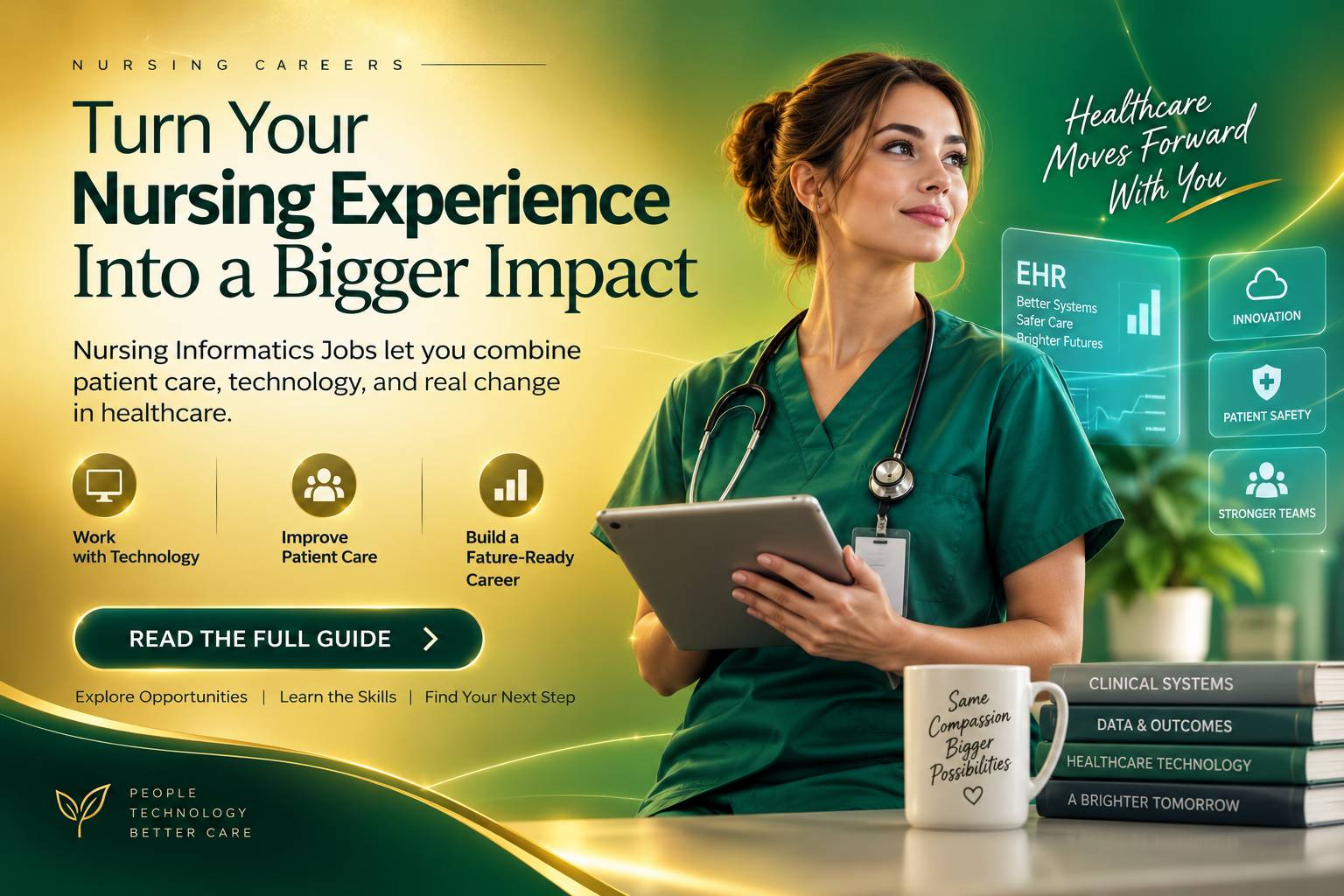
A nurse’s experience doesn’t stop being useful when the job moves beyond the bedside. In many cases, it becomes the missing piece. Nursing Informatics Jobs put healthcare professionals in a position to improve the digital tools that shape patient care, from electronic records and documentation systems to communication platforms used throughout a busy day.
Healthcare has adopted more technology, but extra software doesn’t automatically make work easier. A poorly planned system can create duplicate tasks, add unnecessary clicks, and leave important information harder to find. Nurses who’ve worked through a hectic shift know where those frustrations show up. That firsthand perspective is one reason informatics has become such a valuable career direction.
Nursing Informatics Jobs in the Modern Healthcare Workplace
Nursing Informatics Jobs bring nursing practice and information systems together. Depending on the employer, the work might include improving electronic health record use, testing new platforms, reviewing patient-care data, supporting software rollouts, or helping staff adapt when a system changes.
The difference lies in practical experience. A feature can look impressive during a presentation and still get in the way when nurses are juggling documentation, patient needs, and communication with several departments. Someone who understands that environment can catch issues that aren’t obvious from technical specifications alone.
Informatics professionals also spend time connecting people with different priorities. A nurse may describe a problem at the bedside, an IT team may focus on system performance, and management may be concerned with cost or implementation deadlines. The informatics nurse helps turn those separate concerns into something the organization can actually work on.
Career decisions rarely come down to one factor. Pay, advancement, workload, and the kind of work someone wants to do all matter. Reviewing highest-paying nursing jobs can help nurses place informatics alongside other specialties when weighing long-term earning potential and professional growth.
Nursing Informatics Jobs: Opportunities, Requirements, and Career Fit
Employers don’t always use the same job title. A position may be advertised as a nursing informatics specialist, clinical informatics nurse, informatics analyst, or clinical systems specialist. The responsibilities differ, yet the central need remains similar: healthcare organizations want professionals who understand patient care and can work effectively with the systems supporting it.
A nursing education and clinical background are often valuable starting points. Familiarity with electronic health records, process improvement, healthcare information systems, implementation projects, and data can strengthen a candidate’s profile. Senior or highly specialized positions may require further education or advanced informatics training.
Real-world nursing experience adds something that can’t be learned from software manuals alone. A nurse knows how a small documentation delay can affect the next step in care. They see where information gets lost, where repeated tasks eat into a shift, and where a process sounds good in theory but falls apart under pressure. Informatics gives that knowledge a wider application.
Experience in other patient-care roles can also provide an early understanding of how healthcare teams operate. Those considering different entry points into the field can explore certified nursing assistant jobs to see how foundational care roles contribute to daily operations and coordinated patient support.
The move isn’t right for everyone. Informatics can involve lengthy meetings, system testing, training sessions, project deadlines, and careful attention to detail that don’t always have an immediate payoff. Nurses who thrive on constant face-to-face patient care may prefer to remain closer to the bedside. Others may enjoy tracing the source of a recurring issue until they find what needs to change.
Skills That Help Nurses Succeed in Informatics Careers
Programming knowledge can be useful in certain settings, but Nursing Informatics Jobs aren’t built around writing code. The core challenge is understanding what happens when a digital tool meets a real healthcare environment. A platform may collect accurate information and still frustrate staff if it takes too long to use or adds steps without a clear benefit.
Good problem-solving starts with looking past the surface. If several nurses struggle with the same task, the issue may not be individual performance. The screen layout could be confusing. The process might contain redundant steps. Training may not match the actual situation staff face during a shift. Finding the real source of the problem is a major part of the job.
Communication carries equal weight. An informatics nurse might discuss a bedside concern with a technical team, then explain the same issue in different terms to managers, vendors, or frontline staff. Keeping the meaning intact while adjusting the conversation to the audience takes judgment.
Some nurses want their careers to involve changing locations and short-term assignments rather than long-term system projects. Becoming a travel nurse offers a useful contrast because it places greater emphasis on mobility and adapting to new clinical settings, while informatics tends to center on improving the tools and processes within healthcare organizations.
Why Nursing Informatics Jobs Are Worth Considering
Digital systems are now woven into everyday healthcare operations. Electronic records, communication platforms, remote-care technology, and data-based processes influence how information moves and how teams coordinate care. When these systems create friction, the impact reaches the people using them first.
That gives informatics nurses a meaningful role. Their work may influence a department-wide documentation process, improve how information is shared, or help a hospital introduce a new clinical platform with fewer disruptions. The job usually looks different from bedside nursing, but the decisions made in informatics can still affect patient care in practical ways.
Work arrangements also shape career choices. Nurses interested in taking temporary assignments in different places may compare informatics with opportunities available through travel nursing companies. It is a different professional experience, with changing workplaces and assignments rather than sustained involvement in one organization’s information systems.
The route to those assignments can involve another layer of decisions. Understanding how travel nursing agencies manage placement, contracts, and assignment support may help nurses decide whether that style of work suits them better than a role focused on technology, process improvement, and organizational systems.
No nursing specialty is automatically the right choice simply because it pays more or has strong demand. The better fit depends on what a nurse enjoys doing every day. People who like investigating problems, working with digital systems, and improving how care teams get things done may find informatics more satisfying than a career built around a single traditional nursing setting.
FAQ Nursing Informatics Jobs and Careers
- What qualifications are commonly required for Nursing Informatics Jobs?
Requirements vary by employer, but a nursing education and clinical experience are commonly important. Candidates may become more competitive with experience using electronic health records, participating in implementation projects, improving documentation processes, or training healthcare staff. Some employers also prefer formal education or additional training in nursing informatics, healthcare information systems, or data-related fields, particularly when the role carries broader technical or leadership responsibilities.
- Can nurses work in Nursing Informatics Jobs without programming experience?
Yes. Many positions don’t require nurses to write software or have professional programming skills. Informatics nurses often work with developers, IT specialists, and system vendors while contributing the clinical knowledge those teams need. Understanding healthcare workflows, recognizing usability problems, communicating system needs clearly, and helping staff adapt to technology can be far more relevant to many roles than knowing how to code.
- Do Nursing Informatics Jobs offer good long-term career opportunities?
Opportunities can remain promising as healthcare organizations continue relying on electronic records, digital communication, remote-care tools, and data to manage increasingly complex operations. Nurses who combine solid clinical experience with informatics knowledge can pursue work involving system support, implementation, optimization, education, and process improvement. Career growth still depends on individual qualifications, employer needs, available roles, and the ability to keep current with changes in healthcare technology.
Nursing Informatics Jobs offer nurses another way to build on what they already know while taking on problems that technology alone can’t solve. For those who enjoy practical analysis, digital systems, and finding better ways for care teams to work, informatics can turn everyday clinical experience into expertise with long-term value.