 Info Hot Job Find your dream job! Get for jobs, post your resume, compare salaries and find career advice and research.
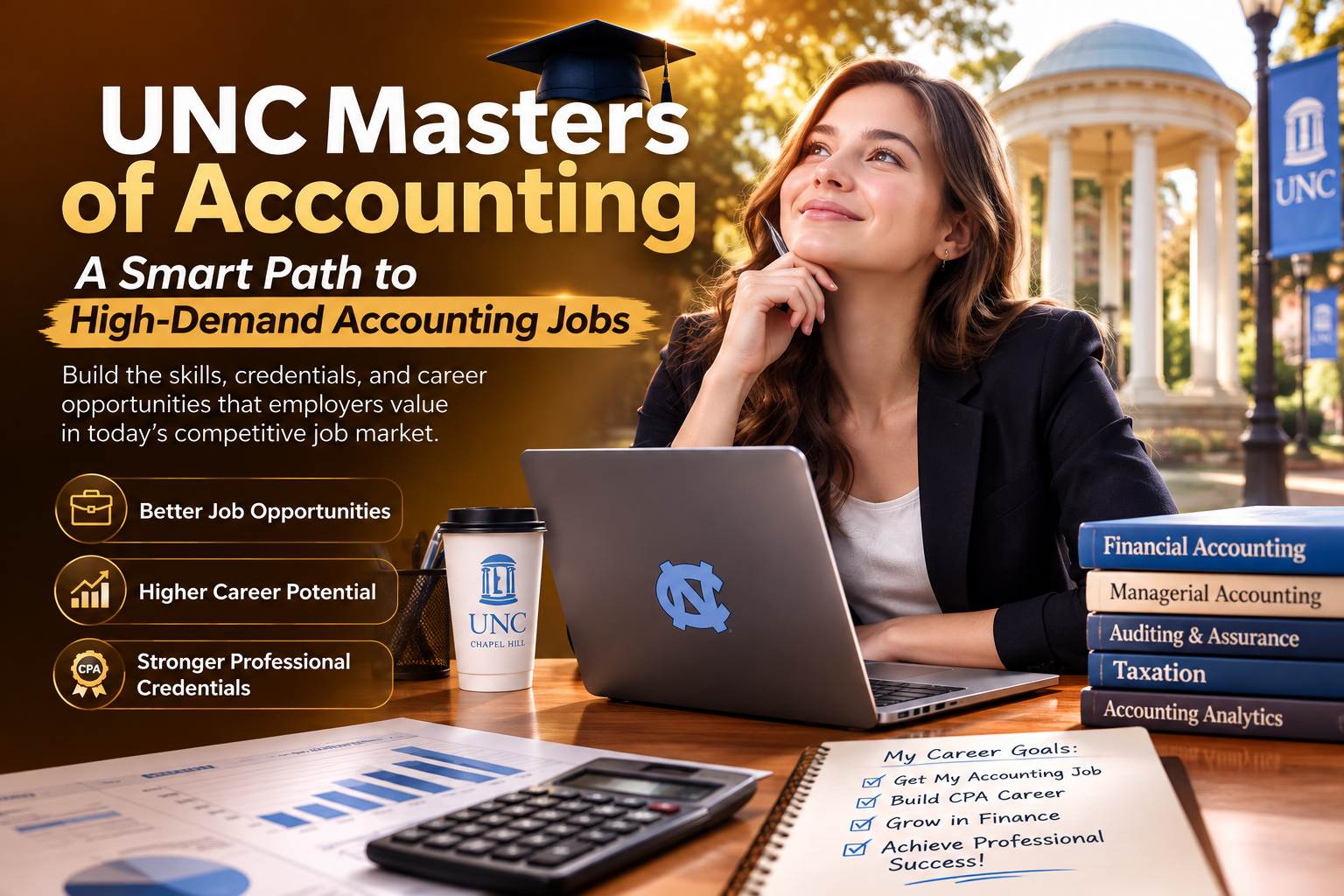
A graduate accounting degree can open doors, but the degree itself isn’t the finish line. Employers still want people who can interpret financial information, solve business problems, communicate clearly, and step into demanding accounting roles without needing constant supervision. That’s where the UNC Masters Of Accounting can become a serious career advantage.
The University of North Carolina at Chapel Hill’s Master of Accounting program is designed around professional accounting careers, with pathways that connect graduate education to public accounting, corporate finance, tax, audit, and other business functions. The program has also earned STEM designation, reflecting the increasingly analytical and technology-driven nature of modern accounting.
UNC Masters Of Accounting and Career Opportunities
The strongest argument for pursuing a graduate accounting degree isn’t simply earning another credential. It’s about becoming more competitive when employers are comparing candidates for jobs where technical accounting knowledge matters.
Accounting graduates can pursue roles such as staff accountant, audit associate, tax associate, financial reporting analyst, internal auditor, corporate accountant, and eventually controller or accounting manager. The exact career path depends on experience, professional credentials, technical ability, and the type of employer.
The UNC Masters Of Accounting can be particularly relevant for students who want to move into accounting from another academic background. Graduate accounting programs can provide structured exposure to areas that employers expect new professionals to understand, including financial reporting, taxation, auditing, analytics, and professional judgment.
That matters because accounting jobs have changed. Employers aren’t looking only for someone who can enter numbers into a spreadsheet. They need professionals who can investigate unusual transactions, understand business risks, work with data, communicate findings, and recognize when financial information doesn’t tell the whole story.
UNC’s own career outcomes and recruiting connections with major accounting firms also reflect a key employer expectation: graduates must be job-ready, not just degree-ready. In practice, this means candidates are expected to demonstrate both technical accounting knowledge and the ability to apply it in real business environments.
UNC Masters Of Accounting Jobs and Skills Employers Want
A master’s degree may help a candidate get noticed, but it won’t replace practical skills. The accounting job market rewards candidates who can connect classroom knowledge with real business situations.
For example, an entry-level accountant may be asked to reconcile accounts, investigate discrepancies, prepare financial statements, or support an audit. A tax professional may need to research regulations and explain their impact to a client. An internal auditor may examine controls and identify weaknesses that could expose a company to financial or operational risk.
Those responsibilities require more than accounting theory.
The UNC Masters Of Accounting program emphasizes problem-solving, numerical ability, leadership, communication, and the ability to break complicated business problems into manageable pieces. These are not optional skills—they are core employer expectations in public accounting firms, corporate finance departments, and advisory roles.
That combination can make a difference during recruiting. A candidate who understands accounting but can’t explain a finding clearly may struggle in an interview. Likewise, someone with excellent communication skills but weak technical accounting knowledge may not survive the demands of the job.
For students targeting Big Four firms, regional accounting firms, corporations, or financial organizations, the goal should be to leave graduate school with evidence of both technical competence and professional readiness. Employers consistently evaluate whether candidates can handle real client work, tight deadlines, and high-stakes financial reporting environments.
Is UNC Masters Of Accounting Worth It for a Career in Accounting?
The answer depends on the student’s career objective, existing education, and expected return on investment.
For someone who already has substantial accounting education and professional experience, another degree may not automatically create a dramatic career change. For a student transitioning from a non-accounting background, however, a specialized master’s program can provide a much more direct route into the profession.
The CPA pathway is another important consideration. CPA eligibility depends on state-specific education and licensing requirements, so students should verify current rules with the relevant state board rather than assuming that every master’s program automatically satisfies every requirement.
Career outcomes also depend heavily on recruiting strategy. Students who wait until graduation to start thinking about employment may give themselves an unnecessary disadvantage. Internships, networking, career events, interview preparation, technical skills, and professional certifications all directly influence how employers evaluate candidates for accounting roles.
For practical career research, understanding the broader accounting market is useful. Opportunities can range from traditional accounting positions to specialized finance and receivables roles.
For example, professionals interested in financial services can explore finance and accounting jobs at Ledgent. This helps candidates understand real employer expectations, including the types of accounting skills, software knowledge, and experience levels commonly required in the job market.
Students strengthening their technical accounting knowledge may also benefit from reviewing accounting books and resources. These materials support exam preparation, improve conceptual understanding, and help students stay aligned with what employers expect in financial reporting, auditing, and taxation roles.
Another important area in accounting careers is working capital management. Understanding concepts like factoring accounts receivable helps candidates see how companies manage liquidity and cash flow—knowledge that is especially relevant for corporate accounting, credit analysis, and financial planning roles.
For a real-world example of employer expectations, candidates can examine this Senior Accountant job in Holtville, California. Reviewing actual job postings helps students understand required qualifications, daily responsibilities, and the level of experience expected in accounting careers.
FAQ UNC Masters Of Accounting Career Questions
FAQ UNC Masters Of Accounting Requirements
1. Do you need an accounting bachelor’s degree for the UNC Masters Of Accounting?
Not necessarily. The program has historically provided pathways for students coming from non-accounting backgrounds, although specific prerequisites and admission requirements can change by intake. Students should review the current UNC admissions requirements before applying, especially if their undergraduate degree isn’t in accounting or business. A transition into accounting can be realistic, but applicants need to understand the coursework expected before or during the program.
FAQ UNC Masters Of Accounting Jobs
2. What jobs can you get after completing the UNC Masters Of Accounting?
A UNC Master of Accounting graduate can pursue several professional accounting careers, including audit, tax, corporate accounting, financial reporting, internal audit, and related finance positions. The degree doesn’t guarantee a particular job, though. Recruiting success depends on academic performance, relevant experience, interviewing, networking, technical skills, and whether the candidate meets professional licensing requirements for the intended career path. Employers ultimately look for candidates who can perform in real accounting roles from day one.
FAQ UNC Masters Of Accounting Online Program
3. Is an online UNC Masters Of Accounting useful for getting an accounting job?
An online graduate accounting degree can be useful when it provides rigorous accounting education and allows students to build the same professional capabilities employers expect from graduate candidates. UNC has offered online Master of Accounting study options, and the program has promoted flexible scheduling for working professionals and career changers. However, employers still evaluate candidates based on skills, experience, and readiness for accounting work—not delivery format alone.
The UNC Masters Of Accounting can be a strong launch point for an accounting career, particularly for candidates who need specialized graduate training or want to transition into the profession. The degree provides the academic foundation, but the real career advantage comes from combining that education with technical ability, professional credentials, experience, and a disciplined approach to job searching. In a competitive accounting market, employers consistently favor candidates who can demonstrate both knowledge and readiness to perform in real accounting roles from the start.


