 Info Hot Job Find your dream job! Get for jobs, post your resume, compare salaries and find career advice and research.
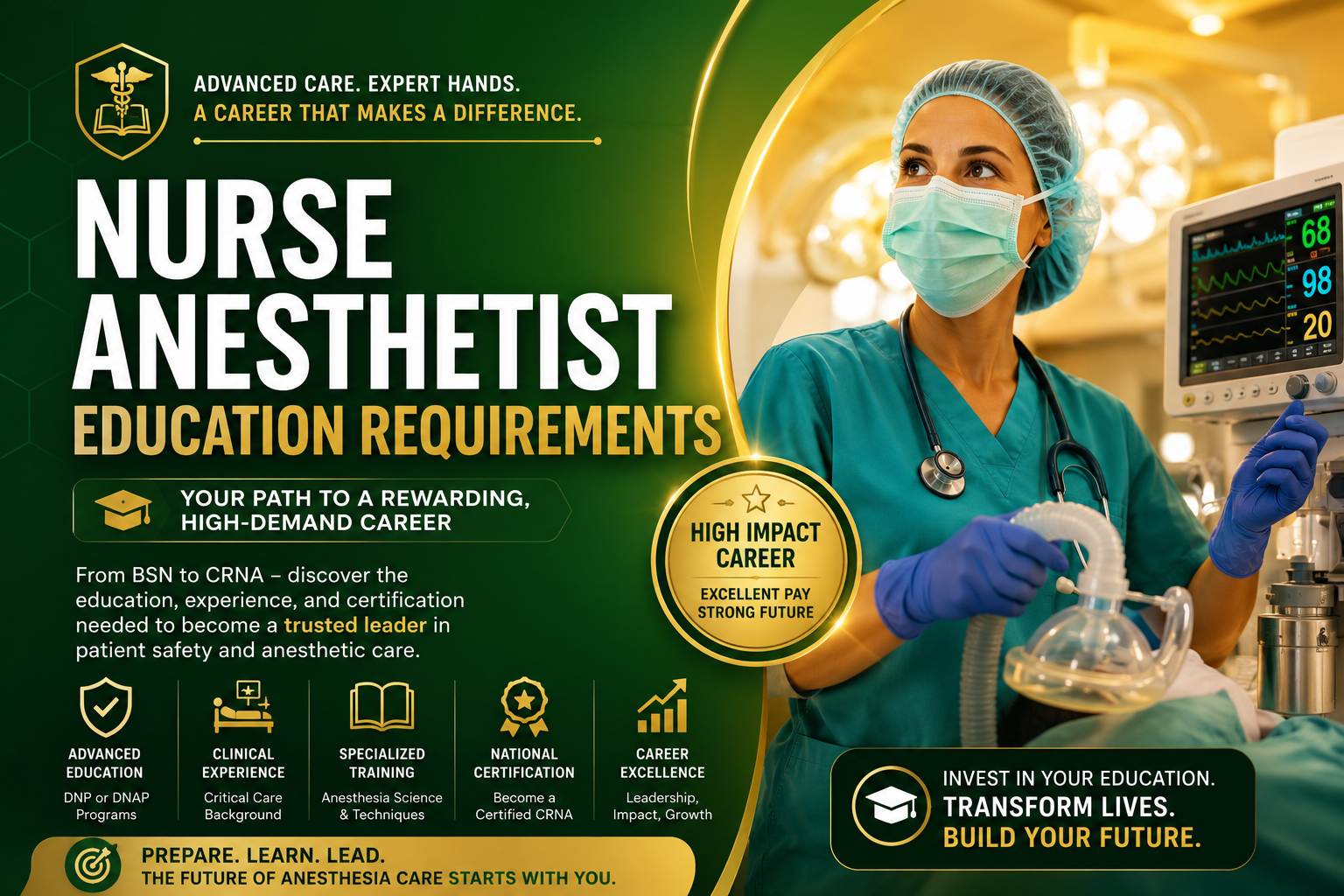
Advanced nursing careers continue attracting ambitious healthcare professionals, and few specialties offer the same combination of responsibility, clinical expertise, and career potential as nurse anesthesia. As surgical procedures increase and healthcare systems expand, Certified Registered Nurse Anesthetists (CRNAs) remain among the most sought-after advanced practice nurses in the United States.
Understanding Nurse Anesthetist Education Requirements is the first step for nurses who want to enter this highly specialized profession. The journey demands dedication, advanced education, and extensive clinical experience, but the long-term rewards often include outstanding career stability, professional respect, and access to some of the highest-paying nursing positions available.
Understanding Nurse Anesthetist Education Requirements for Career Success
Every nurse anesthetist begins by establishing a strong nursing foundation. Most candidates earn a Bachelor of Science in Nursing (BSN) before becoming licensed as a Registered Nurse (RN). Although nursing education has evolved, graduate nurse anesthesia programs now generally expect applicants to hold a bachelor’s degree and possess relevant clinical experience.
Critical care experience plays an especially important role. Many CRNA programs prefer applicants who have worked in intensive care units, cardiovascular ICUs, trauma centers, or other high-acuity settings where complex patient assessment and rapid clinical decision-making are routine.
This experience helps nurses develop advanced physiological knowledge, medication management skills, and confidence under pressure—all essential qualities for administering anesthesia safely.
Professionals looking to strengthen their overall nursing expertise before pursuing advanced practice can benefit from exploring Psychiatric Nurse Education Requirements to better understand how specialized education shapes successful nursing careers.
Advanced CRNA Education and Clinical Training
Meeting Nurse Anesthetist Education Requirements requires more than undergraduate education. Today’s aspiring CRNAs must complete an accredited doctoral-level nurse anesthesia program, typically leading to either a Doctor of Nursing Practice (DNP) or Doctor of Nurse Anesthesia Practice (DNAP).
Graduate education combines advanced classroom instruction with extensive supervised clinical practice. Students study advanced pharmacology, physiology, pathophysiology, chemistry, anesthesia equipment, pain management, airway management, and perioperative patient care while gaining hands-on experience across a wide variety of surgical specialties.
Clinical rotations expose students to pediatric, obstetric, cardiac, neurological, orthopedic, and outpatient surgical procedures. These experiences prepare future CRNAs to make critical decisions in fast-paced environments where patient safety depends on precise clinical judgment.
Maintaining professional knowledge throughout this educational journey becomes much easier by participating in Nursing Continuing Education Seminars that keep nurses informed about evolving healthcare practices and emerging clinical research.
Why Nurse Anesthetist Education Requirements Matter to Employers
Healthcare organizations invest significant trust in nurse anesthetists because they manage one of the most critical aspects of patient care. Employers therefore seek candidates whose education demonstrates both technical excellence and sound clinical reasoning.
Graduates from accredited CRNA programs often enter hospitals, ambulatory surgery centers, military healthcare systems, pain management clinics, physician practices, and rural healthcare facilities. Their responsibilities extend well beyond administering anesthesia, including patient assessment, anesthesia planning, intraoperative monitoring, postoperative pain management, and emergency airway intervention.
Because the profession requires continuous competency, employers also appreciate candidates who actively pursue lifelong learning through continuing education and professional certification maintenance.
Nurses preparing for advanced roles can further strengthen their credentials by earning Continuing Education Credits For Nurses while maintaining licensure and expanding clinical expertise.
Building a Competitive Career as a Nurse Anesthetist
The educational pathway may be demanding, but it positions nurses for exceptional long-term career opportunities. Strong demand, expanding surgical services, and growing healthcare needs continue supporting employment for highly qualified CRNAs across both urban and rural healthcare settings.
Professional growth doesn’t end after graduation. Many nurse anesthetists participate in specialty conferences, advanced simulation training, quality improvement initiatives, leadership development, and evidence-based research throughout their careers.
Some eventually transition into faculty positions, clinical education, healthcare administration, or advanced leadership roles where they mentor future generations of anesthesia providers.
Healthcare professionals interested in nurse education careers may also explore this Department of Veterans Affairs Nurse Educator opportunity.
Those considering hospital-based education can review the Nurse Educator position at Osceola Regional Medical Center for additional career inspiration.
Outside formal education, many CRNAs continue strengthening their clinical knowledge through trusted references such as this professional nursing education resource, supporting continuous learning throughout an advanced nursing career.
FAQ CRNA Education Path
1. How long does it usually take to complete the Nurse Anesthetist Education Requirements?
The educational timeline varies depending on previous experience, but most candidates spend several years completing a BSN, gaining critical care experience as a Registered Nurse, and finishing an accredited doctoral nurse anesthesia program. The entire journey commonly requires eight years or more, depending on individual career progression and educational choices. While the pathway is rigorous, it prepares graduates for one of the most advanced and respected nursing specialties in healthcare.
2. Is ICU experience required before applying to a nurse anesthesia program?
In most cases, yes. Accredited CRNA programs typically expect applicants to have recent experience caring for critically ill patients in high-acuity environments such as intensive care units. ICU experience develops advanced assessment skills, hemodynamic monitoring knowledge, medication management abilities, and rapid decision-making capabilities that form the clinical foundation for safe anesthesia practice. Competitive applicants often exceed the minimum experience requirements established by graduate programs.
3. Why are Nurse Anesthetist Education Requirements more demanding than many other nursing specialties?
The role of a Certified Registered Nurse Anesthetist involves managing anesthesia before, during, and after surgical procedures while continuously monitoring patient stability. Because anesthesia directly affects vital body functions, advanced scientific knowledge, technical proficiency, and extensive clinical preparation are essential. The comprehensive educational process helps ensure graduates possess the judgment, competence, and confidence necessary to deliver safe, evidence-based anesthesia care across a wide variety of healthcare settings.
Apply Nurse Anesthetist Education Requirements
Nurse Anesthetist Education Requirements represent a challenging yet highly rewarding pathway for nurses seeking advanced clinical practice. The combination of strong academic preparation, critical care experience, doctoral education, and lifelong professional development creates a foundation for exceptional career opportunities. Nurses willing to invest in this educational journey position themselves among the most respected, highly skilled, and in-demand professionals in modern healthcare.


