Info Hot Job Find your dream job! Get for jobs, post your resume, compare salaries and find career advice and research.
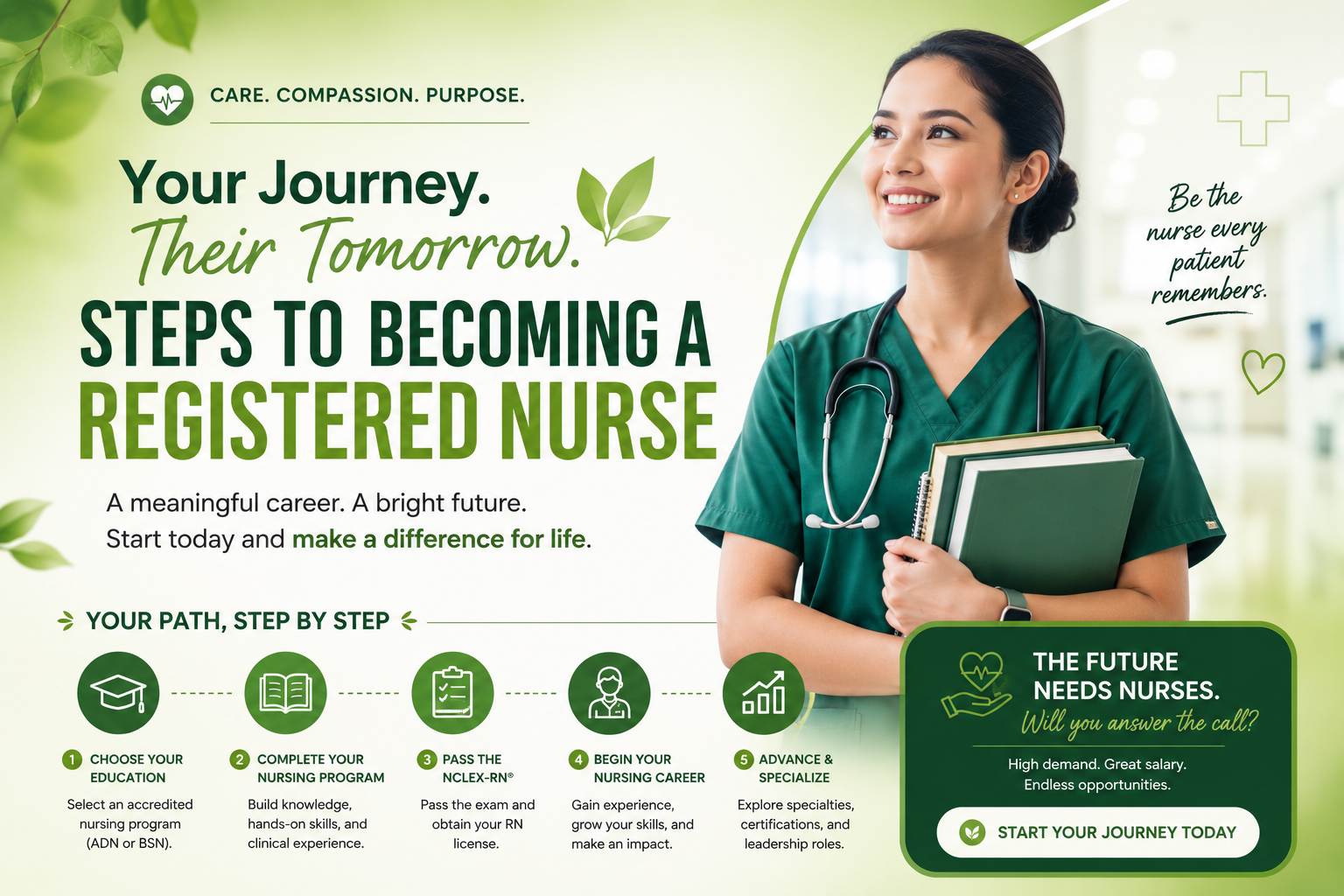
A nursing career offers something many professions struggle to provide: meaningful work, long-term stability, competitive earnings, and countless growth opportunities. As healthcare systems continue expanding across hospitals, outpatient centers, rehabilitation facilities, and community clinics, the demand for qualified registered nurses remains consistently strong. Understanding the Steps To Becoming A Registered Nurse is the first move toward entering one of the most respected professions in healthcare.
The journey requires commitment, education, and determination, but the rewards often extend far beyond financial compensation. Registered nurses improve lives every day while building careers that evolve alongside medical technology, patient care standards, and specialized healthcare services. Whether you’re starting your professional journey or considering a career change, becoming a registered nurse creates opportunities that continue growing throughout an entire career.
Steps To Becoming A Registered Nurse and Choosing the Right Education
Every registered nurse begins with education, and selecting the right nursing program shapes future career opportunities. Prospective nurses generally choose between an Associate Degree in Nursing (ADN) and a Bachelor of Science in Nursing (BSN). Both pathways can lead to RN licensure, although many healthcare employers increasingly prefer BSN graduates because of expanding clinical responsibilities and leadership expectations.
Choosing a nursing school involves more than comparing tuition costs. Accreditation, clinical training opportunities, graduation rates, faculty experience, and employer partnerships all influence long-term career success. A strong educational foundation prepares future nurses to think critically, communicate effectively, and deliver safe patient care in fast-changing healthcare environments.
Clinical experience gained during nursing school also plays a major role. Students rotate through medical-surgical units, maternity care, pediatrics, emergency departments, mental health facilities, and community healthcare settings. These experiences help future nurses discover which specialties best match their interests and strengths.
Those still deciding between different nursing pathways may benefit from comparing the educational differences explained in this guide on Practical Nurse Vs Registered Nurse, which highlights how each role supports different career goals.
Steps To Becoming A Registered Nurse After Graduation
Graduating from nursing school marks an important milestone, but it doesn’t immediately lead to employment as a registered nurse. Candidates must first pass the NCLEX-RN licensing examination, which evaluates clinical judgment, patient safety, pharmacology, and evidence-based nursing practice.
Preparation often begins months before graduation. Many nursing students complete review courses, practice examinations, and structured study plans to improve confidence before taking the exam. Passing the NCLEX-RN officially qualifies candidates for RN licensure through their state nursing board.
Once licensed, newly registered nurses begin applying for positions across hospitals, physician offices, outpatient clinics, rehabilitation centers, nursing homes, home healthcare agencies, and specialty healthcare organizations. Employers frequently provide nurse residency or transition programs that help newly licensed nurses strengthen clinical skills during their first year of practice.
A deeper understanding of professional responsibilities can also be found in this comprehensive guide covering the Registered Nurse job description, offering valuable insight into daily nursing practice.
Steps To Becoming A Registered Nurse With Career Advancement
Earning an RN license isn’t the finish line—it’s the beginning of continuous professional development. Registered nurses who pursue certifications, advanced education, and specialty training often enjoy greater career flexibility, higher salaries, and expanded responsibilities.
Many nurses eventually specialize in pediatrics, emergency nursing, intensive care, oncology, labor and delivery, perioperative services, critical care, cardiology, or surgical nursing. Specialization allows professionals to build expertise while increasing their value within competitive healthcare markets.
Advanced roles also become available after gaining clinical experience. Nurses may transition into leadership, quality improvement, informatics, case management, clinical education, or advanced practice nursing.
For professionals interested in surgical specialties, becoming a Registered Nurse First Assistant represents an excellent opportunity to work alongside surgeons during complex operative procedures while advancing their careers.
Nurses passionate about caring for children may also discover rewarding opportunities by becoming a Pediatric Registered Nurse, where specialized knowledge supports infants, children, and adolescents throughout every stage of development.
Steps To Becoming A Registered Nurse for Long-Term Success
Career success depends on more than earning a license. Healthcare employers consistently seek nurses who demonstrate professionalism, adaptability, communication skills, leadership potential, and commitment to lifelong learning.
Technology continues reshaping healthcare, requiring registered nurses to master electronic health records, telemedicine platforms, advanced monitoring systems, and evidence-based clinical decision-making. Continuing education ensures nurses remain current with changing treatment guidelines and emerging healthcare innovations.
Professional networking also contributes to long-term growth. Joining nursing organizations, attending conferences, participating in mentorship programs, and pursuing specialty certifications all strengthen career prospects while opening new employment opportunities.
Some experienced nurses also choose flexible employment arrangements through travel nursing opportunities, gaining valuable experience across multiple healthcare systems while expanding both clinical and professional expertise.
FAQ Registered Nurse Career Path
- How long does it usually take to complete the steps to becoming a Registered Nurse?
The timeline depends largely on the educational pathway you choose. An Associate Degree in Nursing generally requires about two years, while a Bachelor of Science in Nursing typically takes four years. After graduation, candidates must successfully pass the NCLEX-RN examination before receiving licensure. Although the educational investment varies, both pathways can lead to rewarding careers with excellent long-term growth opportunities.
- Is becoming a Registered Nurse still a good career choice today?
Yes. Registered nursing continues to rank among the most stable healthcare professions due to strong demand across hospitals, outpatient facilities, rehabilitation centers, and community healthcare organizations. In addition to competitive salaries, registered nurses benefit from career flexibility, opportunities for specialization, leadership positions, continuing education, and meaningful patient interactions throughout every stage of their professional journey.
- What happens after completing the steps to becoming a Registered Nurse?
After obtaining RN licensure, nurses typically begin working in clinical settings while building practical experience. Over time, many pursue specialty certifications, graduate education, or leadership positions that expand their responsibilities and earning potential. Career paths may include pediatric nursing, emergency care, surgery, education, management, advanced practice nursing, informatics, and many other rapidly growing healthcare specialties.
Building a Successful Future as a Registered Nurse
Understanding the Steps To Becoming A Registered Nurse provides more than a roadmap toward licensure—it establishes the foundation for a lifelong profession filled with purpose, stability, and continuous growth. Every stage, from selecting the right nursing program to passing the licensing examination and pursuing advanced specialties, contributes to long-term career success.
Healthcare continues evolving, creating new opportunities for nurses willing to expand their knowledge and embrace lifelong learning. Whether your goal is bedside care, pediatric nursing, surgical services, leadership, or travel nursing, the registered nursing profession offers remarkable flexibility to shape a career around your interests and ambitions.
For those ready to invest in education and professional development, becoming a registered nurse remains one of the smartest career decisions in today’s healthcare job market, combining meaningful work with outstanding opportunities for advancement.