Info Hot Job Find your dream job! Get for jobs, post your resume, compare salaries and find career advice and research.
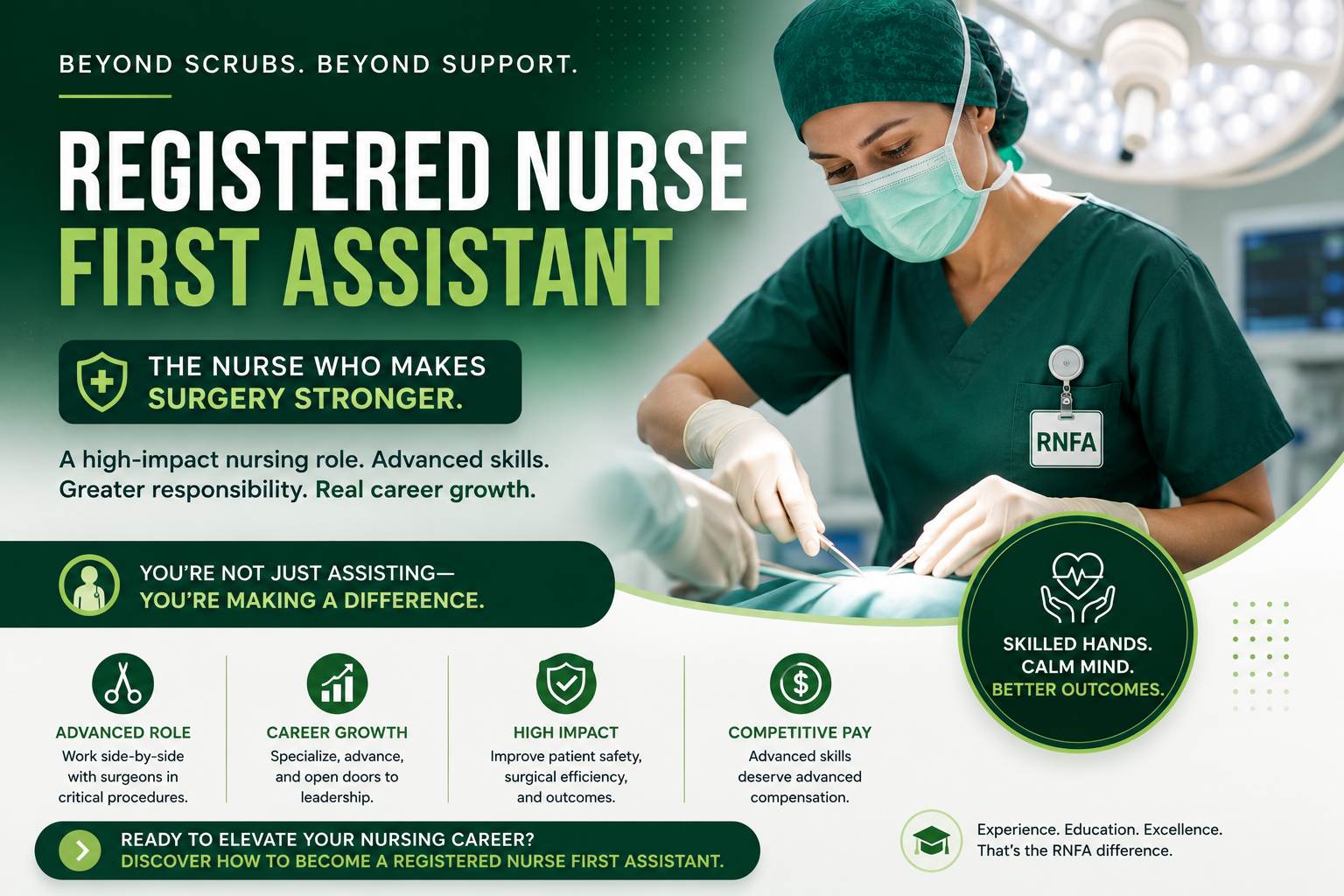
For registered nurses who want to expand their clinical expertise beyond traditional bedside care, becoming a Registered Nurse First Assistant can open the door to one of the most respected roles in surgical nursing. Operating rooms demand precision, teamwork, and rapid decision-making, making this specialty an excellent fit for experienced nurses who enjoy fast-paced environments and advanced patient care.
Healthcare facilities continue investing in highly trained perioperative professionals as surgical procedures become increasingly complex. Surgeons rely on skilled Registered Nurse First Assistants (RNFAs) to improve efficiency, enhance patient safety, and support successful surgical outcomes. As a result, this career offers both professional recognition and strong employment opportunities across hospitals, surgical centers, and specialty healthcare organizations.
Unlike entry-level nursing positions, the RNFA role rewards years of clinical experience, specialized education, and advanced surgical knowledge. For nurses seeking long-term career growth, it represents a natural progression toward higher responsibility and greater professional satisfaction.
Registered Nurse First Assistant Career Outlook
Demand for surgical services continues growing due to an aging population, advances in medical technology, and increasing access to specialized healthcare. Every successful operation depends on an experienced surgical team, and Registered Nurse First Assistants have become indispensable members of that team.
Hospitals actively recruit qualified RNFAs because their advanced training improves workflow inside the operating room while supporting surgeons during procedures. Their presence often contributes to shorter operating times, improved patient outcomes, and enhanced coordination among surgical staff.
The career outlook remains promising because experienced perioperative nurses are retiring while healthcare organizations continue expanding surgical departments. This creates opportunities for registered nurses willing to invest in additional education and certification.
Nurses considering advanced specialties may also find value in understanding foundational career pathways before specialization. This comparison of Practical Nurse Vs Registered Nurse explains how nursing education influences long-term career advancement.
Registered Nurse First Assistant Job Description and Responsibilities
A Registered Nurse First Assistant works directly alongside surgeons during operative procedures. Unlike circulating nurses or scrub nurses, RNFAs actively participate in surgery by providing hands-on assistance within their professional scope of practice.
Responsibilities often include preparing patients before surgery, maintaining sterile technique, handling surgical instruments, controlling bleeding, exposing the surgical site, assisting with tissue handling, suturing under appropriate authorization, and helping close surgical wounds. Throughout every procedure, RNFAs continuously monitor patient safety while anticipating the surgeon’s next steps.
Success in this role depends on exceptional technical ability, communication, and teamwork. Surgical environments change quickly, leaving little room for hesitation. RNFAs must remain calm under pressure while making sound clinical judgments that contribute to efficient operations.
Although the work is demanding, many nurses appreciate the opportunity to become highly specialized experts whose skills directly influence surgical success.
Readers interested in broader nursing responsibilities can also explore this detailed guide to the Registered Nurse job description, which explains the foundation upon which advanced specialties are built.
Registered Nurse First Assistant Salary and Career Growth
Salary potential ranks among the strongest advantages of becoming a Registered Nurse First Assistant. Advanced education, surgical expertise, and specialized certifications often result in higher compensation compared with many traditional registered nursing positions.
Income varies according to geographic location, employer, specialty, certifications, and years of experience. Large medical centers, trauma hospitals, orthopedic programs, cardiovascular surgery departments, and academic healthcare systems frequently offer highly competitive compensation packages for experienced RNFAs.
Career advancement extends well beyond salary. Many RNFAs transition into perioperative leadership, surgical services management, clinical education, quality improvement, or advanced practice nursing. Others become valuable mentors responsible for developing future perioperative professionals.
Some nurses also combine RNFA expertise with flexible assignments through specialized surgical contracts. Opportunities similar to travel nursing careers allow experienced professionals to work in diverse healthcare settings while strengthening their surgical experience.
Registered Nurse First Assistant Education and Certification
Becoming a Registered Nurse First Assistant requires more than earning RN licensure. Most employers expect candidates to possess significant perioperative nursing experience before entering an approved RNFA education program.
Candidates typically begin by working as operating room nurses, where they gain expertise in sterile technique, surgical procedures, patient positioning, instrumentation, infection prevention, and perioperative patient management. This clinical foundation prepares nurses for the advanced responsibilities associated with first assisting.
Following formal RNFA education, many professionals pursue nationally recognized certifications to strengthen their qualifications and remain competitive within the employment market. Continuing education also remains essential because surgical techniques, medical devices, and evidence-based practices continue evolving.
Professional development never truly stops in perioperative nursing. Healthcare organizations increasingly seek experienced nurses capable of mentoring staff, improving surgical quality, and supporting organizational excellence.
Experienced surgical nurses interested in education and leadership may find career inspiration through opportunities like this Registered Nurse Clinical Educator position, where advanced clinical knowledge supports future generations of nurses.
Nurses who enjoy caring for younger patients may also consider highly rewarding specialties such as becoming a Pediatric Registered Nurse, demonstrating the wide range of career paths available after obtaining RN licensure.
FAQ Registered Nurse First Assistant Career
- What qualifications are required to become a Registered Nurse First Assistant?
Most Registered Nurse First Assistant positions require active RN licensure, substantial perioperative nursing experience, and completion of an approved RNFA education program. Many employers also prefer specialty certifications because they demonstrate advanced surgical competence. Clinical experience inside the operating room remains one of the most valuable qualifications, allowing nurses to safely assist surgeons during increasingly complex procedures.
- Is Registered Nurse First Assistant a good long-term career?
Yes. Registered Nurse First Assistant remains one of the strongest long-term nursing specialties for professionals interested in surgery. The role combines advanced clinical responsibilities with competitive salaries, professional respect, and numerous advancement opportunities. As healthcare systems continue expanding surgical services, experienced RNFAs are expected to remain valuable members of multidisciplinary surgical teams across many healthcare settings.
- Can a Registered Nurse First Assistant work in different surgical specialties?
Absolutely. Registered Nurse First Assistants may work in orthopedic surgery, cardiovascular surgery, general surgery, neurosurgery, plastic surgery, pediatric surgery, trauma surgery, and many other specialties. Their versatility allows experienced nurses to broaden their expertise, pursue specialized certifications, and explore diverse employment opportunities throughout hospitals, outpatient surgical centers, and academic medical institutions.
Why Registered Nurse First Assistant Is a Smart Career Investment
A career as a Registered Nurse First Assistant represents the next level of professional growth for registered nurses who want greater clinical responsibility and direct involvement in surgical care. The combination of advanced technical skills, meaningful patient impact, competitive compensation, and expanding employment opportunities makes RNFA one of the most rewarding specialties in modern nursing.
While the educational requirements exceed those of traditional registered nursing roles, the long-term benefits often justify the investment. Nurses who enjoy precision, teamwork, continuous learning, and operating room environments frequently discover lasting career satisfaction as Registered Nurse First Assistants.
As healthcare technology advances and surgical services continue expanding, skilled RNFAs will remain essential to delivering safe, efficient, and high-quality patient care. For registered nurses ready to elevate their careers, this specialty offers both professional challenge and exceptional long-term opportunity.