Info Hot Job Find your dream job! Get for jobs, post your resume, compare salaries and find career advice and research.
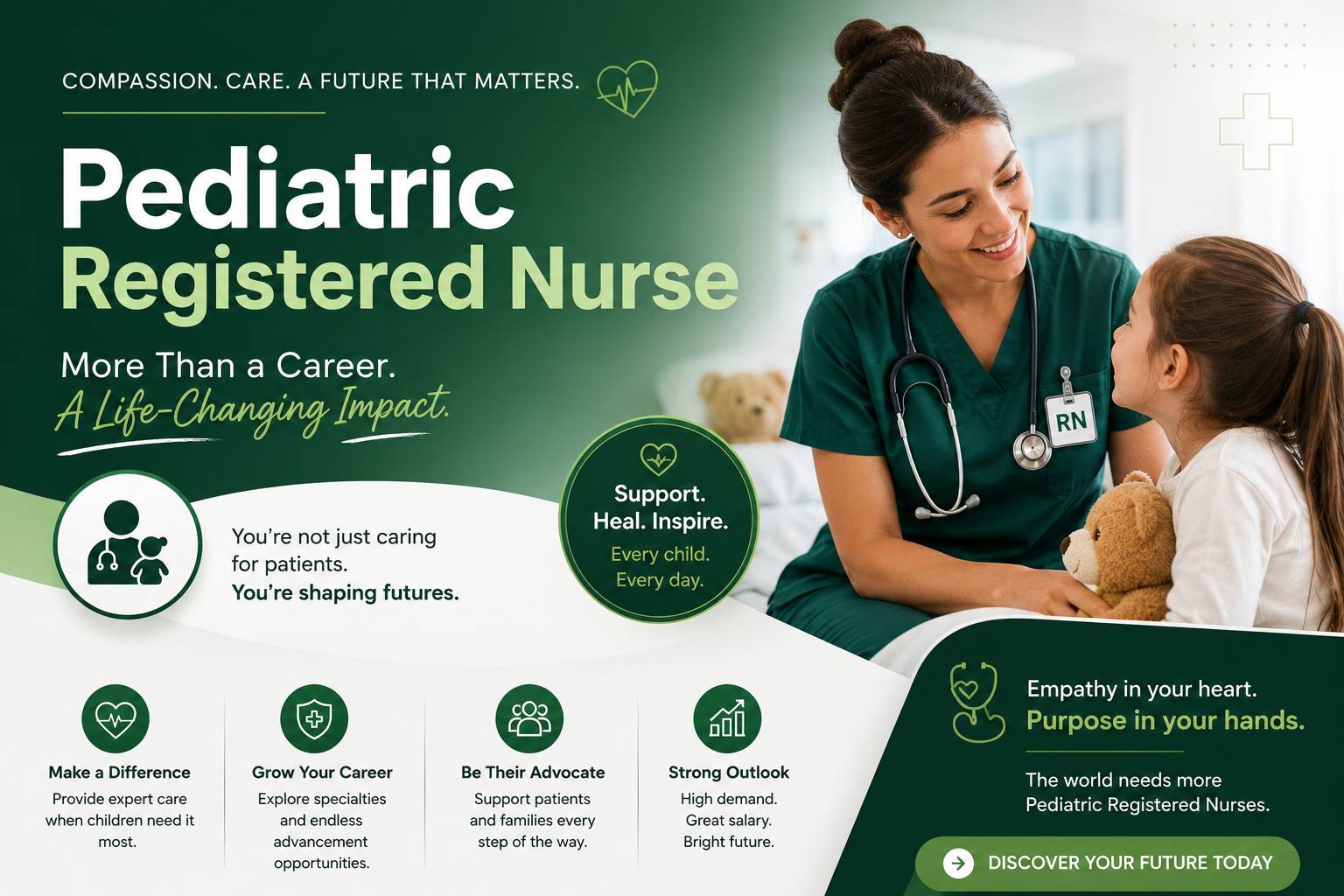
A career in pediatric nursing offers more than a stable paycheck. It provides the opportunity to make a lasting difference during some of the most important moments in a child’s life. As healthcare systems continue expanding pediatric services, employers actively seek professionals who combine clinical expertise with compassion, communication skills, and sound judgment. That growing demand has made the Pediatric Registered Nurse one of the most attractive nursing careers for both new graduates and experienced registered nurses looking for a specialty.
Working with infants, children, adolescents, and their families requires a unique blend of medical knowledge and emotional intelligence. Pediatric patients often cannot explain their symptoms clearly, making observation, assessment, and family-centered care essential parts of the job. Nurses who thrive in this environment often find the profession both personally rewarding and professionally secure.
Pediatric Registered Nurse Career Outlook and Job Opportunities
Healthcare organizations continue investing in pediatric care because children require specialized treatment that differs significantly from adult medicine. Hospitals, children’s medical centers, outpatient clinics, emergency departments, neonatal units, rehabilitation facilities, schools, and home healthcare providers all rely on pediatric registered nurses to deliver safe, high-quality care.
The employment outlook remains positive as healthcare providers expand services for growing communities while replacing experienced nurses reaching retirement. Pediatric nurses also benefit from increasing awareness of preventive healthcare, chronic childhood conditions, and developmental disorders that require long-term nursing support.
Unlike many careers with limited advancement, pediatric nursing creates opportunities to specialize throughout a professional lifetime. Nurses may transition into neonatal intensive care, pediatric intensive care, pediatric oncology, pediatric emergency care, cardiac care, surgical services, school nursing, clinical education, or leadership positions without leaving their specialty.
For readers comparing nursing pathways before selecting a specialty, understanding the differences explained in this guide on Practical Nurse Vs Registered Nurse can help clarify the educational and career requirements.
Pediatric Registered Nurse Job Description and Daily Responsibilities
The responsibilities of a Pediatric Registered Nurse extend well beyond administering medication and monitoring vital signs. Every shift involves assessing a child’s physical condition, recognizing subtle clinical changes, educating parents, coordinating with physicians, and supporting families through stressful situations.
Pediatric nurses perform comprehensive assessments that consider both physical and emotional development. Because children respond differently to illness than adults, nurses must recognize age-specific symptoms while adapting communication techniques to each developmental stage.
Family involvement also plays a central role. Parents frequently participate in treatment decisions, medication education, discharge planning, and long-term care. Strong communication skills become just as valuable as technical nursing knowledge.
Technology continues changing pediatric practice as well. Electronic health records, advanced monitoring equipment, telehealth consultations, and evidence-based care protocols require pediatric nurses to remain current through continuing education and professional development.
Those interested in understanding the broader nursing profession may also benefit from reading this comprehensive guide covering the Registered Nurse job description, including responsibilities shared across multiple specialties.
Pediatric Registered Nurse Salary and Career Advancement
Salary varies according to geographic location, employer, education level, certifications, and years of experience. Pediatric Registered Nurses working in large children’s hospitals, academic medical centers, or specialized intensive care units generally earn more than nurses employed in smaller outpatient settings.
Experience significantly influences earning potential. Nurses who obtain certifications in pediatric nursing, critical care, neonatal care, or pediatric emergency nursing often qualify for higher-paying positions and expanded responsibilities.
Career advancement rarely stops at bedside care. Many pediatric nurses become charge nurses, clinical supervisors, nurse educators, case managers, quality improvement specialists, or department leaders. Others continue their education to become Pediatric Nurse Practitioners, Clinical Nurse Specialists, or healthcare administrators.
Leadership opportunities continue expanding as healthcare organizations emphasize mentoring newly licensed nurses, implementing evidence-based practice, and improving patient outcomes.
Professionals interested in education-focused careers can explore opportunities similar to this Registered Nurse Clinical Educator position, demonstrating how nursing experience can lead to influential leadership roles.
Pediatric Registered Nurse Education and Essential Skills
Every Pediatric Registered Nurse begins by completing an accredited nursing program and passing the NCLEX-RN examination. Many employers increasingly prefer candidates holding a Bachelor of Science in Nursing because pediatric care demands advanced assessment, critical thinking, and interdisciplinary collaboration.
Beyond formal education, successful pediatric nurses develop patience, emotional resilience, adaptability, and exceptional communication. Young patients often experience fear and anxiety, making trust-building an essential clinical skill rather than simply a personality trait.
Critical thinking becomes especially valuable when treating children because symptoms can change rapidly. Pediatric nurses frequently identify subtle warning signs before serious complications develop, allowing healthcare teams to intervene quickly.
Continuous learning also remains essential. Pediatric medicine evolves alongside advances in vaccines, genetic testing, childhood disease management, medical technology, and family-centered care models. Nurses who embrace lifelong learning remain highly competitive in today’s employment market.
Healthcare careers also offer flexibility beyond traditional hospital employment. Nurses seeking broader experience may find valuable opportunities through travel nursing assignments, which provide exposure to diverse healthcare systems while strengthening clinical expertise.
FAQ: Pediatric Registered Nurse Career
- What qualities make someone successful as a Pediatric Registered Nurse?
Successful Pediatric Registered Nurses combine strong clinical knowledge with patience, empathy, adaptability, and excellent communication skills. Since children may struggle to explain symptoms, careful observation becomes essential. Building trust with both young patients and their families also improves treatment outcomes, making emotional intelligence just as valuable as technical nursing ability in pediatric healthcare settings.
- Is Pediatric Registered Nurse a good long-term career choice?
Yes. Pediatric nursing offers strong job stability because healthcare providers consistently require qualified professionals to care for infants, children, and adolescents. As pediatric services continue expanding and experienced nurses retire, employers actively recruit skilled pediatric nurses. The specialty also offers numerous advancement opportunities in intensive care, oncology, emergency medicine, leadership, education, and advanced practice nursing.
- Can a Pediatric Registered Nurse work outside children’s hospitals?
Absolutely. Pediatric Registered Nurses work in many healthcare environments beyond dedicated children’s hospitals. Employment opportunities include physician offices, outpatient clinics, schools, rehabilitation centers, home healthcare agencies, public health organizations, urgent care facilities, and community health programs. This flexibility allows nurses to select work environments that best match their professional interests, preferred schedules, and long-term career goals.
Building a Rewarding Future as a Pediatric Registered Nurse
Choosing to become a Pediatric Registered Nurse means entering a profession where every clinical decision has the potential to improve a child’s future. The role combines advanced nursing knowledge with meaningful patient relationships, creating a career that remains both intellectually challenging and emotionally fulfilling.
Growing healthcare demand, expanding pediatric specialties, competitive salaries, and multiple advancement pathways continue to strengthen the outlook for pediatric nurses across the country. Whether working in hospitals, outpatient clinics, schools, or specialized care centers, pediatric registered nurses remain essential members of modern healthcare teams.
Professionals interested in maternal and newborn care may also explore specialized opportunities such as this Registered Nurse Birth Place position, where family-centered nursing continues from childbirth through early pediatric care. For nurses committed to lifelong growth, pediatric nursing offers a career with lasting purpose, professional security, and countless opportunities to make a meaningful impact.