Info Hot Job Find your dream job! Get for jobs, post your resume, compare salaries and find career advice and research.
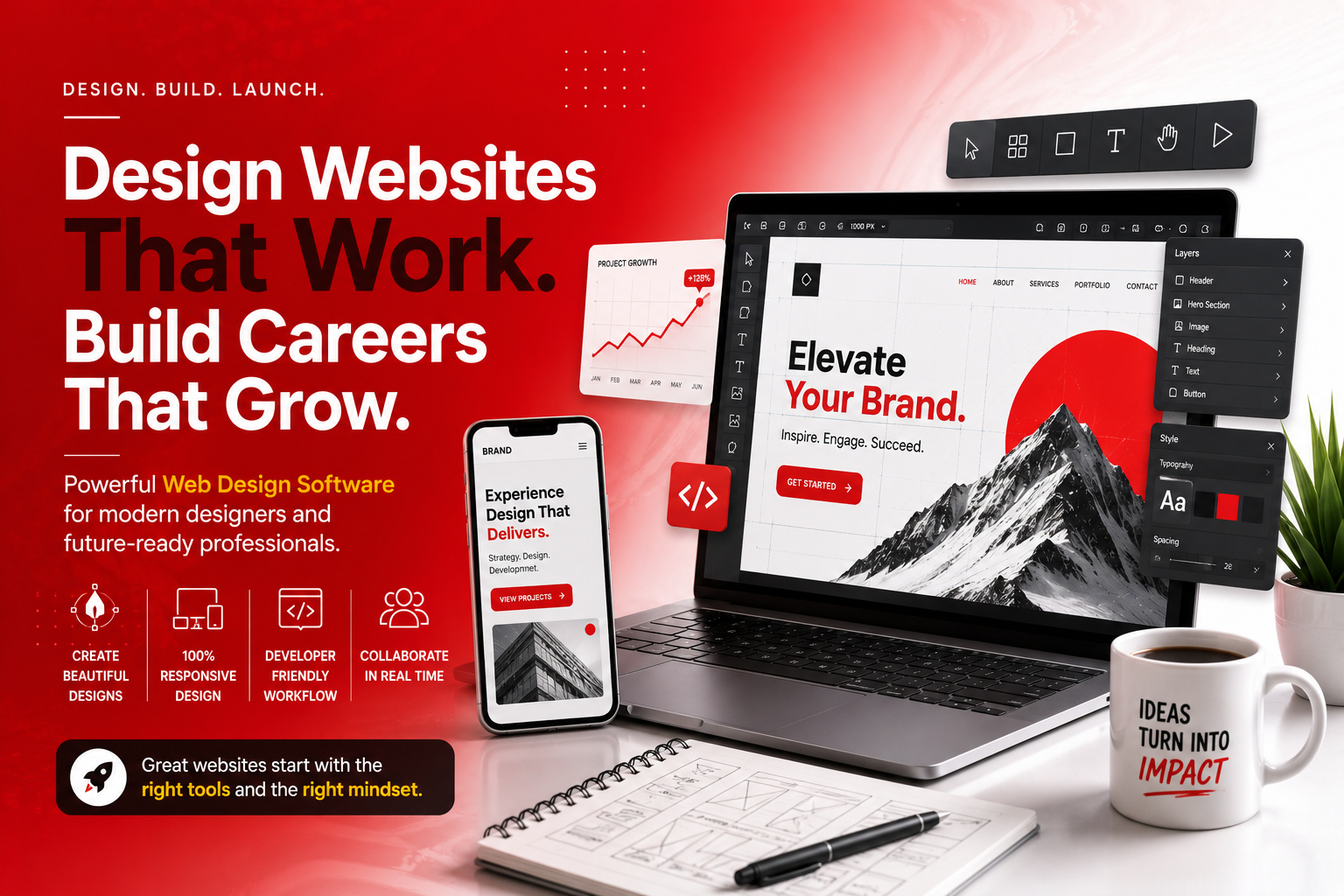
Every business wants a website that looks professional, loads quickly, and delivers a smooth user experience. That demand continues to fuel one of the fastest-growing segments of the digital economy. Behind every modern website is more than creativity—there’s the right Web Design Software helping professionals transform ideas into functional, visually engaging online experiences.
The growing reliance on digital platforms has changed what employers expect from designers. Companies no longer hire people who simply make websites look attractive. They want professionals who understand responsive layouts, accessibility, collaboration, branding, and user experience. Learning the right software has become one of the smartest investments for anyone pursuing a career in web design or digital product development.
Web Design Software Builds Skills Employers Want
Mastering Web Design Software develops practical abilities that employers actively seek. Modern web design requires more than arranging text and images. Designers must understand layout structures, typography, responsive design, color systems, component libraries, and collaboration with developers.
Digital agencies, software companies, startups, e-commerce businesses, educational institutions, and marketing teams all depend on professionals who can turn concepts into polished website designs. Candidates who already know professional design workflows often adapt faster and contribute to projects almost immediately.
Software proficiency also strengthens creative confidence. Instead of struggling with technical limitations, designers can focus on solving business problems, improving user journeys, and producing interfaces that communicate clearly. These abilities become especially valuable when competing for remote positions or freelance contracts where portfolios often matter more than formal education.
Visual communication remains an essential part of web development. Designers looking to strengthen complementary creative skills can also explore this guide on Free Graphic Design Software.
Modern Web Design Software Supports Long-Term Career Growth
Today’s Web Design Software includes far more than visual editing tools. Cloud collaboration, interactive prototyping, reusable design systems, real-time feedback, responsive previews, and developer handoff features have become standard in professional workflows.
These capabilities improve communication between designers, developers, project managers, and clients. Instead of exchanging countless revisions through email, teams can collaborate on the same project while tracking every update. Faster collaboration reduces production time while improving design consistency.
Artificial intelligence is also reshaping the industry. AI-assisted layout generation, automatic content suggestions, accessibility recommendations, and image optimization help designers complete projects more efficiently. Rather than replacing creativity, these features allow professionals to spend more time solving complex design challenges.
Creative technology extends beyond websites into specialized design fields. Professionals interested in digital planning and visualization can gain additional insight by reading about Landscape Design Software.
Choosing Web Design Software for Future Job Opportunities
The best Web Design Software isn’t necessarily the most expensive platform. Employers generally care more about transferable skills than software brands. Designers who understand user-centered thinking, responsive interfaces, accessibility standards, and design systems can quickly adapt to different tools throughout their careers.
Technology continues changing at an impressive pace. New frameworks, devices, and user expectations constantly influence how websites are created. Professionals who remain curious and continuously improve their technical abilities position themselves for stronger long-term career stability.
The demand for digital experiences shows no sign of slowing. Businesses continue investing in websites that convert visitors into customers, strengthen brand identity, and improve customer engagement. As a result, skilled web designers remain valuable across nearly every industry.
Those exploring broader technology careers can better understand digital employment trends through this comparison of Web Developer vs Software Engineer.
The evolution of creative technology has also expanded opportunities for professionals working in product design and software development. This overview of Software Designer Jobs highlights how design expertise continues influencing the future job market.
Career growth often follows technical specialization. Designers interested in compensation trends can explore this detailed guide on Software Designer Salary to better understand how advanced software skills contribute to higher earning potential.
FAQ Responsive Web Design Software
1. Is Web Design Software enough to get a web design job without a computer science degree?
Yes. Many employers prioritize practical ability over academic background, especially when hiring web designers. A strong portfolio created with Web Design Software often demonstrates creativity, user experience knowledge, and technical competence more effectively than a degree alone. While understanding HTML and CSS remains valuable, companies frequently hire candidates who can solve design problems, communicate ideas clearly, and produce responsive website layouts that meet business goals.
2. What features should beginners look for in Web Design Software today?
Beginners should focus on software that supports responsive design, interactive prototyping, reusable components, collaboration features, and developer-friendly exports. These capabilities reflect how professional design teams work in modern companies. Choosing software with an active learning community and regular updates also helps new designers stay aligned with industry trends while building skills that remain valuable as technology continues evolving.
3. Does learning Web Design Software improve freelance opportunities?
Absolutely. Freelance clients often judge designers by portfolio quality, communication, and the ability to deliver professional website mockups quickly. Web Design Software allows freelancers to present realistic prototypes, gather client feedback efficiently, and streamline project revisions. These advantages improve client satisfaction while increasing the likelihood of repeat business, referrals, and long-term career growth in an increasingly competitive digital marketplace.
Digital transformation continues creating demand for professionals who combine creativity with technical expertise. Learning Web Design Software equips designers with practical skills that employers consistently value across agencies, startups, software companies, and independent businesses. More importantly, these skills remain adaptable as technology evolves. Professionals who invest in mastering modern design workflows today will be better prepared to compete for future opportunities, where innovation, collaboration, and user experience define long-term success.