Info Hot Job Find your dream job! Get for jobs, post your resume, compare salaries and find career advice and research.
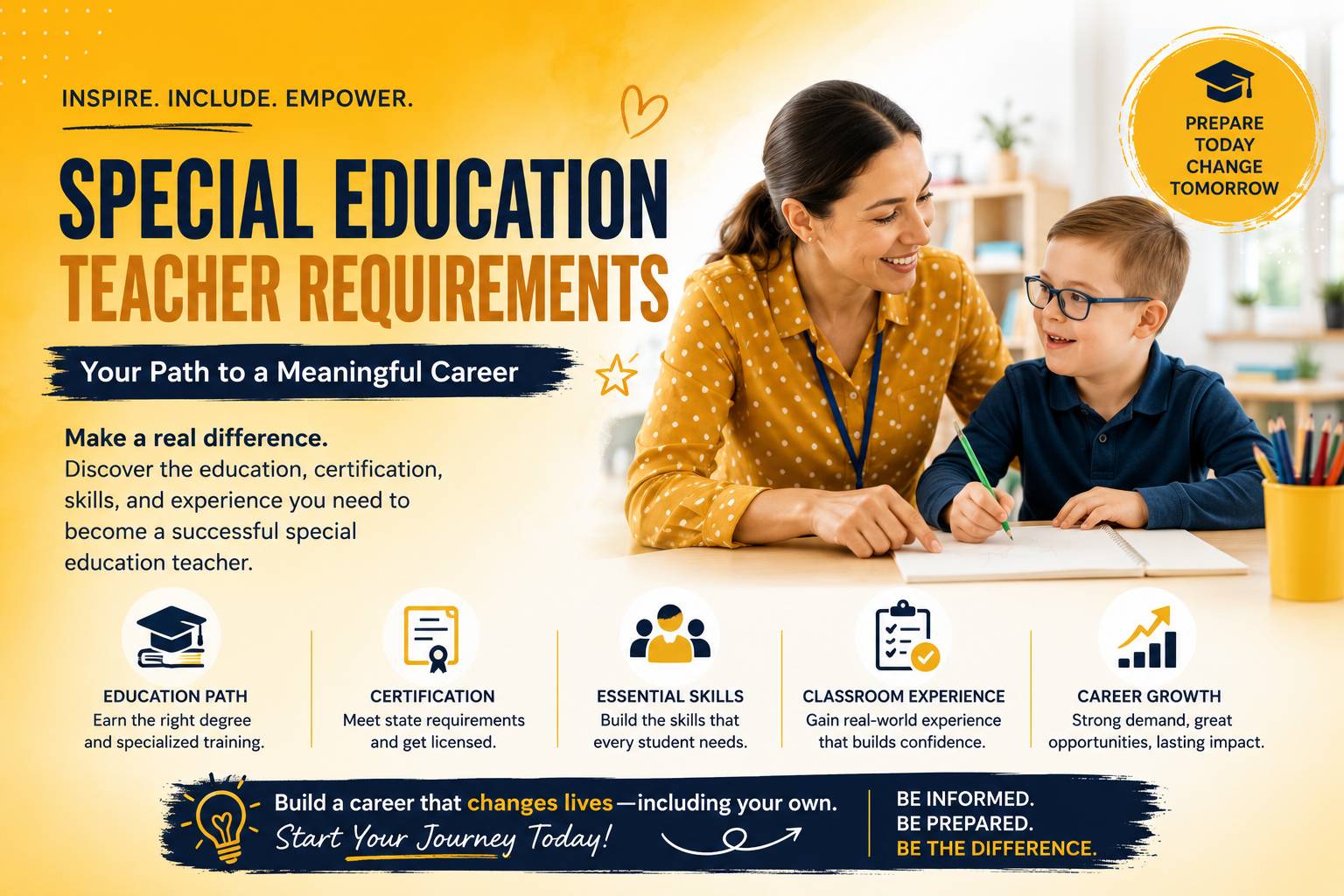
Helping students overcome learning challenges takes more than patience and compassion. It requires specialized training, professional knowledge, and a commitment to helping every learner reach their full potential. That’s why understanding Special Education Teacher Requirements is the first step for anyone considering this meaningful career path.
Special education teachers work with students who have a wide range of physical, emotional, behavioral, and learning disabilities. Every school day brings unique challenges, but it also offers opportunities to make a lasting difference. As schools continue expanding inclusive education programs, qualified special education professionals remain in high demand across the United States.
Meeting the necessary qualifications doesn’t simply satisfy hiring requirements. Proper preparation equips educators with the confidence, instructional strategies, and legal knowledge needed to support students while collaborating effectively with parents, therapists, and school administrators.
Special Education Teacher Requirements for Certification and Licensing
The foundation of Special Education Teacher Requirements begins with earning a bachelor’s degree from an accredited college or university. Most aspiring special education teachers complete a degree in Special Education, although some states allow candidates with other education degrees to pursue specialized certification programs.
Teacher preparation programs combine coursework with extensive classroom experience. Students study educational psychology, behavior management, child development, individualized instruction, disability assessment, classroom accommodations, and federal special education laws.
Student teaching serves as one of the most important requirements before entering the profession. During this supervised placement, future educators gain practical experience by working directly with students under the guidance of licensed teachers. This hands-on training builds confidence while preparing candidates for real classroom situations.
After completing an approved preparation program, candidates must meet state certification requirements. Most public schools require passing one or more licensing examinations that evaluate teaching knowledge, subject competency, and professional readiness before issuing a teaching license.
Anyone still planning their educational pathway should first understand what education is needed to become a teacher before deciding whether to specialize in special education.
Skills That Strengthen Special Education Careers
Academic qualifications alone don’t define successful special education teachers. Schools also seek professionals with strong communication, adaptability, empathy, organization, and collaboration skills.
Every student has unique learning needs. Effective teachers regularly modify lesson plans, develop individualized education programs (IEPs), monitor student progress, and adjust instructional methods based on ongoing assessments.
Collaboration plays a central role as well. Special education teachers frequently work alongside general education teachers, speech therapists, occupational therapists, psychologists, counselors, and parents to ensure students receive comprehensive support.
Technology has become increasingly important within special education. Teachers now integrate assistive technologies, digital learning platforms, communication devices, and adaptive software that improve accessibility and student engagement.
Professional development continues throughout an educator’s career. New instructional strategies, educational research, and legal requirements require teachers to stay informed through workshops, certifications, and graduate education.
Understanding the broader value of Teaching And Teacher Education helps future educators appreciate how professional preparation strengthens classroom effectiveness and long-term career growth.
Career Growth and Salary Potential in Special Education
The demand for qualified special education teachers continues to remain strong due to ongoing teacher shortages and increasing support for inclusive learning environments. This demand creates stable employment opportunities across elementary schools, middle schools, high schools, private institutions, and specialized educational programs.
Many educators continue their education after becoming licensed. Earning a master’s degree, specialized endorsements, or advanced certifications often improves promotion opportunities while increasing earning potential.
Experienced professionals may transition into instructional coaching, special education administration, curriculum development, educational consulting, or district-level leadership positions. Others choose to specialize further in autism education, behavioral intervention, early childhood special education, or transition services for older students.
Career satisfaction often extends beyond financial rewards. Many special education teachers describe helping students achieve milestones as one of the most fulfilling aspects of the profession.
If salary is an important factor in your decision, reviewing how much special education teachers make offers valuable insight into long-term earning potential and career outlook.
Those seeking practical classroom experience before becoming licensed may also benefit from exploring teacher assistant opportunities at Park Hill School District, where valuable instructional skills can be developed alongside experienced educators.
Professionals who eventually decide to explore careers beyond traditional classrooms can also learn about jobs for teachers outside of education while continuing to leverage their educational expertise.
FAQ Special Education Certification
1. Do all states require special education teachers to hold a teaching license?
In nearly every U.S. state, public schools require special education teachers to earn a valid teaching license or certification before working independently in the classroom. Requirements vary by state but generally include completing an approved teacher preparation program, earning a bachelor’s degree, completing supervised student teaching, and passing one or more certification examinations. Private schools may have different hiring standards, although professional credentials remain highly valued.
2. Can general education teachers become special education teachers later in their careers?
Yes. Many licensed teachers transition into special education by completing additional certification programs, graduate coursework, or state-approved endorsement pathways. Their previous classroom experience often provides a strong foundation, while specialized training helps them develop the knowledge necessary to support students with disabilities, create individualized education programs, and implement evidence-based instructional strategies.
3. Is special education still a good career choice in today’s job market?
Special education continues to offer strong employment prospects because qualified professionals remain in high demand across many school districts. Growing awareness of inclusive education, increased student support services, and ongoing teacher shortages contribute to consistent hiring opportunities. Educators who pursue advanced certifications or graduate degrees may also enjoy expanded leadership roles and improved salary potential throughout their careers.
Understanding Special Education Teacher Requirements goes far beyond meeting minimum hiring standards. The combination of formal education, classroom experience, professional certification, and continuous learning prepares educators to support students with diverse needs while building rewarding, long-term careers. For those committed to making a meaningful impact, special education remains one of the most valuable and respected teaching professions available today.