Info Hot Job Find your dream job! Get for jobs, post your resume, compare salaries and find career advice and research.
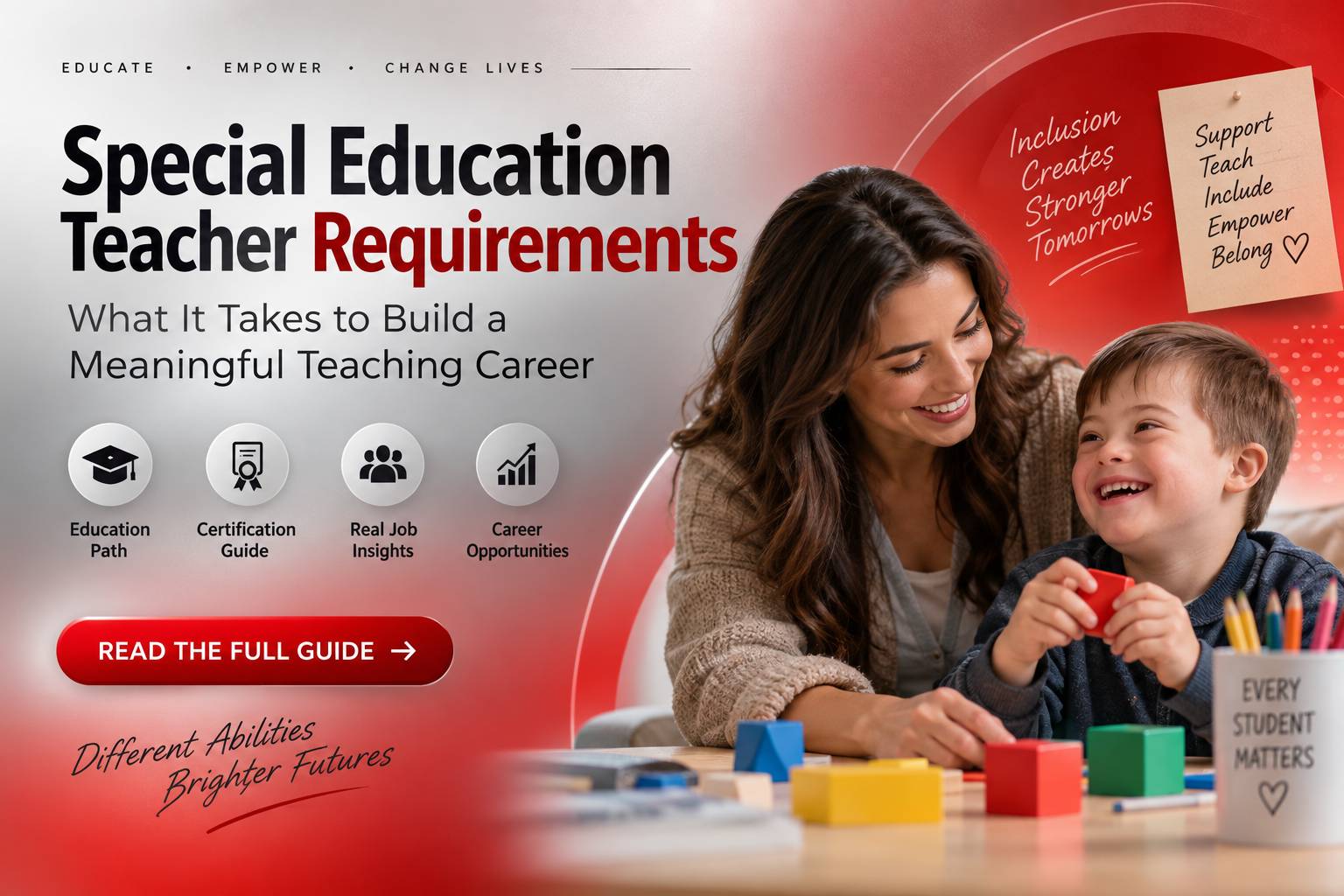
Teaching students with disabilities takes more than patience and good intentions. A classroom can change quickly, and a strategy that works well for one student may not work at all for another. That reality makes Special Education Teacher Requirements more demanding than simply earning a degree and submitting a job application.
Special education teachers support students with different educational needs, including learning disabilities, autism, emotional or behavioral challenges, physical disabilities, and speech or language difficulties. Their work involves making instruction accessible while helping students develop academic, social, and practical skills. It’s demanding, but for people who enjoy solving problems and building meaningful connections with students, the profession can be a rewarding career choice.
Understanding Special Education Teacher Requirements
For most people entering the field, the starting point is a bachelor’s degree. Special education is a common major, although related education programs may also provide a pathway into the profession. The exact academic requirements depend on the state and the teaching credential a candidate plans to pursue.
College preparation typically combines coursework with practical training. Future teachers study instructional methods, assessment, child development, classroom management, and disability characteristics. They also learn how to modify lessons, assignments, and classroom activities when a student needs a different way to access the curriculum.
Finishing college doesn’t automatically make someone eligible to teach in a public school. State certification or licensure is generally required, and the rules can vary considerably across the United States. Some states require a specific special education endorsement, while others have broader certification structures with additional qualifications for special education positions.
Real classroom experience adds another layer to that preparation. Student teaching, internships, and supervised fieldwork allow aspiring educators to work directly with students before taking full responsibility for a classroom. It’s often where the difference between theory and practice becomes obvious. A carefully planned lesson may still need to change once a teacher sees how students actually respond.
For a closer look at the career pathway, how to become a special education teacher provides additional information about entering the profession.
Special Education Teacher Skills and Certification
A credential gets a teacher into the classroom, but professional skills determine how effectively that teacher responds to what happens there. Special education educators may work with students who have very different learning styles, levels of independence, communication abilities, and behavioral needs.
Certification can involve examinations, background checks, specific coursework, supervised teaching experience, or other state requirements. Some states also require continuing education to maintain an active license. Because licensing rules aren’t identical nationwide, anyone planning a teaching career should check the current requirements in the state where they intend to work.
Communication is part of the job almost every day. A teacher may coordinate with a general education teacher, speak with a parent, participate in an IEP meeting, and work with a school specialist within the same week. Being able to explain student needs clearly and professionally helps keep those relationships productive.
Then there’s adaptability. One student may understand a concept after a short explanation, while another may need visual material, hands-on practice, repetition, assistive technology, or a completely different approach. Effective teaching isn’t about forcing every student through the same process. It means paying attention to what produces results and changing direction when necessary.
Classroom management brings its own challenges. Some students may experience difficulties with attention, emotional regulation, social interaction, or behavior. Consistent expectations provide structure, but flexibility still matters. When something isn’t working, a thoughtful teacher looks at the circumstances, identifies possible triggers, and considers whether the environment or instructional approach needs to change.
Progress can also look different from one student to another. A higher test score is important, but so are improvements in communication, independence, participation, social interaction, and everyday classroom routines. Recognizing those gains requires careful observation as well as formal assessment.
People still deciding which academic route to take can also review what education is needed to become a teacher for broader information about teacher preparation.
Special Education Teacher Job Outlook and Career Expectations
Meeting the formal Special Education Teacher Requirements is only the beginning. The realities of the job become much clearer once the focus shifts from qualifications to the work itself.
Special education teachers may work in elementary schools, middle schools, high schools, specialized programs, and other educational environments. Their responsibilities can differ substantially depending on grade level, student needs, school resources, and how special education services are organized.
Teaching is only one part of the workload. Lesson planning, assessments, progress documentation, meetings, family communication, and collaboration with other professionals can fill much of the school week. Individualized Education Programs, or IEPs, are another important responsibility and can require careful preparation and ongoing documentation.
The administrative side shouldn’t be underestimated. Teachers may need to record student progress, prepare for meetings, explain instructional decisions, and coordinate information with families and support professionals. Strong organizational skills can make a noticeable difference when classroom responsibilities start competing for attention.
Compensation naturally matters when considering any career. Special education teacher salaries vary according to location, school district, education level, experience, certification, and other employment conditions. Cost of living matters too. A salary that looks attractive on paper may have a very different value in a high-cost metropolitan area than in a smaller community.
For more compensation information, how much special education teachers make can help put the financial side of the career into perspective.
There is another consideration that doesn’t appear on a job description: how a teacher approaches learning. Special education often requires structure without becoming rigid. Students need clear expectations and predictable routines, but educators also need enough flexibility to change an approach when it isn’t helping a particular student.
That balance is closely related to a teacher’s philosophy of education. Having a clear perspective on teaching can help educators make consistent classroom decisions while still responding to individual needs.
Technology has become part of that process as well. Digital tools can support accessibility, differentiated instruction, communication, assessment, and student engagement. The most useful resource isn’t necessarily the most sophisticated one; it should solve a genuine classroom need. Teachers looking for practical ideas can explore educational websites for teachers for additional resources.
FAQ Special Education Teacher Requirements
1. Do special education teachers need a specific degree?
In the United States, requirements vary by state, but public-school special education teachers generally need a bachelor’s degree and an appropriate state teaching license or certification. Some states offer alternative certification routes, while others require specific coursework or examinations. Candidates should check the education agency in the state where they plan to teach because credentials accepted in one state may not automatically satisfy another state’s requirements.
2. What skills are most important for a special education teacher?
Successful special education teachers typically need strong communication, organization, adaptability, classroom management, and collaboration skills. They also need to understand how different disabilities can affect learning and how instruction can be modified accordingly. Patience matters, but professional judgment matters just as much. Teachers must evaluate what works, recognize when a student needs a different approach, and work effectively with families and other education professionals.
3. Can you become a special education teacher without majoring in special education?
In some states, alternative pathways allow candidates with degrees in other fields to pursue teacher certification through approved preparation programs, graduate programs, or alternative licensure routes. The exact requirements depend on the state, grade level, and certification area. Candidates should verify current licensing rules with the relevant state education agency before choosing a program because eligibility requirements and certification pathways can differ significantly.
The path into special education is structured, but it isn’t identical for everyone. Education, certification, supervised experience, communication, and practical classroom judgment all contribute to professional readiness, yet qualifications are only part of the picture. The work calls for people who can adapt without losing structure, communicate across different groups, and stay focused when progress takes time. Understanding the licensing rules, daily responsibilities, workplace expectations, and compensation before applying gives prospective teachers a clearer picture of what the profession actually demands.