Info Hot Job Find your dream job! Get for jobs, post your resume, compare salaries and find career advice and research.
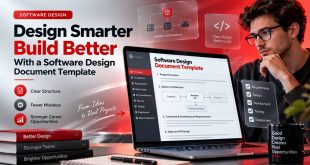
Software projects rarely fail because developers cannot write code. Most failures begin much earlier, when requirements are misunderstood, architecture decisions are undocumented, and teams work from different assumptions. A well-crafted Software Design Document acts as the bridge between ideas and implementation, turning abstract concepts into a structured plan that developers, architects, testers, and stakeholders can follow with confidence.
In modern software development, speed matters. However, speed without direction often creates technical debt, rework, and costly delays. Organizations that invest time in documenting software design gain a clear advantage because every contributor understands the system’s purpose, structure, and expected behavior before significant development resources are committed.

Software Design Document Fundamentals and Business Value
A Software Design Document (SDD) is a formal document that describes how a software system will be built. It outlines architectural decisions, system components, data flow, integration methods, security considerations, performance expectations, and implementation strategies. Rather than focusing on business requirements alone, the document translates those requirements into a technical framework.
The importance of an SDD becomes increasingly apparent as projects grow in complexity. Small applications may survive with minimal documentation, but enterprise systems, SaaS platforms, healthcare software, financial applications, and large-scale web services require precise coordination among multiple teams. Without documented design decisions, knowledge becomes fragmented and heavily dependent on individual contributors.
An effective Software Design Document reduces ambiguity. Developers know how modules interact. Quality assurance teams understand expected behavior. Project managers gain better visibility into technical risks and resource allocation. Stakeholders can review architectural decisions before development costs escalate.
Documentation also strengthens long-term maintainability. Software rarely remains unchanged after launch. New features, security updates, regulatory requirements, and infrastructure upgrades continuously reshape applications. When design decisions are documented properly, future teams can modify systems without repeatedly reverse-engineering existing code.
Organizations pursuing careers in software architecture often emphasize documentation skills alongside technical expertise. Professionals interested in emerging opportunities may find value in exploring software design careers shaping the future of technology, where structured design practices continue to gain strategic importance.
Key Components of a High-Quality Software Design Document
A strong Software Design Document follows a logical structure that communicates technical intent clearly without becoming unnecessarily complicated. The document typically begins with a project overview that defines objectives, scope, assumptions, and constraints. This section establishes context and ensures everyone shares the same understanding of the system’s purpose.
The architecture section serves as the foundation of the document. Here, software architects explain system layers, service boundaries, communication protocols, deployment environments, and technology selections. Architectural diagrams often accompany descriptions to provide visual clarity.
Data design is another critical component. Databases, schemas, entity relationships, storage strategies, and data validation rules must be documented carefully. Poor data modeling can affect scalability, reporting accuracy, and long-term system performance.
Integration design describes how the software interacts with external services, APIs, third-party platforms, and internal systems. As modern applications increasingly depend on interconnected ecosystems, documenting these interactions helps reduce implementation errors and simplifies troubleshooting.
Security considerations deserve dedicated attention. Authentication methods, authorization models, encryption standards, audit logging, and compliance requirements should be documented before development begins. Security integrated into design is far more effective than security added later.
Performance expectations must also be defined clearly. Response times, scalability targets, concurrency requirements, caching strategies, and infrastructure assumptions help engineering teams build systems capable of meeting real-world demand.
User interface considerations may be included depending on project scope. Visual workflows, navigation structures, accessibility requirements, and interaction patterns help ensure consistency across the product experience.
Teams exploring adjacent design disciplines frequently encounter overlapping principles. Understanding tools used in visual product development can complement technical documentation practices, particularly when reviewing resources about graphic design software and creative career pathways.
Software Design Document Best Practices for Modern Development Teams
The misconception that documentation slows development remains surprisingly common. In reality, poor documentation creates far greater delays than the effort required to produce a clear Software Design Document.
Effective documentation prioritizes clarity over volume. A concise, well-structured design document often delivers more value than hundreds of pages filled with unnecessary details. Every section should answer practical implementation questions rather than merely restating requirements.
Consistency is equally important. Teams should adopt standardized templates that simplify review processes and improve readability across projects. Standardized structures allow engineers to locate critical information quickly, reducing onboarding time and improving collaboration.
Visual communication significantly enhances understanding. Architecture diagrams, workflow charts, sequence diagrams, and data flow illustrations often explain complex concepts more efficiently than lengthy text descriptions. Combining concise narratives with meaningful visuals creates stronger documentation.
Version control should extend beyond source code. Design documents evolve as systems change. Maintaining revision histories ensures that architectural decisions remain traceable and that teams understand why modifications occurred.
Collaboration during document creation improves quality. Architects, developers, QA engineers, DevOps specialists, security professionals, and product stakeholders frequently identify different risks and requirements. Incorporating diverse perspectives early helps prevent expensive redesigns later.
Technical professionals evaluating long-term career growth often compare responsibilities across design and engineering roles. Insights into compensation trends can be found through discussions surrounding software designer salary expectations in today’s technology market.
Educational programs increasingly recognize documentation as a core engineering competency. Specialized academic pathways such as the UTD Software Engineering Web Specialist program often emphasize structured design methodologies alongside programming expertise.
Even industries outside traditional software development demonstrate the value of systematic design planning. For example, solutions built around cabinet design software for precision project planning illustrate how detailed design documentation supports accuracy, efficiency, and predictable outcomes.
Software Design Document Challenges and Future Trends
Software development methodologies continue evolving, but the need for structured design documentation remains constant. Agile, DevOps, and continuous delivery practices have changed how documents are maintained, not whether they are needed.
One common challenge involves keeping documentation synchronized with implementation. Documents that become outdated quickly lose credibility. Modern teams increasingly integrate documentation updates into development workflows to ensure accuracy throughout the software lifecycle.
Artificial intelligence is beginning to influence software design documentation as well. AI-powered tools can generate diagrams, summarize architectural decisions, and assist in maintaining technical records. While automation improves efficiency, human judgment remains essential for evaluating trade-offs, business priorities, and architectural risks.
Cloud-native architectures, microservices, event-driven systems, and distributed computing environments further increase the importance of design documentation. As systems become more interconnected, understanding dependencies and communication patterns requires detailed planning that cannot exist solely within source code.
Organizations that consistently produce high-quality Software Design Documents often experience fewer misunderstandings, faster onboarding, improved maintainability, and more predictable project outcomes. Documentation is not administrative overhead; it is a strategic asset that supports software quality from conception through long-term operation.
FAQ software architecture documentation
1. What is the difference between a Software Design Document and a Software Requirements Specification?
Although both documents support software development, they serve different purposes. A Software Requirements Specification focuses on what the system must accomplish from a business and functional perspective. A Software Design Document explains how those requirements will be implemented technically. The requirements document defines expected outcomes, while the design document details architecture, components, databases, integrations, security controls, and implementation strategies. Together, they create a complete roadmap that guides software projects from planning through deployment.
2. How detailed should a Software Design Document be for Agile development teams?
Agile development does not eliminate the need for documentation. Instead, it encourages practical and continuously updated documentation. A Software Design Document should contain enough technical detail to guide implementation, support collaboration, and reduce ambiguity without becoming excessively complex. Architecture decisions, system interactions, security requirements, and integration designs should always be documented clearly. The document should evolve alongside the product, allowing teams to adapt while maintaining a reliable technical reference throughout the development lifecycle.
3. Can AI tools create a complete Software Design Document automatically?
AI tools can accelerate documentation by generating outlines, diagrams, architectural summaries, and technical descriptions based on provided requirements. However, fully automated design documents still require expert review. Architectural trade-offs, compliance considerations, scalability planning, security decisions, and business constraints demand human expertise. AI functions best as a productivity assistant rather than a replacement for architects and engineering leaders. Organizations achieve the best results when automation supports documentation processes while experienced professionals validate technical accuracy and strategic alignment.
A Software Design Document is far more than a technical formality. It establishes a shared vision, reduces uncertainty, and creates a durable foundation for software success. As applications become increasingly sophisticated and development teams become more distributed, organizations that prioritize clear design documentation position themselves to deliver reliable, scalable, and maintainable software with greater confidence and efficiency.