Info Hot Job Find your dream job! Get for jobs, post your resume, compare salaries and find career advice and research.
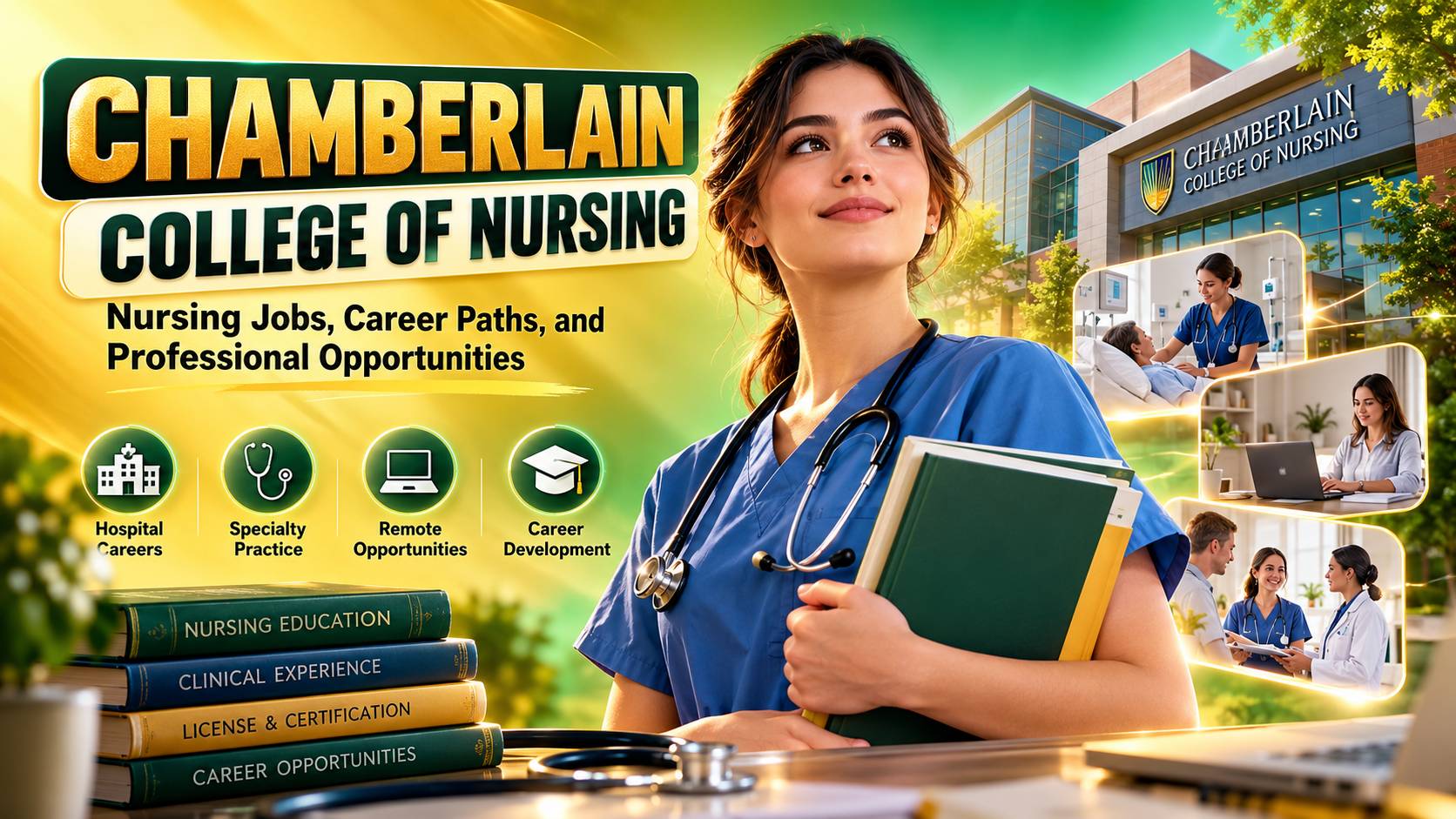
A nursing degree can lead to several kinds of work. Some graduates head straight into hospital units, while others eventually move into clinics, specialty practices, insurance, education, or clinical review. That flexibility is one reason nursing remains attractive to people looking for a profession with room to grow. Chamberlain College Of Nursing is one of the educational options prospective nurses may consider when planning that future.
Choosing a school, however, is only part of the decision. What comes after graduation matters just as much. Licensure, clinical experience, continuing education, and specialty training can all influence the jobs a nurse can pursue. Thinking about those factors early gives students a chance to build experience around a career direction instead of waiting until graduation to figure out what comes next.
Chamberlain College Of Nursing and Career Preparation
Nursing school has a practical purpose: preparing students to care for patients safely and make sound clinical decisions. That means developing skills in assessment, documentation, communication, patient education, teamwork, and professional responsibility. These aren’t simply classroom requirements; they become part of everyday nursing practice.
Those skills also travel well between healthcare settings. A nurse may use them on a medical-surgical floor, in an outpatient clinic, during a patient review, or while coordinating care for someone with a complex medical history. The workplace changes, but good clinical judgment remains essential.
Career interests often become clearer during clinical education. Someone who enjoys fast-paced acute care may gravitate toward hospital nursing, while another student may become interested in women’s health, oncology, community care, or healthcare administration. There’s no single route that every nursing graduate has to follow.
Prospective students can compare different educational options before committing to a program. Looking at Kaplan nursing programs and career opportunities can provide another perspective when evaluating nursing education and possible career directions.
Chamberlain College Of Nursing Jobs and Career Opportunities
The familiar image of a nurse working beside a hospital bed represents only one part of the employment picture. Registered nurses can work in outpatient care, physician offices, rehabilitation, specialty centers, community programs, and other healthcare environments. Some roles focus heavily on direct patient care, while others rely more on clinical analysis, coordination, documentation, or communication.
Insurance is one example of how nursing expertise can be used outside traditional bedside care. Nurses with appropriate experience may review medical information, support claims operations, or help organizations interpret healthcare records. A role such as a Nurse Consultant career in Tampa, Florida shows how clinical knowledge can be applied in a business-oriented healthcare setting.
Remote work has expanded the picture further. Clinical appeals and medical review positions may involve evaluating patient records, understanding treatment decisions, and determining whether documentation supports a particular healthcare decision. Opportunities such as remote Clinical Appeals Nurse positions show how experienced nurses can take their knowledge into a different work environment.
Specialty practice offers another direction. Nurses who continue their education may qualify for advanced roles that require deeper knowledge of a particular patient population or clinical field. Oncology is a good example because cancer care involves complex treatment plans, long-term patient relationships, and multidisciplinary coordination. Opportunities involving oncology Nurse Practitioner and PA careers illustrate how advanced education can lead toward specialized healthcare work.
Not every graduate will want the same kind of job, and that’s normal. A nurse might spend several years in direct patient care before moving into utilization review or education. Another may pursue advanced practice, while someone else may prefer bedside nursing and develop expertise in a particular specialty. Career goals can change as professional experience grows.
Chamberlain College Of Nursing Graduate Career Development
The first nursing job is rarely the final stop. Healthcare organizations change, clinical standards evolve, and nurses often discover new interests after gaining experience in practice. Continuing education helps professionals keep pace with those changes while building knowledge that can support future career moves.
Professional development becomes especially important when a nurse moves into a specialty or seeks additional credentials. Employers may look for experience with specific patient populations, certifications, documentation systems, or clinical processes, depending on the position. Nurses planning their next step can also explore Registered Nurse CEU opportunities as part of an ongoing education strategy.
Experience matters, too. A new graduate and a nurse with several years of specialty practice may hold the same basic license, yet their employment options can look very different. Practical experience can make it easier to qualify for positions involving greater responsibility, specialized clinical knowledge, or independent decision-making.
Job seekers should keep expectations realistic. A nursing degree doesn’t automatically guarantee a particular salary, specialty, employer, or location. Hiring requirements vary, and some positions call for additional credentials or previous clinical experience. A sound career plan leaves room for those differences rather than assuming graduation alone determines the outcome.
For many nurses, career growth happens gradually. One position provides experience for the next, continuing education adds another layer of knowledge, and professional interests become clearer over time. That progression can lead from entry-level nursing into specialty practice, leadership, education, consulting, clinical review, or advanced practice.
FAQ Chamberlain College Of Nursing Jobs
1. What careers can graduates pursue after attending Chamberlain College Of Nursing?
Graduates may pursue registered nursing positions in hospitals, clinics, outpatient facilities, rehabilitation centers, specialty practices, and community healthcare. Depending on experience, licensure, and additional education, career options can also include case management, clinical appeals, utilization review, nursing education, quality improvement, leadership, advanced practice, and other specialized healthcare positions.
2. Does Chamberlain College Of Nursing prepare students for remote nursing jobs?
The clinical knowledge and professional skills developed through nursing education can provide a foundation for healthcare positions that may be performed remotely. Remote roles, however, often require more than a nursing degree. Employers may expect an active license, previous clinical experience, specialty knowledge, strong documentation skills, and familiarity with electronic healthcare systems. Requirements vary by position and employer.
3. How can Chamberlain College Of Nursing graduates improve their job opportunities?
Graduates can strengthen their employment prospects by maintaining an active nursing license, gaining relevant clinical experience, pursuing continuing education, and developing expertise in a desired specialty. Additional certifications may be useful for certain positions. Strong communication, documentation, clinical judgment, and technology skills can also help nurses adapt when new career opportunities become available.
A nursing career doesn’t have to follow a straight line. Chamberlain College Of Nursing can provide an educational starting point, while professional growth continues through clinical experience, licensure, specialization, and ongoing learning. For graduates who keep developing their skills, opportunities can extend well beyond the hospital floor into specialty care, clinical review, education, consulting, and other areas of healthcare.