Info Hot Job Find your dream job! Get for jobs, post your resume, compare salaries and find career advice and research.
A nursing license represents years of education, clinical training, and professional commitment. But earning that credential is only the beginning. As healthcare practices evolve, nurses must keep their knowledge current to meet clinical standards and remain qualified to practice. What they learned during initial training may not always reflect the procedures, treatments, and technologies used in today’s healthcare facilities.
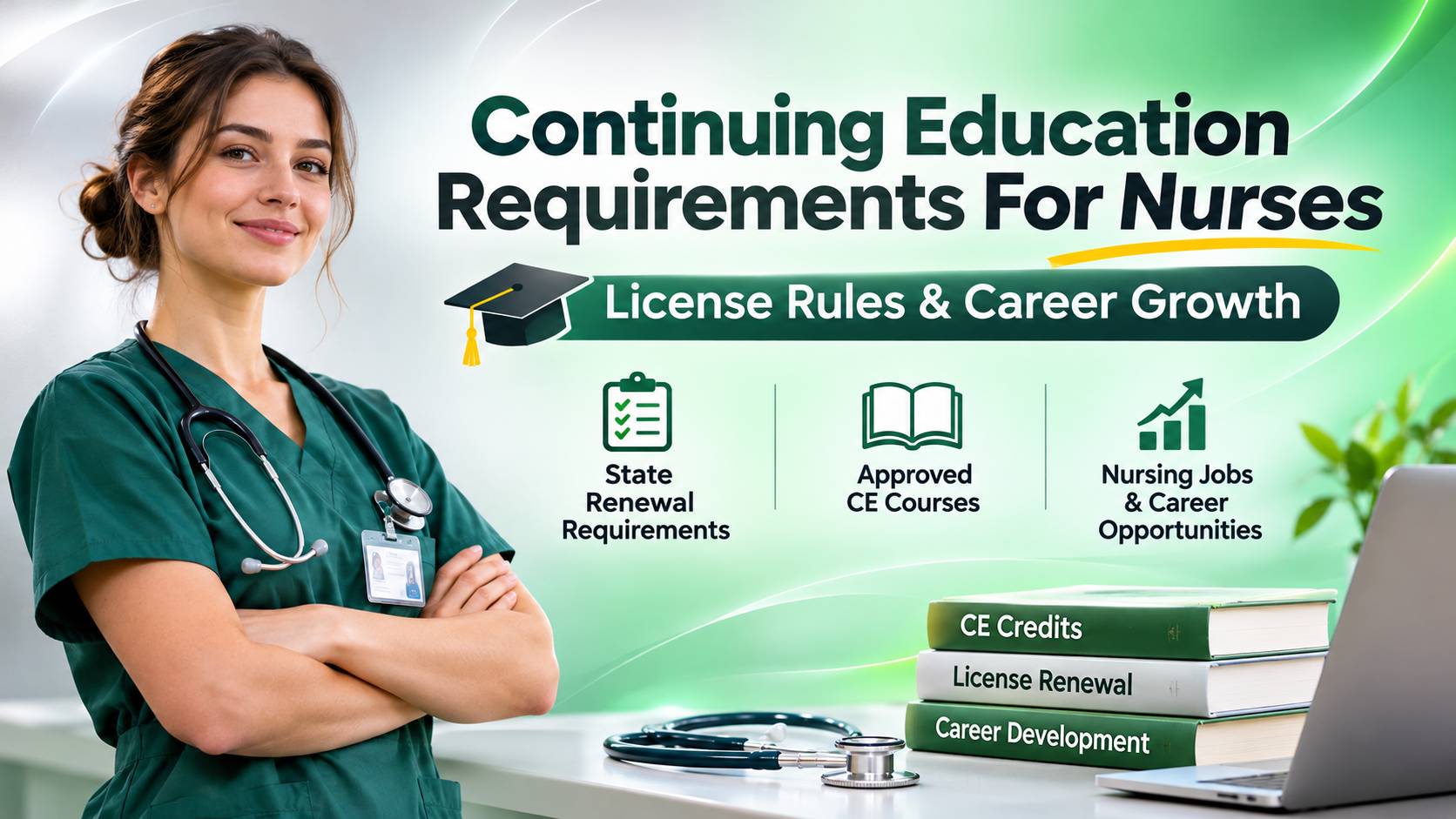
Continuing Education Requirements For Nurses are designed to address this challenge. Across the United States, nursing professionals must follow state-specific rules governing license renewal and professional development. For registered nurses (RNs), licensed practical nurses (LPNs), and advanced practice registered nurses (APRNs), overlooking these obligations can create problems that extend beyond paperwork. An incomplete renewal process may affect their ability to continue working.
There’s also a career consideration that deserves attention. Healthcare employers want nurses who can adapt to changing patient needs, understand current clinical practices, and contribute to better outcomes. Meeting education requirements protects professional credentials, while choosing the right courses can help nurses prepare for new responsibilities and employment opportunities.
Why Continuing Education Requirements For Nurses Matter
Clinical experience is valuable, but healthcare knowledge doesn’t stand still. Medication protocols change, new treatment options become available, and patient safety standards continue to develop. Nurses who don’t update their knowledge may eventually find themselves relying on practices that no longer reflect current recommendations.
Continuing education helps close that gap. Courses covering infection prevention, medication safety, patient assessment, nursing ethics, and evidence-based practice give professionals opportunities to strengthen their clinical judgment.
The benefits extend into the workplace. A hospital recruiting for a specialized department may look beyond years of experience and consider whether applicants understand current clinical guidelines. The same applies to outpatient facilities, rehabilitation centers, and healthcare organizations with specific patient populations.
This doesn’t mean that collecting additional education credits automatically leads to a promotion. Employers still assess experience, certifications, communication skills, and actual job performance. However, nurses who take professional development seriously have a stronger foundation when competing for positions that demand specialized knowledge.
Continuing Education Requirements For Nurses by State and License Type
One point often overlooked by nursing professionals is that the United States doesn’t have a single continuing education standard for every nurse. Each state board of nursing establishes its own licensing and renewal regulations.
Some states require a specified number of continuing education contact hours within a renewal cycle. Others recognize alternative professional development activities or require education in particular subjects. The rules can also differ according to license category and professional responsibilities.
For example, an RN may have different renewal obligations from an LPN. APRNs can face additional requirements related to specialty certification, prescriptive authority, or advanced clinical practice.
There’s another distinction worth understanding: state licensing requirements aren’t necessarily the same as workplace training obligations. A hospital may require annual competency assessments, infection control updates, or mandatory safety education even after an employee has fulfilled all state renewal conditions.
The National Council of State Boards of Nursing (NCSBN) provides regulatory resources for nurses seeking information about licensing across the country. Nurses can also consult their respective state boards for the rules that apply to their individual licenses.
State Nursing License Renewal and CEU Requirements
Continuing education units (CEUs) and contact hours are commonly used to measure professional learning. However, nurses shouldn’t assume that every course offering CEUs will automatically satisfy their state’s licensing requirements.
Course approval, provider accreditation, subject matter, and documentation all matter. Certain jurisdictions also require education covering specific topics, such as pain management, substance use disorders, nursing ethics, or infection prevention.
Requirements can vary considerably between states. For example, California has specific continuing education requirements for registered nurses, including 30 contact hours during each two-year renewal period. Other states may use different renewal conditions, exemptions, or alternative methods of demonstrating continued competency. This is why nurses should consult the relevant state board rather than rely on information intended for professionals in another jurisdiction.
A mistake at this stage can become costly. Completing several courses only to discover that they don’t meet the applicable renewal standards wastes both time and money. Checking eligibility before enrollment is a much safer approach.
Nurses should also keep certificates of completion and other supporting documents. Some boards require direct reporting, while others expect professionals to retain records in case of an audit. Knowing the difference can prevent last-minute complications.
Approved Nursing Continuing Education Courses and Professional Development
Choosing the right course involves more than finding an available program with attractive credit hours. Nurses need education that is recognized by the appropriate licensing authority and relevant to their actual responsibilities.
Professional associations, universities, accredited education providers, and healthcare organizations offer programs in clinical practice, patient communication, medication management, and professional ethics. Online courses have also made learning more accessible, particularly for nurses working rotating shifts or demanding schedules.
Specialty education deserves particular consideration. An oncology nurse, for instance, needs to understand developments in cancer treatment and symptom management. A nurse working in diabetes care must remain familiar with glucose monitoring, medication management, and patient education strategies.
These areas of expertise can also open doors to different professional roles. Nurses interested in patient education and chronic disease management may find Diabetic Nurse Educator career opportunities relevant to their long-term career plans.
The most useful educational choices are those that serve two purposes: satisfying applicable licensing obligations and improving professional capability. A course that directly supports a nurse’s specialty or intended career direction is generally more valuable than unrelated training completed simply to accumulate credits.
How Continuing Education Influences Nursing Jobs and Career Growth
Maintaining an active nursing license is essential, but it doesn’t necessarily make an applicant stand out during recruitment. Employers often evaluate a broader combination of qualifications, including clinical experience, professional certifications, specialty knowledge, and the ability to work effectively with patients and colleagues.
This distinction becomes especially important when nurses consider moving beyond conventional bedside assignments. Positions in clinical education, quality improvement, supervision, and specialty healthcare services may require competencies that aren’t fully developed through routine clinical practice.
Continuing education can help address those gaps. It allows nurses to build relevant knowledge before pursuing positions with greater responsibility. For example, an experienced medical-surgical nurse interested in oncology education may benefit from additional training in cancer treatment, patient counseling, and clinical instruction.
However, professional development should complement practical experience rather than replace it. Employers recruiting for advanced or specialized roles generally want candidates who can demonstrate that they have applied their knowledge in real clinical settings.
Continuing Education for Nurse Educator and Specialty Nursing Jobs
Nurse educator positions provide a good example of how clinical experience and professional development can work together. These professionals help healthcare organizations train staff, reinforce clinical standards, and improve the consistency of patient care.
The role requires more than a strong nursing background. Educators must communicate clearly, understand instructional methods, and translate complex clinical information into practical learning experiences. Experience in a particular specialty can be especially valuable when the position involves educating healthcare professionals about specific treatments or patient conditions.
Depending on the employer, additional qualifications may include a bachelor’s or master’s degree, relevant clinical experience, specialty certifications, and previous teaching or staff development responsibilities. These requirements aren’t identical across organizations, so reviewing individual job descriptions remains essential.
Consider opportunities such as Incyte Corporation Oncology Nurse Educator jobs. This type of position illustrates how oncology knowledge can become an important qualification outside traditional bedside care.
Healthcare systems offer another route into professional education. Universal Health Services Nurse Educator opportunities reflect the demand for nursing professionals who can combine clinical understanding with staff development responsibilities.
For nurses considering this career direction, continuing education should be selected with a clear purpose. Courses in specialty practice, clinical instruction, communication, and professional leadership may support future applications. Still, each employer sets its own qualifications, and relevant experience remains an important part of the selection process.
Managing CE Credits and Nursing License Renewal Deadlines
Even nurses who understand the requirements can run into difficulties if they don’t manage their records properly. Certificates, course descriptions, provider details, contact hours, and completion dates should be kept together and organized throughout the renewal cycle.
Waiting until a license is about to expire creates avoidable pressure. Suitable courses may not always be available at short notice, particularly when a state requires education in specific subjects. Documentation problems can add another layer of difficulty.
A better approach is to spread professional development activities across the renewal period. Employer-sponsored learning platforms can help, especially when hospitals provide internal training, competency assessments, and access to recognized educational programs.
It’s also worth checking renewal dates regularly rather than relying entirely on reminders from an employer. Ultimately, maintaining a professional license is the nurse’s responsibility. Good recordkeeping and early planning make that responsibility considerably easier to manage.
FAQ: Continuing Education Requirements For Nurses
1. How many continuing education hours do nurses need to renew their licenses?
There isn’t one standard number of continuing education hours for nurses throughout the United States. Each state board of nursing establishes its own renewal conditions, and some jurisdictions require particular educational subjects instead of a fixed number of contact hours. Requirements may also differ between RNs, LPNs, and APRNs. Nurses should check their state board’s latest regulations before enrolling in courses, as requirements can change between renewal periods.
2. Can nurses complete continuing education requirements online?
Yes. Many state nursing boards accept online continuing education courses when the programs and providers meet the applicable approval or accreditation standards. Online learning is particularly convenient for nurses managing rotating shifts, overnight schedules, and demanding clinical responsibilities. However, not every online course qualifies for license renewal. Before enrolling, nurses should confirm the provider’s recognition, eligible contact hours, required subject areas, and documentation procedures with their state board.
3. What happens if a nurse doesn’t complete continuing education requirements before license renewal?
Failing to meet mandatory education requirements can prevent a nurse from satisfying license renewal conditions, depending on the applicable state regulations. Consequences may include delayed renewal, additional compliance obligations, or restrictions on professional practice. Working without an active license when one is legally required can also create serious employment and regulatory consequences. Nurses who anticipate missing a deadline should contact their state board promptly to understand available options rather than assuming an extension will automatically be granted.
Continuing Education Requirements for Nurses are more than a licensing formality. They help ensure that nursing professionals remain familiar with current clinical standards while meeting the obligations attached to their professional credentials.
For nurses planning their next career move, the value of continuing education goes further. Relevant courses can strengthen specialty knowledge, support professional development, and prepare experienced clinicians for opportunities in nursing education and other advanced responsibilities.
The challenge isn’t simply completing enough hours before a renewal deadline. It’s making those learning opportunities count. Nurses who approach professional education with that mindset are better prepared to maintain their credentials, meet employer expectations, and adapt to the changing demands of healthcare.