Info Hot Job Find your dream job! Get for jobs, post your resume, compare salaries and find career advice and research.
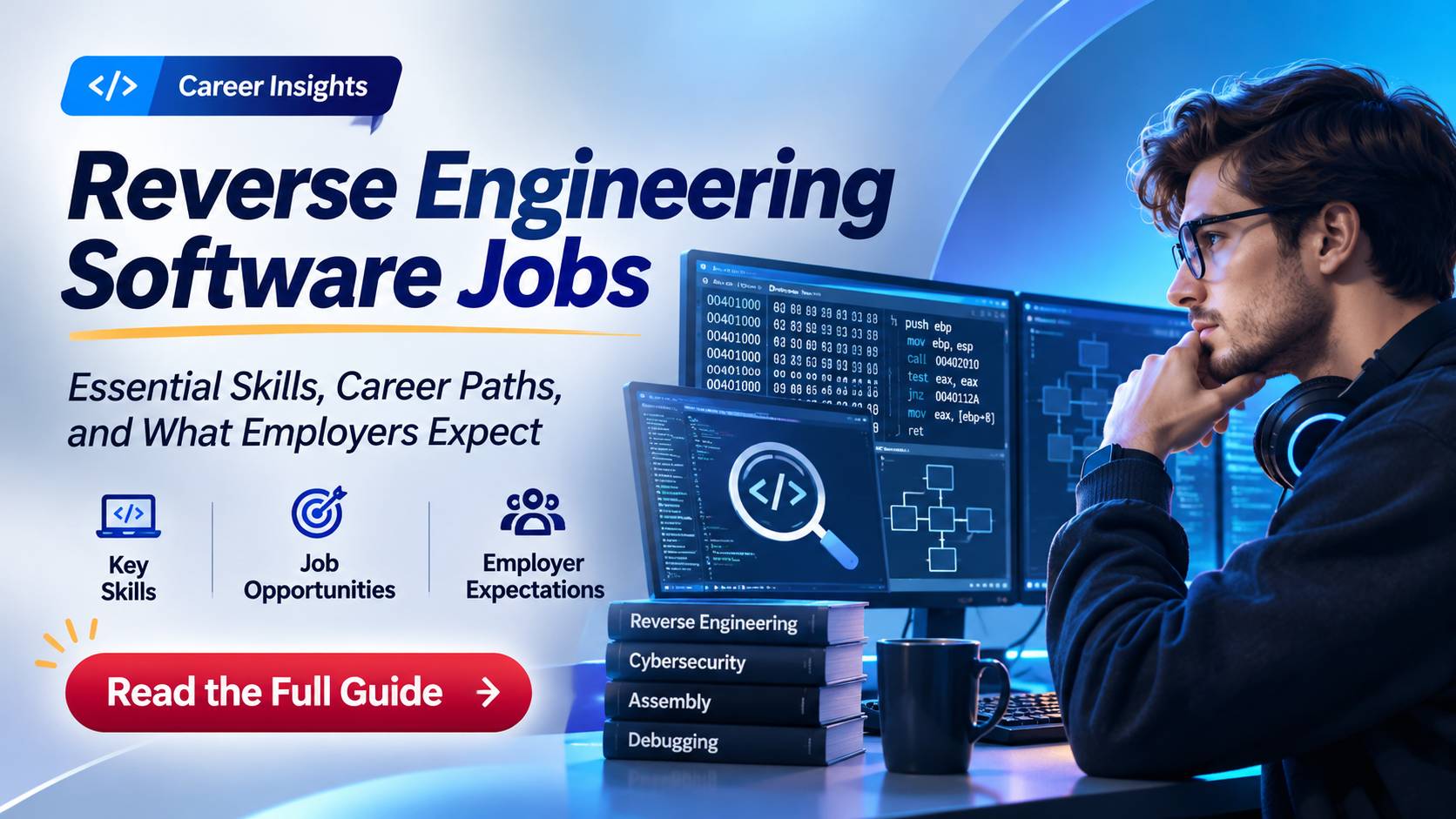
Modern software systems aren’t always easy to replace. Many businesses still rely on applications developed years ago, undocumented programs, and complicated platforms that support critical operations. Rebuilding these systems from scratch can be expensive, and there’s always a risk of disrupting processes that already work. Companies therefore need engineers who can examine existing software, understand its behavior, and identify ways to improve it without starting over.
This is where Reverse Engineering Software becomes valuable. Rather than building an application from an initial design, engineers investigate programs that already exist. They examine internal structures, analyze functionality, and work out how different components interact. The expertise has practical applications in cybersecurity, software development, embedded technology, and application security.
For job seekers, however, entering this field isn’t simply a matter of learning another programming language. Employers expect candidates to combine technical knowledge with analytical thinking and practical investigation skills. That combination makes reverse engineering an attractive specialization, although getting the first opportunity can take considerable preparation.
Why Reverse Engineering Software Matters in Modern Technology
Reverse Engineering Software involves examining an existing application or program to understand its architecture, algorithms, functionality, and behavior. Engineers essentially work backward from the available software to determine how it operates.
This approach becomes useful when an organization maintains legacy applications or works with proprietary systems that have limited documentation. Replacing an established platform may introduce unnecessary costs, compatibility issues, and operational risks. Understanding its existing architecture gives development teams a clearer starting point.
Consider a financial institution preparing to migrate an older application to modern infrastructure. The original system may contain transaction rules, database dependencies, and business processes that were never properly documented. Developers can’t simply transfer the application and assume everything will work. They need to understand how the existing software processes information and communicates with other systems. Reverse engineering helps uncover those dependencies before significant changes are made.
The same expertise has an important role in cybersecurity. Security researchers examine suspicious executable files to understand malware behavior, investigate vulnerabilities, and determine how malicious programs interact with operating systems. Software manufacturers also use similar techniques to investigate compatibility problems and unexpected application behavior.
The work extends beyond conventional computer applications. Firmware, automotive technology, industrial equipment, and electronic devices can all require detailed software analysis.
There are legal boundaries, of course. Professional reverse engineering must respect intellectual property rights, licensing agreements, contractual obligations, and applicable laws. Authorized technical investigation is fundamentally different from accessing or modifying software without permission.
For businesses, the practical benefit is straightforward: understanding existing software reduces uncertainty. It gives engineers better information before they modify, integrate, or secure systems that the organization depends on.
Reverse Engineering Software Skills Employers Expect
A candidate’s technical foundation often determines whether they progress beyond an initial recruitment screening. Employers generally expect more than familiarity with analysis tools. They want engineers who understand programming, operating systems, debugging, and the behavior of compiled applications.
C, C++, Python, and Assembly are particularly useful. C and C++ help engineers understand pointers, memory allocation, and low-level program execution. Python makes it easier to automate repetitive analysis tasks, process binary data, and develop investigative scripts. Assembly provides insight into the machine instructions generated when source code is compiled.
Operating system knowledge is just as important. Understanding process management, memory structures, system calls, and executable formats helps engineers investigate how applications interact with their environments. Experience with Windows and Linux internals can be especially useful because software investigations frequently involve examining application behavior across these platforms.
Specialized tools support the work, but knowing when and how to use them matters more than collecting software names on a résumé. Ghidra and IDA Pro are commonly used for disassembly and program analysis, while x64dbg supports debugging and examination of application execution.
What does this look like in practice? An engineer investigating an application crash might use a debugger to examine memory behavior, trace a function call, and identify the instruction responsible for an unexpected result. The findings can then help developers correct the underlying problem without replacing the entire application.
Technical ability isn’t the only consideration. Engineers must also explain their findings to development teams, security specialists, and management. Identifying a problem is useful, but documenting its cause and recommending a practical response is what makes the work valuable to an organization.
This is why a portfolio can make a difference. Authorized software analysis projects, open-source contributions, debugging exercises, and documented research give recruiters something concrete to evaluate. A useful project should explain the problem, the investigation process, what was discovered, and why the findings matter.
For professionals comparing specialized technical roles with broader development careers, software engineer salary expectations and compensation factors provide useful context when evaluating career opportunities.
Reverse Engineering Software Jobs and Career Opportunities
The employment opportunities associated with Reverse Engineering Software aren’t limited to companies advertising positions under that exact title. Cybersecurity firms, software manufacturers, automotive businesses, embedded technology developers, and enterprise IT departments may all need people with these capabilities.
Common job titles include Reverse Engineer, Malware Analyst, Vulnerability Researcher, Application Security Engineer, and Security Research Engineer. Their responsibilities overlap, but the day-to-day work isn’t identical.
A Reverse Engineer typically investigates software architecture, compiled programs, and undocumented functionality. A Malware Analyst concentrates on suspicious files, malicious behavior, and security investigations. A Vulnerability Researcher examines weaknesses in software and evaluates their potential security implications.
These distinctions matter when applying for jobs. A vacancy mentioning software analysis may require strong C++ and debugging experience, while another may prioritize malware investigation, operating system knowledge, or application security. Reading the actual responsibilities is more useful than relying on the job title alone.
Embedded technology offers another employment path. Automotive manufacturers, industrial equipment companies, and electronics developers depend on software that must communicate reliably with specific hardware. Engineers familiar with firmware, C/C++, and low-level debugging can contribute to compatibility investigations, system modernization, and product security.
However, there’s a genuine obstacle for newcomers. Dedicated reverse engineering positions often request previous experience, specialized tool knowledge, and a strong understanding of operating system internals. Entry-level vacancies carrying the exact title Reverse Engineer are less common than general software development or cybersecurity positions.
That doesn’t mean beginners have no way in. Starting as a Junior Software Engineer, Application Security Analyst, Junior Malware Analyst, or Security Research Assistant can provide relevant experience. These positions offer opportunities to develop programming skills, investigate technical problems, and become familiar with professional security workflows.
For example, senior C software engineer opportunities in Weston, FL illustrate how advanced programming knowledge connects with specialized engineering responsibilities.
At the associate level, Bosch Associate Software Engineer opportunities in Burnsville, MN provide another reference for understanding employer expectations and the qualifications associated with software engineering positions.
With sufficient experience, professionals can progress toward senior reverse engineering roles, security research leadership, application security architecture, or specialized technical consulting. The direction depends largely on the problems they learn to solve and the depth of their technical expertise.
FAQ Reverse Engineering Software Careers
1. Is Reverse Engineering Software a good career choice?
It can be a worthwhile career for professionals interested in cybersecurity, malware analysis, embedded systems, and software security research. Organizations need people who can investigate existing applications, understand undocumented systems, and identify technical weaknesses. However, opportunities differ across industries, and specialized positions often require substantial experience. Candidates with strong programming fundamentals, practical analysis skills, and a portfolio of legitimate research projects have a more convincing foundation when applying for these roles.
2. Can beginners get Reverse Engineering Software jobs without professional experience?
Yes, although securing a dedicated reverse engineering position without professional experience can be difficult. Employers frequently look for knowledge of C, C++, Assembly, operating system internals, and debugging tools. A practical alternative is to start in junior software development or cybersecurity. Beginners can also build an authorized research portfolio using tools such as Ghidra and x64dbg. Documenting the investigation process and explaining the technical findings can help demonstrate ability beyond what a résumé alone can show.
3. What programming languages and tools are needed for Reverse Engineering Software?
C, C++, Python, and Assembly are among the most useful languages for this discipline. C and C++ help engineers understand memory management and compiled applications, Python supports automation, and Assembly provides a closer look at machine-level instructions. Ghidra and IDA Pro are useful for disassembly and program analysis, while x64dbg supports debugging. The exact combination depends on the software being investigated, the employer’s technology environment, and the responsibilities attached to the position.
Understanding software that someone else built requires a different mindset from developing a new application. Engineers must be comfortable working with incomplete documentation, unexpected program behavior, and technical problems that don’t have obvious solutions. That’s what makes Reverse Engineering Software a specialized professional skill.
For job seekers, the biggest hurdle is often obtaining relevant experience rather than learning another programming language. Starting with software development or cybersecurity can provide a practical foundation, while documented analysis projects demonstrate the ability to investigate unfamiliar systems. Employers ultimately need professionals who can turn technical findings into decisions that improve software reliability and security. Those who develop that ability have a stronger foundation for building a career in this field.