Info Hot Job Find your dream job! Get for jobs, post your resume, compare salaries and find career advice and research.
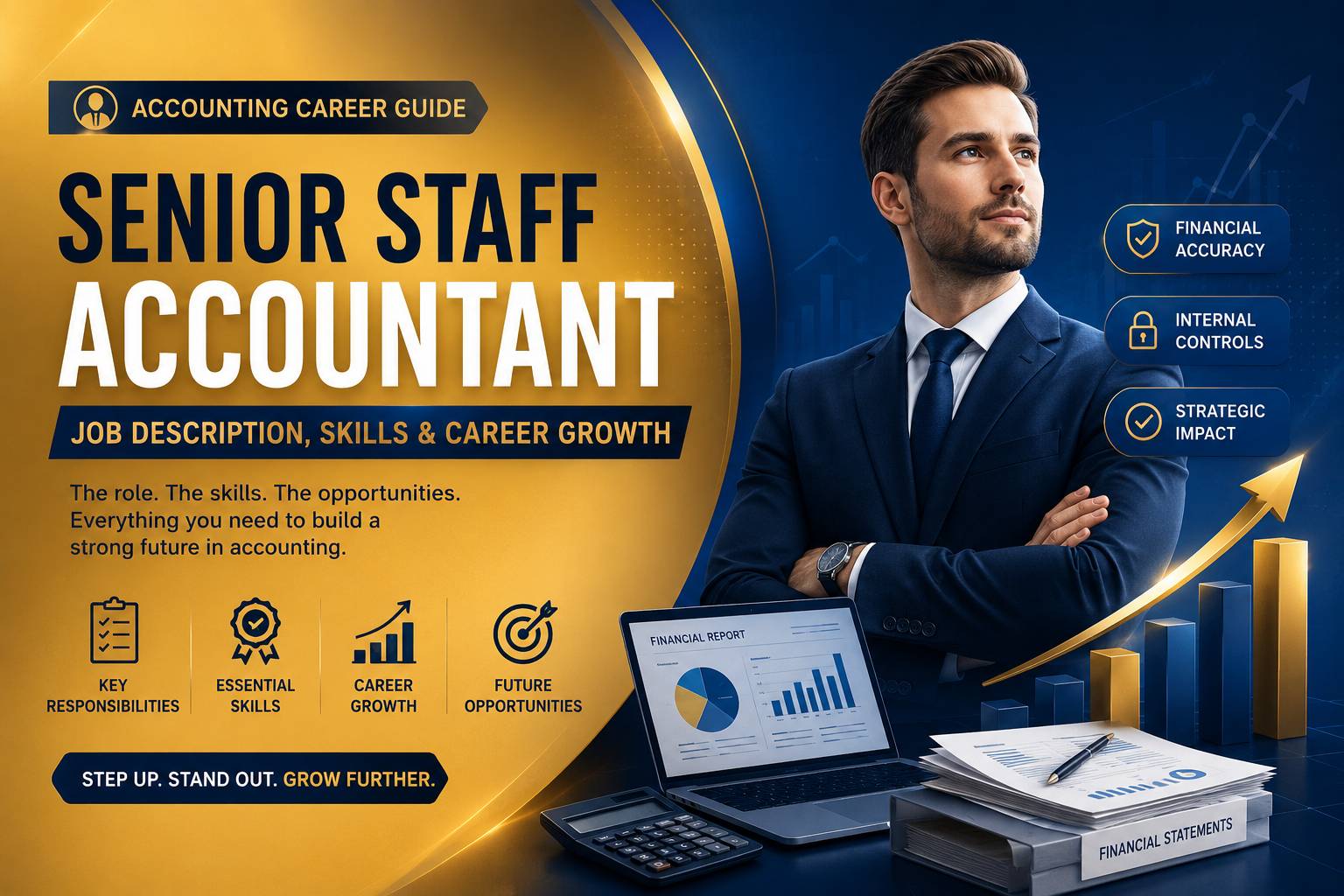
A Senior Staff Accountant Job Description covers far more than keeping the books in order. When account balances don’t match, deadlines are closing in, or a transaction raises questions, companies need someone who can dig into the numbers and figure out what’s really going on.
That’s where a senior staff accountant earns the title. The position calls for solid accounting knowledge, but technical skills alone won’t carry the job. Employers also expect sound judgment, close attention to detail, and the ability to work independently. From reviewing account balances and preparing adjustments to supporting financial statements and resolving general ledger issues, the work directly affects how reliable a company’s financial information can be.
Senior Staff Accountant Job Description: Core Responsibilities
At the heart of a Senior Staff Accountant Job Description is the responsibility to keep financial records accurate throughout the accounting cycle. A typical workload may include preparing journal entries, reconciling balance sheet accounts, reviewing general ledger activity, analyzing transactions, and tracking down discrepancies before they affect financial reporting.
Month-end close puts many of these responsibilities to the test. Accountants may need to record accruals, review prepaid expenses, confirm supporting documents, reconcile outstanding balances, and make sure transactions land in the correct accounting period. There’s usually no room for guesswork. Once the numbers move into management reports or financial statements, even a small mistake can create a bigger problem down the line.
Financial statement accuracy also depends heavily on the quality of this work. Senior staff accountants help verify that account balances have proper support, transactions are classified correctly, and necessary adjustments are recorded on time. Their responsibilities can also strengthen internal controls by following established procedures, spotting unusual activity, and addressing gaps that may lead to reporting errors. Reliable numbers give management a clearer basis for operational and business decisions.
The difference between this position and a more general accounting role often comes down to ownership and complexity. A closer look at a standard accountant job description can show how senior-level accountants typically handle more demanding reconciliations, take greater responsibility for financial processes, and review information before reporting deadlines become critical.
Audit support, fixed asset accounting, internal controls, and management schedules may also fall within the role, depending on the organization. Some companies rely on senior staff accountants to help improve inefficient procedures when recurring issues slow down the close process or make financial reviews more difficult.
Then there’s the judgment factor. A transaction may look technically correct at first glance yet still be recorded in the wrong period or classified under the wrong account. Senior staff accountants need to catch those details, ask the right questions, and resolve the issue before it finds its way into the financial statements.
Senior Staff Accountant Qualifications and Essential Skills
Most employers look for a bachelor’s degree in accounting, finance, or a related field, along with several years of practical accounting experience. Experience with general ledger accounting, account reconciliations, journal entries, financial reporting, and month-end close is particularly valuable because these functions often form the backbone of the position.
A working knowledge of Generally Accepted Accounting Principles, or GAAP, is also expected in many U.S.-based roles. Experience with internal controls, audit support, compliance requirements, and accounting systems can further strengthen a candidate’s profile. Senior-level work often means dealing with large amounts of financial information, so accountants need to recognize when balances or trends don’t add up instead of simply accepting the numbers in front of them.
Strong spreadsheet skills remain useful for everyday accounting work. Excel is commonly used to manage reconciliations, financial schedules, variance analysis, and supporting records. Experience with ERP platforms and other accounting software can also make the job easier, especially in businesses with complex reporting structures and high transaction volumes.
Career development doesn’t have to follow a single track. Accountants interested in budgeting, performance measurement, management accounting, and financial decision-making may find additional opportunities through Certified Management Accountant jobs, particularly when building qualifications for responsibilities beyond traditional financial reporting.
The ability to communicate clearly matters just as much as technical knowledge. Payroll, purchasing, operations, finance leaders, and external auditors may all hold information needed to complete an accounting task. When documentation is missing, or a transaction needs clarification, a senior staff accountant has to get to the point quickly and explain the issue in terms others can understand.
At the end of the day, accuracy remains non-negotiable. Employers need someone who can work through detailed information carefully without losing sight of deadlines, priorities, or the wider impact of an accounting error.
Senior Staff Accountant Career Path and Growth Opportunities
For many professionals, the Senior Staff Accountant role is a stepping stone toward accounting management, controllership, financial analysis, or a specialized area of accounting. Where the path leads often depends on the type of experience gained along the way.
Handling financial reporting, internal controls, audit preparation, process improvements, and increasingly complex accounting issues can build a foundation for positions such as Accounting Manager, Assistant Controller, or Controller. Time on the job helps, but experience alone isn’t always enough. Employers tend to value accountants who can solve problems without constant direction, improve inefficient processes, and understand why financial results matter to the business.
Long-term prospects should also be part of the equation. The accountant job outlook offers useful context for understanding broader career trends and how specialization, technology, and changing employer expectations may shape opportunities for accounting professionals.
Some accountants prefer to develop deeper expertise in a particular area rather than move directly into management. Those drawn to inventory, manufacturing expenses, product costing, and operational efficiency may find a cost accountant job description useful when considering a more specialized direction. The responsibilities are different, but specialized experience can add another layer of technical knowledge and open doors to different opportunities.
No two employers organize accounting work in the same way. Company size, reporting requirements, industry demands, and internal processes can all change what a senior-level accountant handles from one position to another. Looking at a real corporate accountant job opportunity can provide practical context about the qualifications, responsibilities, and financial reporting expectations corporate employers may place on experienced accounting professionals.
Growth ultimately comes from becoming dependable with increasingly complex work. Senior staff accountants who catch problems early, produce accurate results, and help make financial processes run more smoothly can put themselves in a stronger position for roles with broader responsibility.
FAQ Senior Staff Accountant Career Requirements
- What does a Senior Staff Accountant do on a typical day?
The day may involve preparing and reviewing journal entries, reconciling general ledger and balance sheet accounts, analyzing financial information, investigating discrepancies, and working with other departments to resolve accounting issues. During month-end or year-end close, the pace often increases because balances and supporting records must be reviewed carefully before financial reports are completed.
- How much experience is usually required for a Senior Staff Accountant job?
The exact requirement depends on the employer, but senior-level positions commonly seek candidates with several years of relevant accounting experience. A strong background in general ledger work, account reconciliations, financial statements, journal entries, accounting systems, and month-end close can be especially valuable. Employers may also favor candidates who have already handled complex accounting issues with limited supervision.
- What qualifications can help someone advance beyond Senior Staff Accountant?
Moving into a higher-level accounting role often requires deeper experience in financial reporting, internal controls, audit procedures, budgeting, financial analysis, and process improvement. Leadership skills and sound business judgment can also become increasingly important when pursuing accounting management or controller-track positions. Professional certifications and specialized expertise may further strengthen a candidate’s qualifications for jobs with broader financial responsibility.
A Senior Staff Accountant Job Description reflects a position built on accuracy, accountability, and sound professional judgment. From maintaining the general ledger and completing complex reconciliations to protecting financial statement accuracy, supporting internal controls, and catching problems before they escalate, the role offers a strong foundation for accounting professionals ready to take on greater responsibility and move forward in their careers.