 Info Hot Job Find your dream job! Get for jobs, post your resume, compare salaries and find career advice and research.
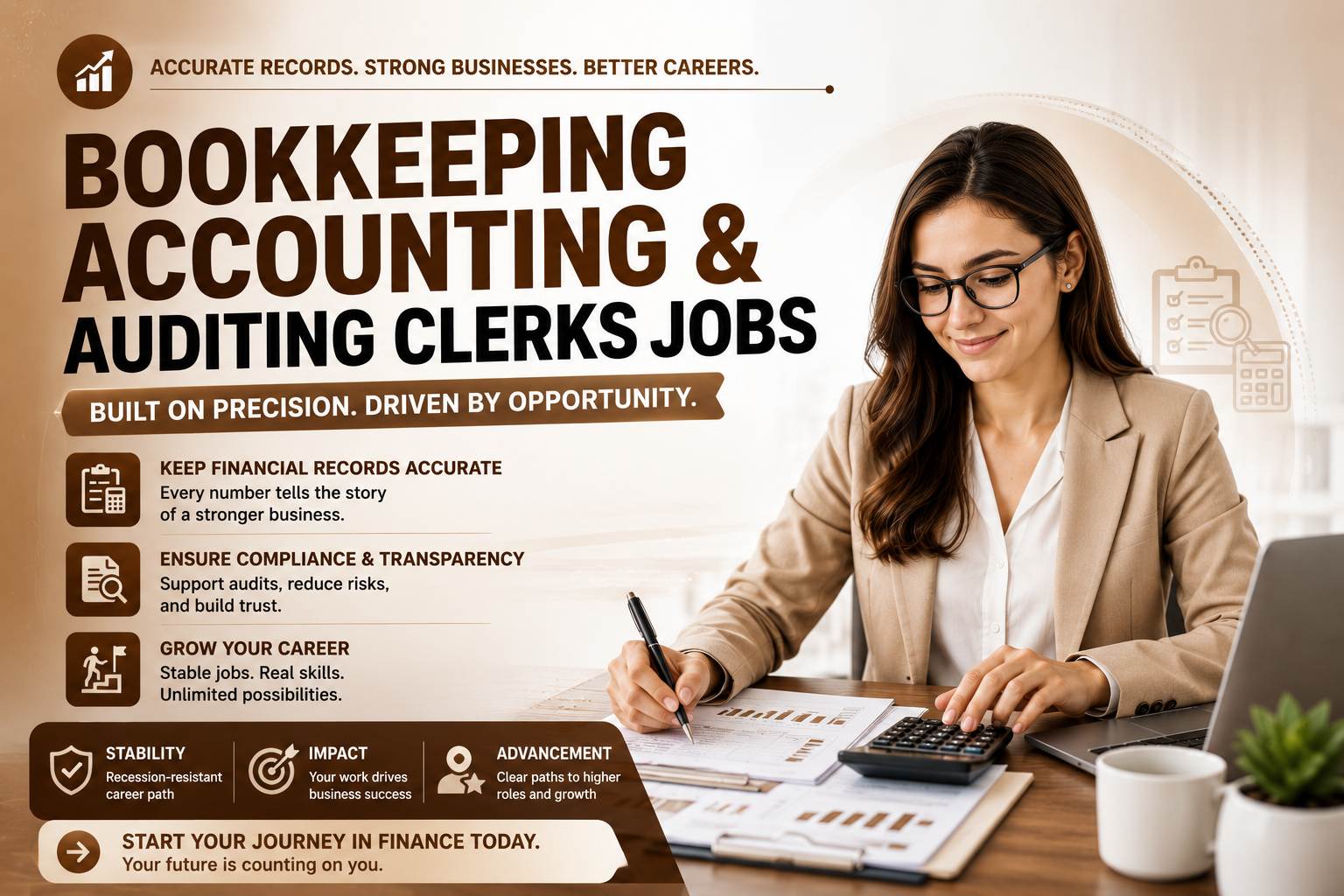
Businesses may adopt new technology every year, but one thing never changes—the need for accurate financial records. Every invoice, payment, payroll transaction, and financial report depends on professionals who keep accounting systems organized and reliable. That’s why Bookkeeping Accounting And Auditing Clerks Jobs continue to play a critical role across nearly every industry.
Many people assume automation has reduced the demand for bookkeeping and accounting support. The reality is more balanced. While software handles repetitive calculations, employers still need skilled professionals who can verify information, identify discrepancies, maintain compliance, and support financial decision-making. Companies don’t simply need data entered; they need financial records they can trust.
For job seekers looking for stability, transferable skills, and long-term career growth, bookkeeping, accounting, and auditing clerk positions remain practical career choices with opportunities in both the public and private sectors.
Bookkeeping Accounting And Auditing Clerks Jobs Responsibilities
Professionals working in Bookkeeping Accounting And Auditing Clerks Jobs perform a wide range of financial tasks that support daily business operations. Their responsibilities commonly include recording financial transactions, reconciling accounts, processing invoices, maintaining payroll records, organizing financial documents, preparing reports, and assisting accountants during month-end or year-end closing procedures.
Accuracy sits at the center of every responsibility. A single reporting error can create budgeting problems, delay financial statements, or affect tax compliance. That’s why employers value professionals who pay close attention to detail while consistently following accounting procedures.
The position also requires collaboration. Bookkeeping clerks often communicate with managers, vendors, customers, payroll departments, and external auditors to resolve financial questions or verify supporting documentation. Strong interpersonal skills complement technical accounting knowledge and help organizations operate more efficiently.
Technology has expanded the responsibilities of these professionals rather than replacing them. Modern accounting software accelerates routine processing, allowing bookkeeping and auditing clerks to focus more on reviewing data quality, investigating unusual transactions, and supporting financial reporting.
Professionals interested in strengthening their qualifications before entering this field may benefit from earning an Accounting Clerk Certificate, which introduces many of the core accounting principles employers expect.
Skills Needed for Bookkeeping Accounting And Auditing Clerks Jobs
Success in Bookkeeping Accounting And Auditing Clerks Jobs depends on far more than basic math skills. Employers look for candidates who combine accounting knowledge with organization, professionalism, analytical thinking, and reliability.
Attention to detail remains one of the most valuable qualities because bookkeeping errors often affect multiple departments. Organized professionals can manage invoices, receipts, payroll records, bank reconciliations, and financial reports without allowing important details to slip through the cracks.
Digital skills have become equally important. Today’s accounting departments rely heavily on Microsoft Excel, QuickBooks, Sage, SAP, Oracle, NetSuite, and cloud-based accounting systems. Candidates who already understand these platforms often transition into new positions more quickly and require less training.
Communication also deserves greater attention than many job seekers expect. Financial information frequently moves between accounting departments, management teams, customers, and suppliers. Professionals capable of explaining accounting issues clearly often become valuable contributors beyond routine bookkeeping duties.
Career advancement usually depends on continuous learning. Many bookkeeping clerks eventually expand into payroll administration, accounts receivable, accounts payable, financial analysis, or staff accounting after gaining practical experience.
Readers seeking a broader understanding of entry-level accounting responsibilities can review this complete guide to the Account Clerk Job Description.
Those interested in customer payment processing can also explore this overview of the Accounts Receivable Clerk career.
Bookkeeping Accounting And Auditing Clerks Jobs Career Outlook
The future of Bookkeeping Accounting And Auditing Clerks Jobs continues evolving alongside financial technology. Although automation has streamlined repetitive processes, employers increasingly value professionals who understand accounting systems and can verify the accuracy of financial information.
Companies continue hiring bookkeeping and auditing clerks because financial oversight cannot rely entirely on automation. Businesses still require professionals capable of identifying reporting inconsistencies, resolving transaction errors, supporting audits, and maintaining regulatory compliance.
Healthcare organizations, manufacturers, logistics companies, retailers, banks, nonprofit organizations, schools, and government agencies all employ bookkeeping and accounting professionals. That wide industry demand creates career flexibility that many specialized occupations cannot offer.
The role also provides an excellent foundation for future advancement. Many experienced bookkeeping clerks become payroll specialists, accounts receivable coordinators, accounts payable specialists, accounting assistants, staff accountants, or financial analysts after expanding their knowledge and earning additional certifications.
If you’re interested in learning how receivable management supports organizational cash flow, this detailed guide covering the financial role of an Accounts Receivable Clerk provides valuable insight.
Likewise, understanding vendor payment management becomes easier by reviewing this explanation of the Accounts Payable Clerk job description.
Many bookkeeping professionals spend their entire workday reviewing spreadsheets, accounting software, invoices, and financial reports. A high-quality office monitor can improve productivity while reducing eye strain during extended work sessions. You can explore one practical option through this professional office monitor.
Bookkeeping Accounting And Auditing Clerks Jobs Remain Relevant
Predictions that bookkeeping careers would disappear have proven overly simplistic. Instead of eliminating jobs, technology has changed the nature of accounting support work. Employers increasingly seek professionals who combine technical accounting knowledge with critical thinking, software proficiency, and communication skills.
Modern bookkeeping and auditing clerks do more than process financial transactions. They verify data integrity, identify reporting issues, assist compliance efforts, and contribute to better financial decision-making. Those responsibilities make the profession increasingly valuable despite ongoing automation.
Candidates willing to invest in accounting knowledge, software skills, and professional development will continue finding opportunities across industries where financial accuracy remains essential to business success.
FAQ Bookkeeping Accounting Careers
- Are Bookkeeping Accounting And Auditing Clerks Jobs still in demand despite accounting software?
Yes. Accounting software automates many repetitive tasks, but employers still require professionals who understand accounting principles, review financial accuracy, investigate discrepancies, and maintain organized financial records. Modern bookkeeping positions increasingly emphasize analytical thinking, software proficiency, and financial oversight rather than simple data entry alone. Companies continue hiring qualified professionals because accurate financial reporting remains essential for every business.
- What qualifications help candidates get hired for Bookkeeping Accounting And Auditing Clerks Jobs?
Most employers prefer candidates with accounting coursework, bookkeeping knowledge, computer proficiency, and experience using spreadsheet or accounting software. Many applicants strengthen their resumes by earning accounting certificates, improving Microsoft Excel skills, and gaining familiarity with platforms such as QuickBooks or SAP. Strong communication, organization, and attention to detail often become equally important during the hiring process because these qualities directly affect financial accuracy.
- Can Bookkeeping Accounting And Auditing Clerks Jobs lead to higher-paying accounting careers?
Absolutely. Many accounting professionals begin their careers in bookkeeping or auditing support positions before advancing into payroll administration, accounts payable, accounts receivable, staff accounting, financial analysis, or accounting management. Practical experience combined with additional education, certifications, and software expertise often creates excellent opportunities for long-term career growth within the accounting and finance profession.
Apply Bookkeeping Accounting And Auditing Clerks Jobs
Bookkeeping Accounting And Auditing Clerks Jobs continue to provide dependable career opportunities for professionals who value accuracy, organization, and financial responsibility. While technology has transformed accounting workflows, it has also increased demand for skilled individuals capable of ensuring financial information remains reliable. For job seekers seeking stability, career flexibility, and opportunities to advance within finance, this profession remains a smart investment in today’s evolving job market.


