Info Hot Job Find your dream job! Get for jobs, post your resume, compare salaries and find career advice and research.
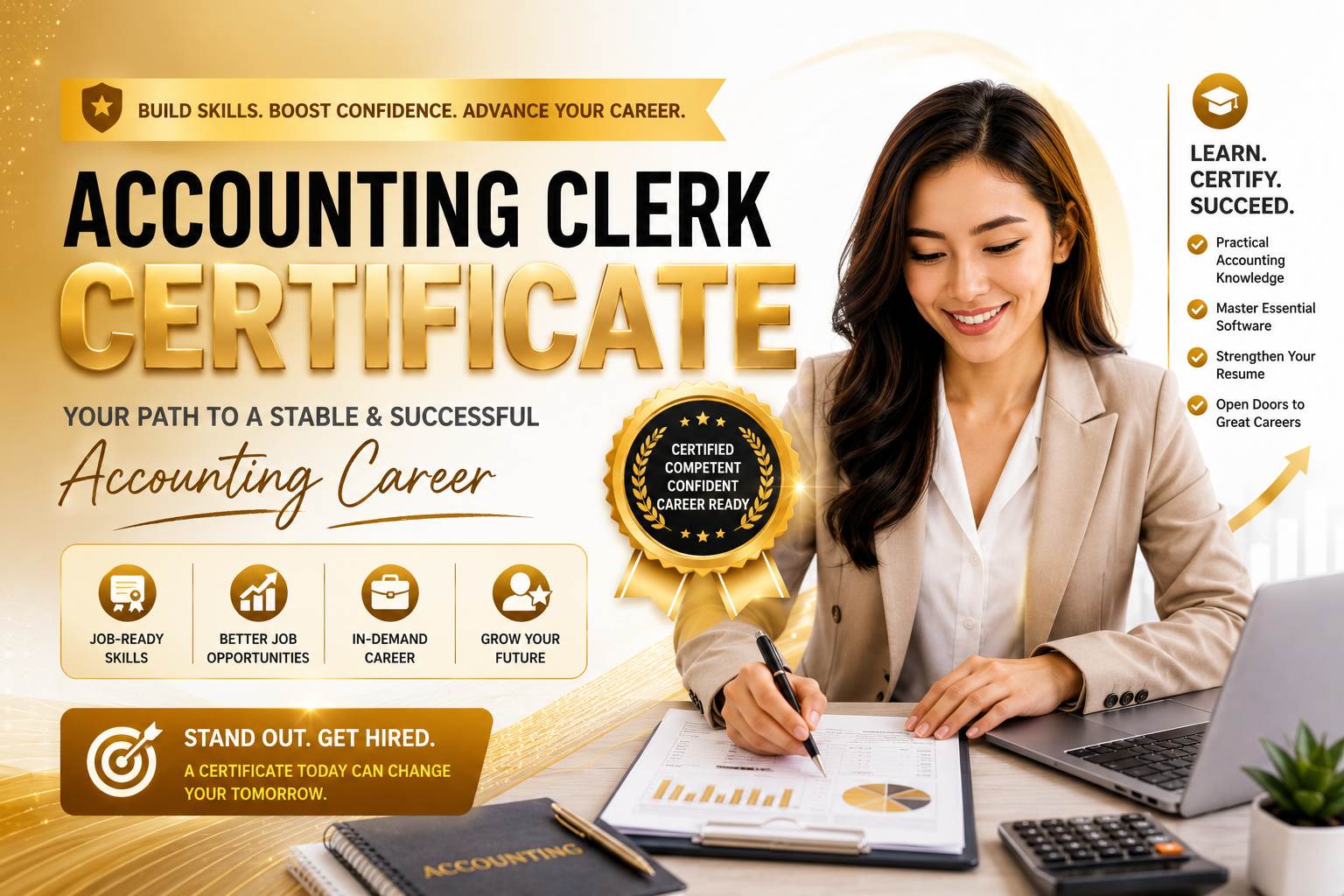
Landing a job in accounting has become more competitive than ever. Employers still value practical experience, but they also look for candidates who demonstrate professional knowledge before they even walk into an interview. That’s one reason an Accounting Clerk Certificate has gained attention among job seekers looking to stand out.
While a certificate doesn’t replace experience, it signals commitment, technical competence, and a willingness to learn. For entry-level professionals, career changers, and recent graduates, it can become a valuable stepping stone toward stable employment in accounting, bookkeeping, payroll, or finance.
Businesses continue hiring accounting clerks because every organization depends on accurate financial records. Whether processing invoices, reconciling accounts, or maintaining accounting systems, trained professionals remain an essential part of daily operations.
Accounting Clerk Certificate Benefits for Career Growth
An Accounting Clerk Certificate provides structured training in the core skills employers expect. Most certificate programs cover bookkeeping principles, financial statements, accounts payable, accounts receivable, payroll basics, accounting software, spreadsheet management, and business communication.
These programs are designed to prepare students for practical workplace responsibilities rather than advanced accounting theory. As a result, graduates often enter the workforce with greater confidence handling real accounting tasks.
Employers appreciate candidates who already understand accounting terminology and workflow. Instead of spending weeks teaching basic concepts, organizations can focus on company-specific procedures. That advantage often makes certificate holders more competitive when applying for entry-level accounting positions.
Another important benefit involves career flexibility. The knowledge gained through an accounting clerk certificate applies across multiple industries, including healthcare, manufacturing, retail, logistics, education, banking, nonprofit organizations, and government agencies. Financial records exist in every business, creating consistent demand for qualified accounting support professionals.
Candidates interested in understanding the responsibilities they’ll perform after certification can explore this detailed guide covering the Account Clerk Job Description.
Accounting Clerk Certificate Skills Employers Expect
Completing an Accounting Clerk Certificate program helps candidates develop technical and workplace skills that employers actively seek. Accuracy remains one of the most valuable qualities because financial mistakes can affect reporting, budgeting, tax preparation, and customer relationships.
Beyond technical knowledge, employers value organization, attention to detail, communication, and problem-solving abilities. Accounting clerks regularly collaborate with finance managers, department supervisors, customers, and vendors to resolve financial questions or correct transaction errors.
Technology also plays a major role in modern accounting. Certificate programs increasingly include training on Microsoft Excel, QuickBooks, Sage, SAP, Oracle, cloud accounting systems, and electronic document management. Professionals comfortable using these platforms adapt more quickly to workplace expectations.
Continuous learning remains equally important. Accounting regulations, software platforms, and reporting requirements continue evolving. Candidates who combine certification with ongoing professional development often enjoy stronger promotion opportunities throughout their careers.
Understanding specialized accounting functions also strengthens long-term career prospects. Readers interested in customer payment management can learn more about the Accounts Receivable Clerk career.
A deeper understanding of receivable operations is available through this comprehensive guide explaining the financial role of an Accounts Receivable Clerk.
Accounting Clerk Certificate and Future Job Opportunities
One of the biggest advantages of earning an Accounting Clerk Certificate is the variety of career paths it supports. Many professionals begin as Accounting Clerks before advancing into positions such as Accounts Payable Specialist, Accounts Receivable Specialist, Payroll Clerk, Billing Coordinator, Accounting Assistant, Staff Accountant, or Financial Analyst.
Career progression depends on practical experience, software proficiency, communication skills, and continued education. Some professionals later complete associate or bachelor’s degrees while building valuable workplace experience simultaneously.
Although automation continues changing accounting workflows, employers still require professionals capable of interpreting financial information, resolving discrepancies, and maintaining accurate records. Technology improves efficiency, but human judgment remains essential whenever exceptions occur.
The demand for accounting professionals also extends across specialized business functions. Learning about outgoing payment management through this detailed explanation of the Accounts Payable Clerk job description provides useful context for broader accounting careers.
Real-world job examples can also help candidates understand employer expectations. This overview of the CMI Management Accounting Clerk opportunity demonstrates how accounting clerk responsibilities vary depending on industry and organizational needs.
Many accounting professionals spend hours working with spreadsheets, accounting software, and financial reports. Investing in a high-quality office monitor can improve productivity and reduce eye fatigue during extended work sessions. You can explore one practical option through this professional office monitor.
Accounting Clerk Certificate Remains a Smart Investment
Some job seekers wonder whether earning an Accounting Clerk Certificate is still worthwhile in today’s technology-driven workplace. The answer largely depends on career goals, but for many candidates, the value remains clear.
A certificate demonstrates initiative before employment begins. It shows employers that applicants understand accounting fundamentals and are prepared to contribute from day one. Combined with practical experience and continuous learning, certification strengthens both confidence and employability.
As accounting departments continue modernizing, professionals who understand financial principles while adapting to new technology will remain highly valuable. Rather than replacing accounting clerks, automation is shifting their focus toward analysis, communication, and financial accuracy.
For individuals seeking an affordable way to enter accounting without immediately pursuing a full accounting degree, an Accounting Clerk Certificate continues to offer a practical and respected career pathway.
FAQ Accounting Clerk Certification
- Is an Accounting Clerk Certificate enough to get an entry-level accounting job?
In many cases, yes. Numerous employers hire entry-level accounting clerks based on a combination of certification, computer skills, and professional attitude. While previous accounting experience certainly strengthens an application, completing a recognized Accounting Clerk Certificate demonstrates practical knowledge of bookkeeping, accounting software, financial records, and business procedures. Employers often view certification as evidence that a candidate is prepared to learn quickly and contribute effectively from the beginning.
- How long does it usually take to complete an Accounting Clerk Certificate?
Program length varies depending on the institution and study format. Some accelerated certificate programs can be completed within a few months, while more comprehensive programs may require six months to one year. Online learning options have also become increasingly popular because they allow students to study while maintaining full-time employment or other responsibilities. Choosing an accredited program with practical software training often provides the greatest long-term career value.
- Does an Accounting Clerk Certificate improve long-term career opportunities?
Yes. Although certification alone does not guarantee promotion, it provides a strong foundation for future advancement. Many professionals begin as accounting clerks before progressing into payroll, accounts payable, accounts receivable, staff accounting, or financial analysis positions. When combined with workplace experience, software proficiency, and continued education, an Accounting Clerk Certificate can become an important building block for a successful accounting career.
Apply Accounting Clerk Certificate Jobs
An Accounting Clerk Certificate remains a practical investment for anyone serious about building a career in accounting or finance. It demonstrates professional commitment, develops job-ready skills, and prepares candidates for opportunities across countless industries. As employers continue seeking reliable professionals who understand both accounting fundamentals and modern financial technology, earning this certification can provide a meaningful advantage in an increasingly competitive job market.