 Info Hot Job Find your dream job! Get for jobs, post your resume, compare salaries and find career advice and research.
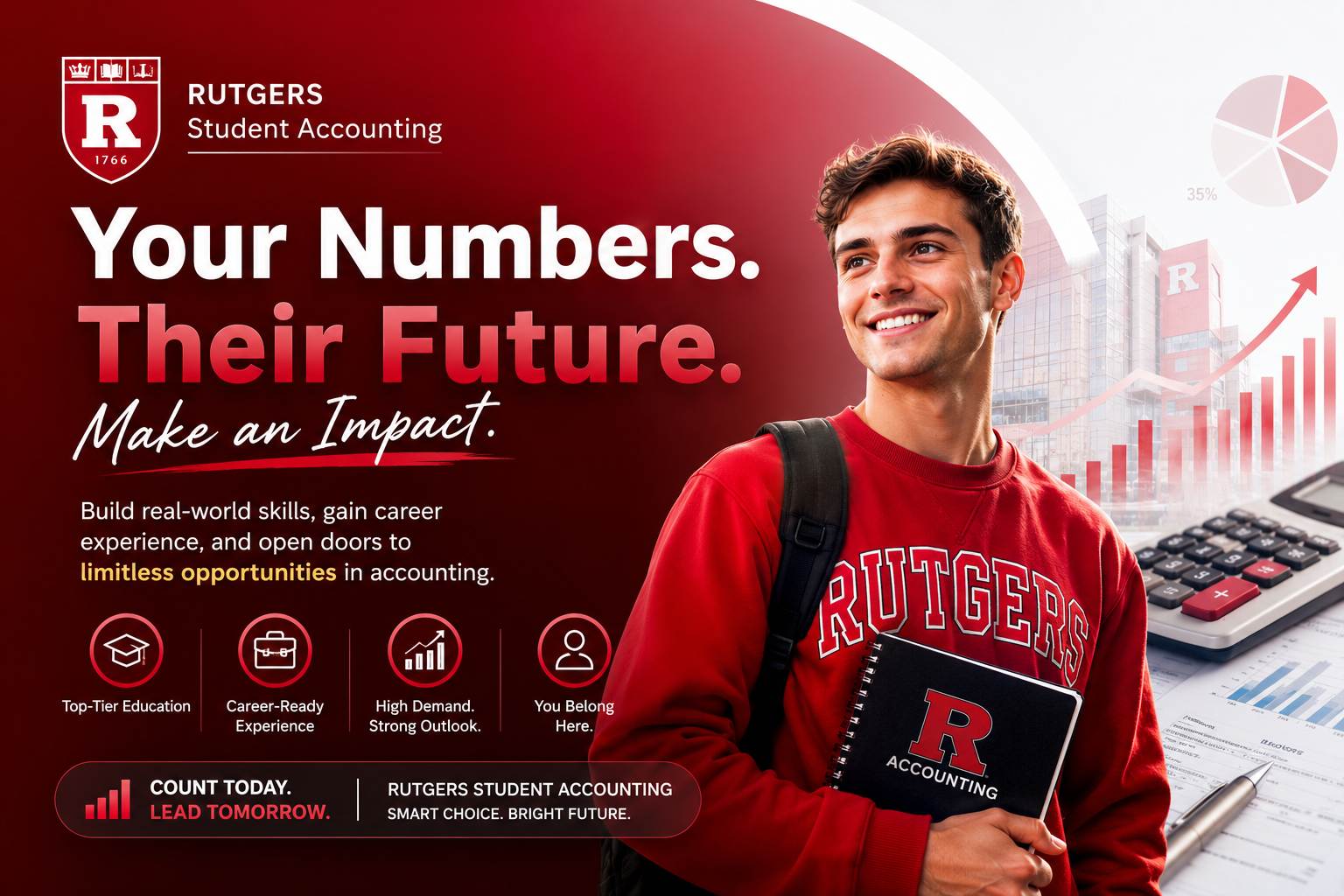
College decisions often shape more than academic success—they influence long-term career growth, financial stability, and professional confidence. Students searching for a business discipline with lasting value frequently discover that Rutgers Student Accounting represents far more than earning a degree. It reflects a practical investment in skills that remain relevant across changing industries and economic cycles.
Accounting continues to serve as the financial backbone of every successful organization. Businesses rely on professionals who understand financial reporting, budgeting, compliance, taxation, auditing, and strategic planning. As companies become increasingly data-driven, accounting graduates are expected to do more than balance numbers. They help leaders make informed decisions that directly affect profitability and long-term performance.
For students preparing to enter an increasingly competitive job market, accounting provides a combination that is difficult to ignore: broad employment opportunities, transferable business knowledge, and continuous professional demand.
Rutgers Student Accounting Career Preparation
One of the strongest advantages of Rutgers Student Accounting is its emphasis on practical business education alongside technical accounting knowledge. Students develop an understanding of financial accounting, managerial accounting, auditing, taxation, business law, economics, information systems, and corporate finance while strengthening communication and analytical thinking.
Modern employers expect graduates to contribute from their first day on the job. They value candidates who can interpret financial information, explain business performance, and collaborate with departments outside accounting. These workplace expectations have reshaped accounting education, making critical thinking and business communication just as valuable as technical calculations.
Internships also play an important role in career preparation. Students who gain real-world experience before graduation often transition into full-time employment more smoothly because they already understand workplace expectations, accounting software, and professional collaboration.
Readers interested in understanding how accounting education builds long-term professional value can also explore this guide to BBA Accounting careers, which explains why accounting remains one of the most dependable business degrees.
Rutgers Student Accounting Jobs and Employment Outlook
The employment outlook for accounting graduates continues to remain positive because every organization requires financial oversight. Economic conditions may change, but financial reporting, tax compliance, payroll management, internal controls, and budgeting remain essential business functions.
Graduates commonly begin their careers as staff accountants, accounting assistants, junior auditors, payroll specialists, tax associates, or financial analysts. As professional experience grows, many advance into leadership positions such as accounting managers, controllers, finance directors, compliance managers, or chief financial officers.
Technology has transformed the accounting profession without reducing its importance. Cloud accounting platforms, automation software, and artificial intelligence now handle repetitive processes more efficiently. Instead of replacing professionals, these innovations allow accountants to focus on financial analysis, business strategy, forecasting, and advisory services.
Understanding current hiring expectations can make a significant difference during the job search. Employers continue to prioritize candidates with practical experience, communication skills, and technical proficiency, as explained in this overview of modern accounting staff hiring trends.
Students preparing for entry-level opportunities may also find it useful to review a real-world Accounting Clerk position at Kinedyne Corporation, which demonstrates the qualifications and responsibilities employers frequently expect.
Rutgers Student Accounting Skills That Employers Want
Today’s accounting profession extends well beyond bookkeeping. Companies increasingly seek professionals capable of analyzing financial performance, identifying business risks, improving operational efficiency, and supporting executive decision-making.
Analytical thinking has become one of the profession’s most valuable strengths. Financial statements contain meaningful business insights that influence investments, budgeting decisions, and organizational strategy. Professionals who understand how to communicate those insights often become trusted advisors inside their organizations.
Technology skills have also become increasingly important. Employers appreciate graduates familiar with spreadsheet modeling, enterprise resource planning systems, cloud accounting software, financial reporting tools, and data visualization platforms. These technical abilities complement traditional accounting knowledge while improving workplace productivity.
Ethics remains equally important. Organizations depend on accurate financial information, regulatory compliance, and transparent reporting. Accounting professionals who consistently demonstrate integrity build stronger professional reputations and enjoy greater advancement opportunities throughout their careers.
Regional employment demand also continues to support accounting graduates. Exploring available accounting jobs in Columbia, SC illustrates how opportunities remain available across healthcare, manufacturing, government, financial services, technology, and nonprofit organizations.
Long-term career planning becomes easier when students understand broader employment trends. This analysis of the future accounting job outlook highlights why accounting continues to provide stability even as industries evolve.
Students comparing different career paths may also benefit from reviewing various accounting degree career opportunities, demonstrating how accounting education supports multiple professional directions throughout a career.
FAQ Rutgers Student Accounting Careers
- Is Rutgers Student Accounting a good choice for students seeking long-term career stability?
Yes. Accounting continues to rank among the most dependable business professions because organizations in every industry require qualified financial professionals. Graduates can pursue careers in public accounting, corporate finance, government agencies, healthcare systems, consulting firms, nonprofit organizations, and technology companies. Since financial management remains essential regardless of economic conditions, accounting graduates often benefit from consistent employment opportunities and long-term career flexibility.
- What skills should Rutgers Student Accounting graduates develop to improve employment opportunities?
Employers increasingly look beyond technical accounting knowledge. Strong analytical thinking, communication skills, problem-solving ability, spreadsheet expertise, accounting software proficiency, business ethics, and teamwork all contribute to successful employment outcomes. Internship experience, professional networking, and familiarity with modern financial systems also strengthen a graduate’s competitiveness during recruitment and support faster career advancement after entering the workforce.
- Can Rutgers Student Accounting graduates work outside traditional accounting roles?
Absolutely. Accounting education develops transferable business skills that apply across many industries and job functions. Graduates frequently move into financial analysis, business consulting, internal auditing, compliance management, operations, banking, investment support, budgeting, risk management, and executive leadership. The combination of financial knowledge and business understanding allows professionals to pursue diverse career paths while maintaining strong long-term employment prospects.
Apply Rutgers Student Accounting
Rutgers Student Accounting represents more than an academic specialization. It provides practical business knowledge, analytical expertise, and professional skills that remain valuable throughout an evolving job market. Organizations continue to rely on accounting professionals who can interpret financial information, support strategic decisions, and maintain financial integrity. Students who combine classroom learning with internships, technology skills, and professional development place themselves in an excellent position to build rewarding careers with long-term stability, competitive earning potential, and opportunities for continuous advancement.


