Info Hot Job Find your dream job! Get for jobs, post your resume, compare salaries and find career advice and research.

A school day can change quickly when a teacher calls in sick, but students still need someone to guide their learning. That’s where substitute teachers step in. For people interested in education, becoming a substitute teacher offers a way to gain classroom experience without immediately committing to a permanent teaching position.
The flexibility can appeal to recent graduates, career changers, and people exploring a future in education. However, the work involves more than following a lesson plan. A substitute might enter an unfamiliar classroom that morning and need to manage student behavior before the first period ends. Understanding the qualifications, hiring process, pay, and daily responsibilities helps applicants decide whether this career fits their goals.
Becoming A Substitute Teacher: Qualifications and Requirements
The first step toward becoming a substitute teacher is checking the requirements where you intend to work. Qualifications vary by state, school district, and assignment. Some employers accept candidates with a high school diploma or equivalent, while others require college credits, a bachelor’s degree, a teaching credential, or state-issued authorization.
Background checks, fingerprinting, employment verification, and district training may also be part of the application process. Applicants should consult their state education agency or school district rather than assume that meeting one employer’s requirements guarantees eligibility elsewhere.
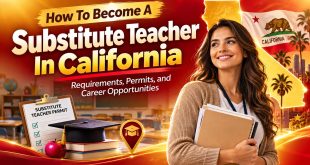
California, for example, has several substitute teaching permit pathways with distinct eligibility requirements. The California Commission on Teacher Credentialing’s official substitute permit guidance explains the available options and their academic requirements. Applicants can also review this practical guide on how to become a substitute teacher in California before deciding which pathway to pursue.
Meeting the formal requirements gets an application started, but it doesn’t guarantee a job. Schools also need dependable people who arrive on time, communicate clearly, follow instructions, and respond calmly when a classroom becomes difficult to manage. Experience working with children can help, although it doesn’t replace credentials required by the employer.
Education may also shape future opportunities. Someone interested in substitute teaching as a temporary role might have different goals from someone planning to become a permanent kindergarten teacher. For those considering the latter path, researching the best colleges for kindergarten teachers can help clarify degree options and longer-term career requirements.
Once eligibility is clear, applicants can look for openings on school district career pages, education job boards, and reputable staffing agency websites. The process commonly involves submitting an application, providing requested documents, completing background screening, and attending orientation when required. Some employers maintain substitute pools and contact approved candidates when assignments become available.
Before accepting the first assignment, ask how lesson plans are provided, whom to contact with questions, and what procedures apply to attendance, student behavior, and emergencies. Knowing these details in advance makes it easier to start the day confidently instead of spending valuable classroom time figuring out the school’s routines.
Becoming A Substitute Teacher: Salary, Flexibility, and Job Expectations
The ability to accept assignments around personal commitments is one of substitute teaching’s main attractions. Depending on the district, substitutes may choose available days, work at different schools, or accept longer assignments when opportunities arise. This arrangement can suit people who want classroom experience while completing their education or exploring another career.
However, flexibility has a financial downside. A substitute’s schedule often depends on teacher absences and local demand, so available work can fluctuate from week to week. A daily pay rate might look attractive, but actual monthly income depends on how many days the substitute gets to work. Anyone relying on this job as a primary income source should account for school holidays, cancellations, and periods with fewer assignments.
The U.S. Bureau of Labor Statistics reported a median hourly wage of $20.03 for short-term substitute teachers in May 2025. This national figure provides a useful reference point, not a guaranteed rate for every applicant. Local pay, qualifications, assignment length, and employer policies can produce different results. Candidates can consult the BLS occupational wage data and compare local job postings before evaluating an offer.
Benefits deserve the same attention as wages. Some substitute positions provide limited access to paid leave, health insurance, or retirement benefits compared with permanent teaching jobs. Long-term assignments may have different compensation arrangements, but the terms depend on the employer. Before accepting a position, check the pay schedule, expected hours, cancellation rules, and eligibility for benefits.
The classroom itself presents another challenge. Imagine arriving at a school where students know their regular teacher’s expectations but have never met you. The lesson plan is ready, yet several students finish their work early while others struggle to get started. A substitute must keep the class moving without losing sight of the learning objectives.
That requires more than subject knowledge. Taking attendance accurately, explaining instructions, redirecting disruptive behavior, and following school safety procedures are all part of the responsibility. If a student needs additional support or an unexpected incident occurs, the substitute must know when to seek assistance rather than act beyond their authority.
Professionalism also affects whether schools invite a substitute back. Being punctual, leaving clear notes for the regular teacher, and following classroom rules help establish reliability. Clothing should be comfortable enough for a full school day while remaining appropriate for the school environment. Educators looking for practical wardrobe inspiration can explore these kindergarten teacher shirt ideas when choosing classroom-friendly outfits.
For someone considering a permanent teaching career, these assignments offer a useful reality check. Working with different classes can reveal which age groups and teaching environments feel like the best fit. It also exposes the less predictable side of the profession, including behavior management and changing daily routines. That experience can help aspiring educators decide whether to pursue additional training or work toward a teaching credential.
FAQ: Becoming A Substitute Teacher
1. Do you need a college degree for becoming a substitute teacher?
Not always. Requirements depend on the state, school district, and specific position. Some employers accept applicants without a bachelor’s degree, while others require college coursework, a completed degree, or an approved substitute teaching permit. Check the official requirements for your intended location and confirm whether fingerprinting, background screening, or additional training is necessary. Meeting the minimum qualifications is essential, but communication skills and experience working with children can also strengthen an application.
2. How much can you earn when becoming a substitute teacher?
Earnings vary according to location, employer, qualifications, and the number of assignments available. The U.S. Bureau of Labor Statistics reported a median hourly wage of $20.03 for short-term substitute teachers in May 2025, although local rates may differ considerably. Before relying on substitute teaching as your primary income, compare local job postings and calculate realistic earnings based on available working days, unpaid school holidays, and potential gaps between assignments. Also check whether long-term placements offer different pay or benefits.
3. Is becoming a substitute teacher a good career choice for beginners?
Substitute teaching can be a practical starting point for people who want classroom experience before pursuing a permanent education role. It provides opportunities to work with different age groups, learn school procedures, and develop classroom-management skills. However, irregular assignments and limited benefits can make the job less suitable for people who need predictable income. Reviewing local employment conditions and trying different classroom assignments can help beginners decide whether substitute teaching suits their circumstances or whether a permanent teaching pathway would be a better fit.
Becoming a substitute teacher can be a worthwhile way to enter education, but the decision deserves more than a quick look at scheduling flexibility. Applicants need to understand local qualification rules, realistic earning potential, and the demands of managing a classroom without the familiarity a permanent teacher develops over time. Those who prepare carefully, communicate well, and adapt to changing situations can gain valuable experience while supporting students and school staff. For the right candidate, the role offers a practical entry point into education and a clearer view of the career opportunities ahead.