Info Hot Job Find your dream job! Get for jobs, post your resume, compare salaries and find career advice and research.
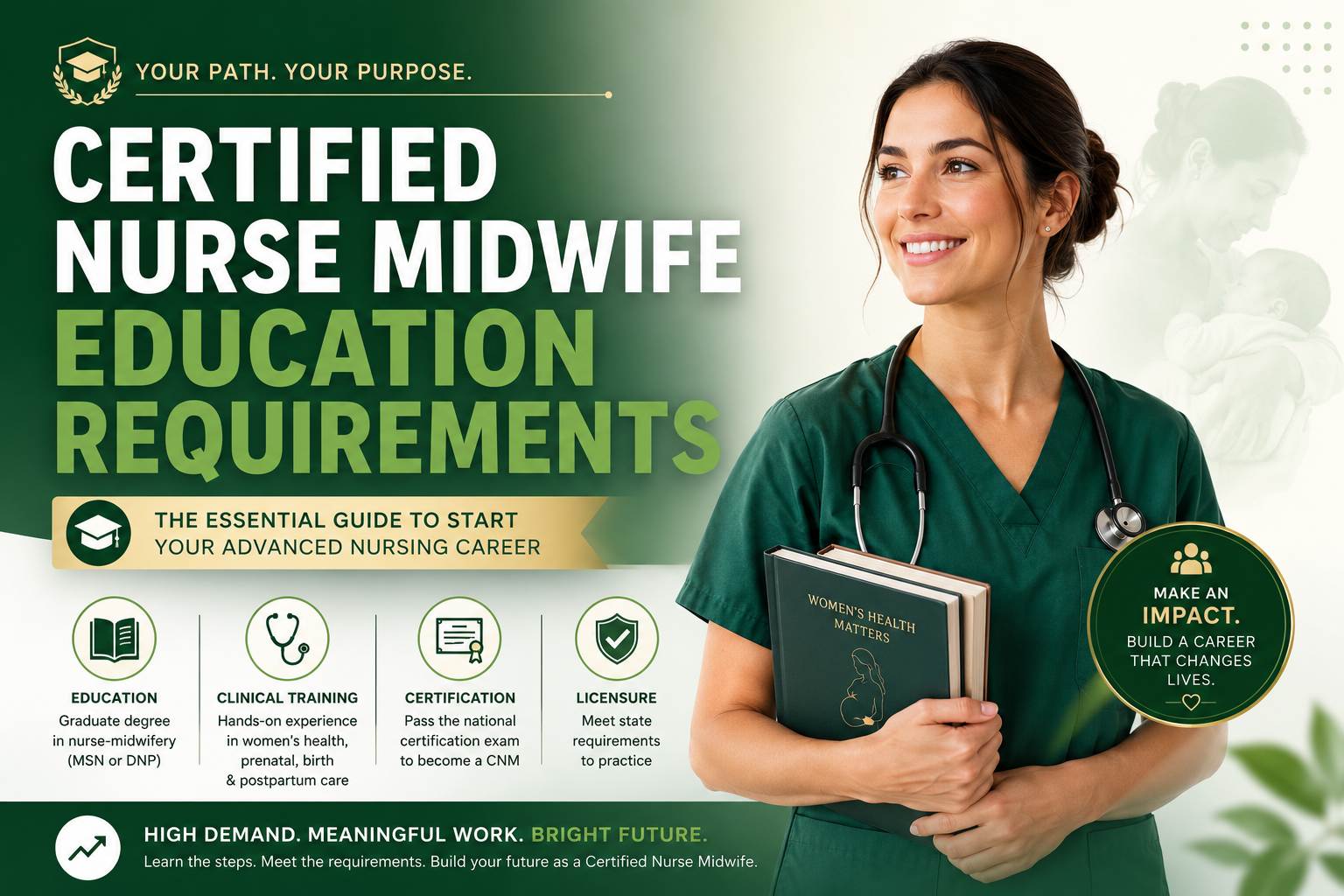
The demand for advanced practice nurses continues to rise as healthcare systems focus on improving maternal and women’s health services. Among these professionals, Certified Nurse Midwives (CNMs) stand out for their ability to provide comprehensive care before, during, and after pregnancy while also supporting women’s health throughout every stage of life. It’s a career built on clinical expertise, compassion, and independent decision-making.
For registered nurses looking to move beyond bedside care, understanding Certified Nurse Midwife Education Requirements is the first major step. Employers expect candidates to meet rigorous academic standards, complete advanced clinical training, and earn professional certification before entering practice. While the journey requires commitment, it also opens the door to greater career opportunities, higher earning potential, and long-term job security.
Certified Nurse Midwife Education Requirements Start with the Right Nursing Foundation
Every successful Certified Nurse Midwife begins with a solid nursing background. The standard pathway starts by becoming a Registered Nurse (RN), typically through a Bachelor of Science in Nursing (BSN). Although some bridge programs accept associate degree nurses, most graduate midwifery programs prefer applicants who already hold a BSN from an accredited institution.
Clinical experience also plays an important role. Many universities recommend or require one to two years of professional nursing experience before admission. Working in labor and delivery, postpartum care, neonatal services, or women’s health can strengthen both clinical judgment and graduate school applications.
After earning RN licensure, candidates must enroll in an accredited graduate program specializing in nurse-midwifery. Most students pursue either a Master of Science in Nursing (MSN) or a Doctor of Nursing Practice (DNP). These advanced degrees provide the knowledge and practical skills required to deliver safe, evidence-based maternity and women’s healthcare.
Nurses who need a flexible educational pathway should also explore Certified Nurse Midwife Online Programs, which allow many students to balance graduate education with full-time employment.
Graduate Programs That Meet Certified Nurse Midwife Education Requirements
Graduate education forms the core of the Certified Nurse Midwife Education Requirements. Accredited nurse-midwifery programs combine advanced classroom instruction with supervised clinical practice designed to prepare graduates for independent patient care.
Students study subjects including advanced physiology, pharmacology, pathophysiology, reproductive health, prenatal assessment, labor management, postpartum care, newborn evaluation, gynecologic care, and primary healthcare for women. Beyond medical knowledge, programs emphasize communication, ethical practice, cultural competency, and evidence-based decision-making.
Clinical rotations remain one of the most valuable components of graduate education. Students gain direct experience under certified preceptors in hospitals, birth centers, outpatient clinics, and community healthcare settings. These real-world experiences help future Certified Nurse Midwives develop confidence while managing increasingly complex patient cases.
Because many graduate students continue working as registered nurses, online learning has become increasingly popular. Coursework is delivered remotely while clinical experiences are completed at approved healthcare facilities near the student’s location.
If flexibility is a priority, the comprehensive guide to Online Certified Nurse Midwife Programs: A Flexible Path to Advanced Women’s Health Leadership offers additional insight into modern learning options.
Certification and Licensure Complete Certified Nurse Midwife Education Requirements
Graduating from an accredited program is only one milestone. Candidates must also earn national certification before practicing as Certified Nurse Midwives.
After completing graduate education, graduates become eligible to sit for the national certification examination administered by the appropriate certifying organization. Successfully passing the examination demonstrates mastery of clinical knowledge and professional competencies required for advanced practice.
State licensure follows certification. Each state establishes its own licensing requirements, although most follow similar standards regarding graduate education, national certification, background verification, and continuing education.
Professional development doesn’t stop after licensure. Certified Nurse Midwives regularly complete continuing education to maintain certification, stay current with evolving clinical guidelines, and provide patients with high-quality, evidence-based care.
Prospective students comparing educational institutions can learn more from this overview of Rowan University Certified Nurse Midwife Glassboro NJ, which illustrates how accredited programs prepare graduates for certification success.
Career Benefits After Meeting Certified Nurse Midwife Education Requirements
The educational journey is demanding, but the professional rewards often justify the investment. Healthcare employers consistently seek advanced practice nurses capable of addressing the growing need for maternal healthcare providers.
Certified Nurse Midwives work in hospitals, physician practices, community health clinics, birth centers, military healthcare systems, universities, and private practices. Some states also allow independent practice, expanding career flexibility even further.
Beyond employment opportunities, Certified Nurse Midwives often report strong job satisfaction because they develop long-term relationships with patients while supporting families through life-changing experiences. The profession combines clinical autonomy with meaningful patient interaction, making it one of the most rewarding advanced nursing specialties.
Competitive compensation also contributes to career appeal. Graduate education frequently leads to significantly higher salaries than traditional registered nursing roles while opening opportunities for leadership, teaching, research, and healthcare administration.
If you’re evaluating graduate schools, the guide covering the Best Certified Nurse Midwife Programs to Advance Your Nursing Career can help identify programs with strong academic reputations and successful graduate outcomes.
Before making your final career decision, it’s also worth reviewing current salary expectations in this detailed resource about Certified Nurse Midwife Salary: What You Can Really Expect in This High-Impact Career.
Students preparing for graduate coursework and certification exams may also benefit from this recommended Certified Nurse Midwife professional reference guide, which covers essential clinical concepts used throughout advanced midwifery education.
FAQ Certified Nurse Midwife Degree Requirements
1. Is a BSN required before applying to Certified Nurse Midwife programs?
In many cases, yes. Most accredited nurse-midwifery graduate programs require applicants to hold a Bachelor of Science in Nursing and an active Registered Nurse license before admission. Although bridge pathways exist for associate degree nurses, they typically include additional coursework before graduate-level study begins. A BSN provides foundational knowledge in leadership, research, community health, and evidence-based nursing practice that supports success in advanced clinical education and prepares students for the rigorous curriculum found in Certified Nurse Midwife programs.
2. How long does it take to complete Certified Nurse Midwife Education Requirements?
The timeline depends on a student’s educational background and enrollment status. After earning a BSN and obtaining RN licensure, graduate education usually requires two to three years for a master’s degree or longer for a doctoral program. Many students also spend time gaining professional nursing experience before applying. Clinical rotations, certification examinations, and state licensure add additional milestones before entering practice, making careful planning important for achieving long-term career goals.
3. Are online graduate programs accepted for Certified Nurse Midwife certification?
Yes, provided the program is properly accredited and meets national educational standards. Accredited online programs combine remote academic coursework with supervised in-person clinical training completed at approved healthcare facilities. Graduates from these programs are generally eligible to take national certification examinations and pursue state licensure just like graduates from traditional campus-based programs. Employers typically prioritize accreditation, certification, clinical competence, and professional experience over the delivery format of graduate education.
Apply Certified Nurse Midwife Education Requirements
Meeting the Certified Nurse Midwife Education Requirements requires dedication, advanced education, and substantial clinical training, but the long-term benefits continue to attract ambitious registered nurses across the country. As demand for women’s healthcare professionals grows, Certified Nurse Midwives remain well positioned for stable employment, competitive salaries, and meaningful professional impact. Choosing an accredited graduate program, completing comprehensive clinical experiences, and earning national certification provide the strongest foundation for a successful and rewarding career in advanced nursing practice.