 Info Hot Job Find your dream job! Get for jobs, post your resume, compare salaries and find career advice and research.
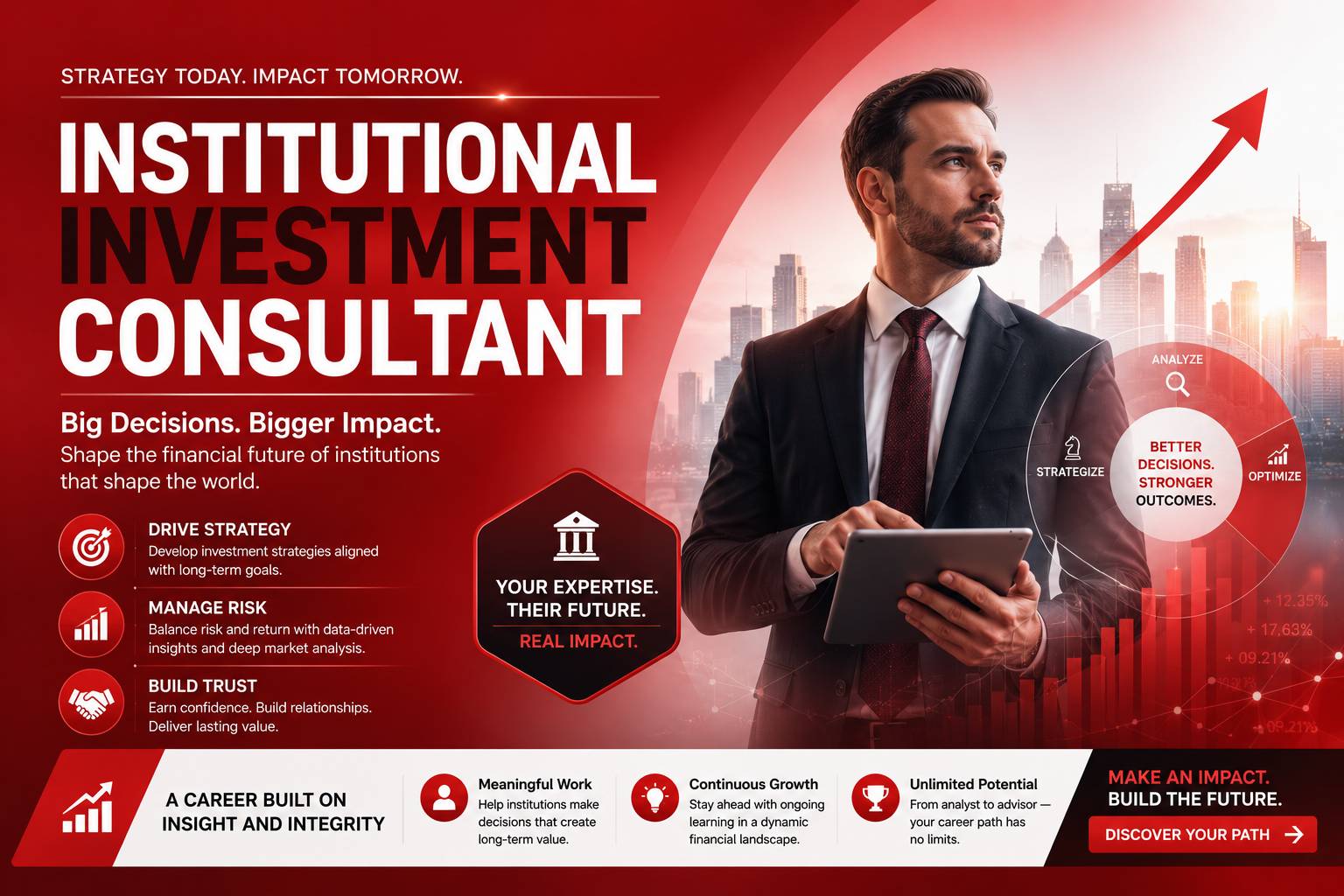
Large organizations rarely leave major investment decisions to chance. Pension funds, insurance companies, universities, foundations, and corporate retirement plans depend on experienced professionals who understand markets, risk management, and long-term financial strategy. That growing demand has made the Institutional Investment Consultant role one of the most respected careers in modern finance.
Unlike advisors who primarily work with individual investors, an Institutional Investment Consultant serves organizations responsible for managing substantial assets. Every recommendation can influence millions—or even billions—of dollars, making the position both challenging and rewarding. Professionals in this field are expected to combine technical expertise with strategic thinking, helping institutions achieve sustainable financial performance while balancing risk and regulatory requirements.
Institutional Investment Consultant Career Path and Responsibilities
An Institutional Investment Consultant works closely with investment committees, corporate executives, pension trustees, nonprofit boards, and other institutional decision-makers. Rather than recommending investments based solely on short-term market movements, consultants evaluate long-term objectives, liquidity needs, governance structures, and risk tolerance before developing comprehensive investment strategies.
Daily responsibilities often include reviewing portfolio performance, conducting manager research, analyzing asset allocation models, evaluating market trends, and preparing presentations for board meetings. Consultants also help clients understand changing economic conditions and recommend adjustments that align with evolving financial goals.
Because institutional investors often manage complex portfolios, consultants must understand equities, fixed income, alternative investments, private equity, real estate, infrastructure, and global market dynamics. Strong analytical skills are essential, but the ability to explain complex financial concepts in clear language remains equally valuable.
Professionals interested in similar consulting careers can also explore the opportunities available through Bilkeykatz Investment Consultants to better understand how advisory roles continue evolving across today’s financial industry.
Institutional Investment Consultant Skills Employers Want
Employers expect much more than investment knowledge when hiring an Institutional Investment Consultant. Successful candidates demonstrate exceptional analytical ability, financial modeling experience, communication skills, and professional judgment.
Institutional consulting often involves interpreting large amounts of financial data before transforming technical findings into practical recommendations. Consultants need confidence when presenting investment strategies to executive leadership while remaining flexible enough to answer difficult questions during committee meetings.
Relationship management is another defining characteristic. Institutional clients expect long-term partnerships built on transparency, consistency, and trust. Consultants who communicate clearly during both favorable and challenging market conditions often develop stronger professional reputations.
Technology also plays an increasingly important role. Modern consultants rely on portfolio analytics, performance reporting systems, financial databases, and risk management software to support informed decision-making. Employers appreciate professionals who combine advanced analytical tools with practical business insight.
Financial professionals interested in client-focused advisory positions may also find value in learning more about the Scottrade Investment Consultant career, where relationship management remains a core component of long-term success.
Institutional Investment Consultant Salary and Career Growth
Compensation for an Institutional Investment Consultant generally reflects experience, education, certifications, employer size, and assets under advisory. Professionals serving major pension funds or large institutional clients often receive competitive salaries combined with performance-based incentives and comprehensive benefits.
Career progression typically follows demonstrated expertise rather than simply years of employment. Consultants who consistently deliver thoughtful investment recommendations and maintain strong client relationships often advance into senior consulting, portfolio leadership, chief investment office support, or executive advisory positions.
Professional development remains an ongoing priority throughout this career. Market conditions evolve constantly, regulatory requirements change, and institutional investment strategies become increasingly sophisticated. Continuing education and industry certifications strengthen credibility while expanding future career opportunities.
Those comparing salary expectations across financial consulting specialties may find useful insights by reviewing this detailed guide on Scottrade Investment Consultant salary trends and the factors influencing compensation within advisory careers.
Future Demand for Institutional Investment Consultants
Organizations continue facing increasingly complex financial environments. Inflation, interest rate changes, geopolitical uncertainty, and technological innovation require experienced professionals who can evaluate risk while maintaining disciplined investment strategies.
As institutional portfolios become more diversified, demand for qualified consultants is expected to remain strong. Employers seek individuals who combine financial expertise with independent thinking, ethical leadership, and the ability to build confidence among stakeholders responsible for major investment decisions.
Communication has become just as important as technical knowledge. Institutional clients expect consultants to explain complicated investment strategies in practical terms without sacrificing analytical accuracy. Professionals who master this balance often establish lasting client relationships that support long-term career growth.
For candidates preparing for interviews or evaluating employer expectations, The Ultimate Guide to Hiring an Investment Consultant provides additional insight into the qualifications organizations value when selecting experienced financial consultants.
Professionals seeking another perspective on institutional-style advisory work may also benefit from exploring this Financial Advisor Investment Consultant opportunity to compare responsibilities across different consulting environments.
Building a Successful Career as an Institutional Investment Consultant
The most successful Institutional Investment Consultant professionals recognize that technical expertise alone isn’t enough. Long-term success depends on credibility, continuous learning, ethical leadership, and the ability to develop practical investment solutions for organizations with complex financial objectives.
As financial markets continue evolving, institutions will increasingly rely on consultants capable of balancing opportunity with disciplined risk management. Professionals who strengthen both analytical and interpersonal skills position themselves for rewarding careers within asset management firms, consulting organizations, pension advisory groups, investment banks, and wealth management institutions.
FAQ Institutional Investment Consultant Careers
- What does an Institutional Investment Consultant do daily?
An Institutional Investment Consultant works with organizations that manage significant financial assets, helping them develop long-term investment strategies, evaluate portfolio performance, assess risk, and select appropriate investment managers. Daily responsibilities often include market research, financial analysis, client meetings, investment committee presentations, and ongoing portfolio reviews. The role combines technical investment expertise with strategic communication to support informed decision-making at the institutional level.
- Is an Institutional Investment Consultant a good long-term career?
Yes. As institutional investors continue managing increasingly complex portfolios, demand for experienced consultants remains steady across pension funds, insurance companies, foundations, asset management firms, and consulting organizations. Career advancement often depends on analytical expertise, relationship management, ethical decision-making, and continuous professional development. Consultants who consistently deliver high-quality advice frequently progress into senior leadership or specialized investment advisory positions.
- What qualifications help someone become an Institutional Investment Consultant?
Most employers prefer candidates with degrees in finance, economics, accounting, mathematics, or business administration. Experience in portfolio management, investment research, or financial analysis is highly valuable, while professional certifications and industry licenses can significantly strengthen career prospects. Beyond technical qualifications, employers consistently seek professionals who communicate effectively, think strategically, solve complex problems, and maintain strong ethical standards when advising institutional clients.
Apply Institutional Investment Consultant
The Institutional Investment Consultant profession continues to stand among the most influential careers in financial services. Organizations increasingly rely on experienced consultants to navigate changing markets, manage complex investment portfolios, and protect long-term financial objectives. For professionals who enjoy combining analytical precision with strategic client advisory, this career offers meaningful responsibility, continuous learning, and outstanding opportunities for long-term growth.


